Topics
Cryo electron microscopy
Cryo-EM in Industry & Academia
| - |
In Heidelberg
Biophysical Society Annual Meeting
| - |
In Baltimore
Otago cryo-EM course
| - |
In Dunedin
The course aims at PhD students and researchers with little experience in cryoEM or that are planning to use cryoEM to bring their projects to the next level.
It will comprise a series of lectures covering all steps of Single-particle cryoEM (from sample preparation to data collection and image processing).
Practical sessions will give the students the opportunity to perform image processing for both single particle and subtomogram averaging.
Confirmed speakers:
Stefan Raunser, Max Planck Institute for Structural Biology, Dortmund, Germany
Steven Ludtke, Baylor College of Medicine, Huston,TX, USA
Hans Elmlund, Monash University, Melbourne, Australia
Michael Landsberg, The University of Queensland, Brisbane, Australia
Christos Gatsogiannis, Max Planck Institute for Structural Biology, Dortmund, Germany
Dominika Elmlund, Monash University, Melbourne, Australia
Mihnea Bostina, University of Otago, Otago, New Zealand
 All applicants are encouraged to submit an abstract describing the project they are currently working on.
On Day 1 we will hold a mini symposium where selecyted participants will present their work.
Challenges for High Speed Cryo Electron Tomography
| - |
In New York
National Resource for Automated Molecular Microscopy
Simons Electron Microscopy Center
New York Structural Biology Center, New York NY
Cryo electron tomography (cryoET) is an enabling technique for structural studies of molecular machines either in vitro or in situ. During the last five years the performance in terms of resolution and applicability cryoET has been enormous due to the game changing technologies that transformed the application of cryoEM in general. The emergence of highly sensitive and faster detectors with electron counting capability, improved properties for prolonged and automated cryoEM data collection sessions, and optimized software and hardware for single particle analysis has resulted in mature and reasonably high throughput workflows for cryoEM. In contrast to the cryoEM workflow, existing cryoET workflows are low throughput.
We invite applications to participate in a workshop to discuss the challenges and opportunities for high speed cryoET. We will focus on understanding current workflows for cryoET, identifying the most critical bottlenecks related to quality and throughput, and proposing future work to address these bottlenecks. Aspects to be discussed will include: (i) Goniometers: eccentricity, stability, speed, repeatability, continuous tilting;Â (ii) Automation;Â (iii) Cameras: delivery and recovery speed, acquisition modes; (iii) Novel strategies: dose rate, step size; phase plates;Â (iv) Image formation of highly tilted specimens; (v) Preprocessing; (vi) Need for dedicated hardware and software.
Apply to participate at: https://www.surveymonkey.com/r/NZ6GLZT
The application deadline is 30 September and a final selection of participants will be made by 15 October. The workshop will be limited to 25 participants.

76th Annual Pittsburgh Diffraction Conference
| - |
In Cleveland, OH
Biomolecular topics include:
X-ray Crystallography
Cryo-EM
X-ray tomography
Cryo -ET
X-ray free electron lasers
Please submit abstracts to pxk258@case.edu (Deadline September 14, 2018)
Conference Registration (Deadline August 27, 2018)
Â
Purdue Cryo-EM Symposium
| - |
In West Lafayette, IN
The goal of this meeting is to gather cryo-EM enthusiasts from around the globe to discuss topics including sample preparation, data collection, image processing and applications of cryo-EM. We will be hosting a range of speakers that will share their recent progress and developments. Application deadline is Friday, August 31. More details can be found in the website of the symposium https://www.purdue.edu/cryoem2018/
Keynote Speaker
Richard Henderson (MRC Laboratory of Molecular Biology)Invited Speakers
Yifan Cheng (UCSF)
Wah Chiu (Stanford University)
Tamir Gonen (UCLA)
Yuan He (Northwestern University)
Grant Jensen (Caltech)
Hong Jin (University of Illinois at Urbana-Champaign)
Werner Kuhlbrandt (Max Planck Institute of Biophysics)
Jun Liu (Yale University)
Steven J Ludtke (Baylor College of Medicine)
Alfonso Mondragon (Northwestern University)
Daniela Nicastro (University of Texas Southwestern Medical Center)
Abbas Ourmazd (University of Wisconsin-Milwaukee)
Eduardo Perozo (University of Chicago)
Vinothkumar Kutti Ragunath (National Centre for Biological Sciences, India)
John Rubinstein (University of Toronto)
Phoebe Stewart (Case Western Reserve University)
Peijun Zhang (University of Oxford)
Minglei Zhao (University of Chicago)
Z. Hong Zhou (UCLA)
3rd iteration of Cryo-EM workshop
| - |
In Diamond Light Source, Didcot
The goal of the workshop is to teach users the best practices in sample preparation for cryo-EM imaging. The workshop will be principally hands-on with students preparing vitrified samples on the latest generation of plunge-freezing devices. They will then have the opportunity to subsequently screen these samples with the eBIC Titan Krios and Talos Arctica electron microscopes.
Topics
Introductory Lectures:
- An introduction to the basics of cryo-EM and cryo-ET
- The complete guide to sample vitrificationÂ
Hands-on sessions:
- Sample preparation for single particle cryo-EM
- Sample screening at eBIC and an introduction to data collection on Titan Krios and Talos Arctica
ESRF workshop on sample preparation for Cryo-EM
| - |
In Grenoble
This is the first of a series of practical hand-on workshops to come in the future. This workshop is aimed at PhDs, Postdocs and young scientists new to the field of single particle cryo-EM and will be held at the ESRF. During the course, participants will learn theoretical and practical aspects of sample preparation for single particle cryo-EM.
There is no registration fee and meals and accommodation during the workshop will be provided free of charge. However, participants should arrange and pay for their own travel to/from Grenoble. A maximum of 12 participants will be selected and we will accept a limited number of participants' samples to be tested during the workshop. In the case that you plan to bring your own sample(s), please clearly mention this in your cover letter, also indicating the importance of the project. Application for the workshop should be supported by a motivation letter and a CV.
Registration is open and can be made at http://www.esrf.fr/home/events/conferences/area-events/esrf-events-list/cryo-em-workshop.html.
The deadline for application is August 31st. Successful candidates will be informed during the first week of September.
Progress in instrumentation for X-ray diffraction and CryoEM
|
In Oviedo
This satellite meeting will present an overview of a wide range of new
laboratory instrumentation available from different companies, as well
as new developments at several large scale facilities. The meeting will
cover information on the newest laboratory instruments from Bruker and
Rigaku as well as on new instrumental solutions such as the Lyncean
Compact Light Source (CLS) and Sigrey’s newest X-ray sources and optics,
and focus on bringing world-class structural and analytical synchrotron
type capabilities back to our labs. We will have sessions focused on new
photon sources to be installed at major European synchrotrons as well as
X-ray Free Electron Laser facilities including ESRF, DESY, MAXIV, and
the Swiss and European X-FELs.
The organisers are also particularly proud to advertise some of the
first experimental results taken at European X-FEL. The program of this
satellite will also be complemented by news from the neutron ISIS
facility and from the cryo-EM equipment producers to provide a forum to
discuss the future of instrumentation for X-ray, neutron diffraction and
CryoEM.
Chairmen:
Prof. Dr hab. Krzysztof Woźniak ( University of Warsaw, Poland)
Prof. Dr. Ullrich Pietsch, (Universität Siegen, Germany)
Dr. Michele Cianci, (Università Politecnica delle Marche, Ancona, Italy)
1 Day UK-Korea Structural Biology Symposium
|
In Didcot
Model Building and Refinement Workshop
| - |
In Solna
The advanced CryoNet workshop is aimed at students and postdocs who have obtained high-resolution cryo-EM maps and currently in the process of model building and refinement. Alongside lectures and tutorials, ample contact time will be provided to discuss practical issues in detail, therefore participants are expected to bring their own data. The software will be presented in the context of large and complex macromolecules with variable quality throughout the map. Special attention will be given to: sharpening, automation, nucleic acids, validation.
Speakers
- Paul Adams, Berkley University of California, USA
- Frank Dimaio, University of Washington, Seattle, USA
- Rouslan Efremov, Vrije Universiteit Brussels, Belgium
- Paul Emsley, MRC Laboratory of Molecular Biology, Cambridge, UK
- Dmitry Lyumkis, Salk Institute, San Diego, USA
- Garib Murshudov, MRC Laboratory of Molecular Biology, Cambridge, UK
- Richard Neutze, University of Gothenburg, Sweden

The Netherlands Centre for Electron Nanoscopy (NeCEN) 2nd Instruct Workshop on CryoEM Best practices
| - |
In Leiden
1st Annual CryoNet Symposium
| - |
In Copenhagen
CryoNet is a Nordic network in Cryo-electron microscopy that is funded by The Novo Nordisk Foundation in Denmark and the Knut and Alice Wallenberg Foundation in Sweden. CryoNet aims to promote collaboration and knowledge sharing across national borders and one main goal is to help establish state-of-the-art cryo-electron microscopy as a strong pillar of Nordic life science research.
The 1st Annual CryoNet Symposium will gather Scandinavian researchers, students and technical staff to discuss the latest advances in Cryo-electron microscopy with some of the world leading researchers in the field. International participants are also welcome to register!
The symposium will begin on Monday, October 8 with registration from 8.30-9.00 and finish by 17:00 on Tuesday, October 9.
EMBO practical course: Methods of cryo-EM and 3D image processing 2018
| - |
In Heidelberg
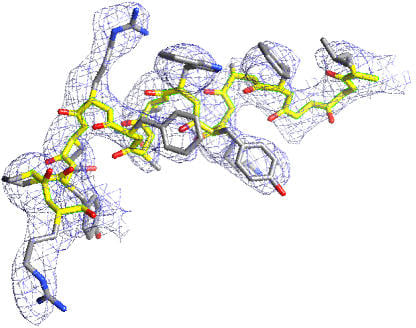
The course is aimed at PhD students and PostDocs who already have experience in cryo-EM and who wish to learn cryo-EM image processing theory and practice with the aim of applying and developing these techniques in the future.

Summer cryo-EM data processing workshop
| - |
In Ann Arbor, MI
Recent technological developments in microscopes, cameras, and computation have led to a “resolution revolution†in the field of cryo-EM, making it possible to determine 3-D structures below a three-angstrom resolution.
The focus of the program â€" which runs June 24 to June 28 â€" is to introduce participants to common image processing packages used to analyze cryo-EM data. This is a hands-on opportunity where trainees will work with instructors to learn how to independently use cryo-EM software packages including cisTEM, cryoSPARC, RELION and Rosetta. Prior experience analyzing cryo-EM data will be helpful as the course is focused on providing participants with practical data processing experience.
The workshop is co-sponsored by Thermo Fisher Scientific, the manufacturer of the four cryo-EM microscopes used at the LSI’s world-class facility. Since its introduction ten years ago, the Thermo Scientific Krios cryo-EM system has proven its ability to visualize three-dimensional structures with near-atomic resolution. This has enabled researchers globally to begin unravelling the complex relationships between structure and function at the molecular and atomic levels.
Instructors of the program include LSI faculty members Michael Cianfrocco, Ph.D., and Melanie Ohi, Ph.D.
Guest lecturers include Xiaochen Bai, UT Southwestern; Alexis Rohou, Genentech; Zev Ripstein from the laboratory of John Rubinstein at the University of Toronto; and Frank Dimaio, University of Washington.

The Eighth Brazil School for Single Particle Cryo-EM
| - |
In Maripora, SP
This single-particle data processing school is an intensive hands-on course/workshop, in which theory and practice are tightly intertwined. The spectrum of topics covered suits attendees that are new to the field as well as those for whom the technique is already of growing importance in their research and who wish to acquire an in-depth understanding of the methodology. Topics range from data collection and three-dimensional reconstruction techniques to the final interpretation of the cryo-EM maps by (flexible) fitting of X-ray structures. The last days of the meeting will be devoted to advanced topics such as dealing with heterogeneous data sets ("4D" cryo electron microscopy) and high-resolution refinements.Â
The attendees are expected to bring along a modern notebook computer onto which all necessary software will be installed. Most processing will take place in the context of the IMAGIC software system but other software packages such as Frealign will also be used. Cryo-EM data sets will be distributed for processing during the course. The participants may bring their own data sets for processing and discussion.Â
It is planned to stay at the 2016 school venue which was located in the country side of Mairiporã at the border of the Rio Juqueri (state of São Paulo).Â
Penn State Summer Microscopy School: one- or two-week options
| - |
In University Park, PA
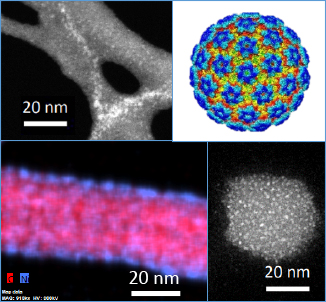
Are you a microscopist in the life sciences interested in learning about EFTEM, STEM and spectrum imaging (EDS & EELS) techniques? Or are you a materials science microscopist interested in learning about cryo-EM, low-dose imaging, and new sample preparation/handling techniques? If so, join Thermo Fisher Scientific (formerly FEI) and Penn State University for a joint cryo-EM course starting August 13, with one-week and two-week options. This course will emphasize TEM methods that can be applied across both life and materials sciences. For example:
- Employing spectroscopy, used in materials science, to provide key elemental information within biological samples.
- Using low-dose and cryo instrumentation designed for life sciences for polymers and weakly-bonded materials.
Week 1 (13-17 August) will consist of topical lectures and live demonstrations.
Week 2 (20-24 August) (optional) will provide hands on training using Penn State's microscopy facility.
Space is limited, so register now.
Fourth international SPHIRE workshop
| - |
In Dortmund
- optimisation of cryoEM datasets for high-resolution refinement and reproducible analysis of the data
incl. :
- CTF estimation (CTER) with error assessment
- robust deep learning particle picking (crYOLO)
- rapid Stable 2D clustering (ISAC2)
- Reproducible Initial model generation (RVIPER)
- automated ML 3D Refinement (MERIDIEN)
- 3D Variablility analysis
- Reproducible Focused 3D Clustering (SORT3D) with statistical analysis of variance (ANOVA)
In addition to the practical sessions, short lectures will be given by SPHIRE developers focusing on crucial steps of the processing, possible pitfalls, as well as the theoretical background behind SPHIRE. Registered participants will have the opportunity to present posters on their research work and are also strongly encouraged to bring their own data, since there will be ample time to interact with the instructors and process their own project with SPHIRE during dedicated hands-on sessions.
The course is aimed at graduate students, faculty, and staff, that currently work in or plan to enter the 3DEM field and wish to use SPHIRE to process cryo-EM single particle data at their home laboratories for their own research projects.
1st FEI-I2PC Cryo-EM Course on Scipion for Facilities
| - |
In Madrid
organizing the First FEI-I2PC Cryo-EM Course on Scipion
*for Facilities*, focused on Facilities needs
in data management and processing and how they can be served by Scipion.
Our Scipion team and collaborators have been working in the last years
in what we call streaming processing. We understand the importance of
having feedback during acquisition and this is precisely what will be
covered in this course. From basic processing like movie alignment and
CTF estimation on the fly, to automatic picking and extraction. Scipion
is equipped with several consensus protocols that might help in your
automated pipeline to screen and select the best micrograph, CTFs or
particles. All with the benefit of Scipion flexibility and ?mix and
match? capabilities. Scipion is also able to gather all the processing
information and present it in a HTML report that could be served over
the web and automatically refreshed. Additionally, Scipion API allows
the integration with your LIMS system. Currently released Scipion 1.2
goes in streaming all the way to particle extraction, and during the
course we will present current work in 2D classification and initial
volume, in collaboration with XMIPP team.
The topic of general pipelines for Single Particle Analysis with Scipion
will also be covered, as it will be Scipion usage on the cloud.
We are targeting a maximum of 20 attendees, and we count with?10
accommodation grants for students and Senior researchers from Instruct
countries.
*Ideal attendee profile:* IT/developer person trying to automatically
process CryoEM acquisition data. (SPA)
EMAG2018: Applications of Electron Microscopy to Beam Sensitive Materials
| - |
In Coventry
Themes
- Low dose electron microscopy techniques
- Ultra low voltage microscopy
- Cryo-electron microscopy
- Environmental, dynamic and time resolved microscopy
- Innovative data acquisition and processing
These may address topics such as:Â
- Advances in low dose imaging and spectroscopy(SEM/(S)TEM/Ion Beam)
- Dynamic SEM/(S)TEM. In situ microscopy techniques
- Tomography
- Electron diffraction
- Beam writing
- Beam-material interaction mechanisms
- Camera and detector technology
- Smart collection (e.g. compressed sensing)
- Low dimensional materials
- Soft matter and hybrid materials
- Catalysis
- Biological and natural materials