Topics
Biological macromolecules
HEC 21. 21st Heart of Europe Bio-Crystallography Meeting
| - |
In Quedlinburg
RapiData 2018
| - |
In Stanford, CA
RapiData 2018 at SSRL is a practical course in macromolecular X-ray diffraction data collection, data processing and structure solution. The aim of the RapiData course is to educate and train young scientists in data collection and processing methods at synchrotron beamlines, using state-of-the-art software and instrumentation
The course will comprise hands-on experiments at the SSRL beamlines, software tutorials, and lectures on the following topics:
- Specimen preparation, tactics in data collection
- X-ray light sources
- X-ray detectors
- Data reduction
- Structure solving by MAD, SAD and Molecular replacement
- Complementary methods (spectroscopy and small angle scattering)
BCA Biological Structures Winter Meeting 2017
|
In Cambridge
The meeting is aimed at giving the audience an insight into the "joy and pain" of protein crystallographic/structural biology research. Speakers have been asked to choose a particular piece of published work from any stage of their career and speak about the "real" story behind it - the people, the chance meeting, the experimental process, the 100's of failed trials that eventually led to "perfect" experiment. The aim here is to give the audience a deeper insight into the processes that lead to the wonderful science that structural biology reveals.
The meeting will be opened by Professor Malcolm Longair, a former head of the department who has recently published a book describing the scientific history of the Cavendish Laboratory. He will present a seminar about the contributions of Perutz, Kendrew, Crick, Watson and Bragg at the Cavendish that help shape structural biology research.
Additional speakers include: the 2017 Nobel Prize winner Richard Henderson, Judith Howard Sir Tom Blundell, Randy Read, Pamela Williams, Ben Bax and Janet Thornton.
Key publications identified by the speakers will be assembled as a pdf-file that can be downloaded from the BSG website. A publication associated with the contents this meeting is planned to appear in the journal Nature Structural & Molecular Biology in 2018.
There will be opportunities to visit the small museum in the Cavendish Laboratory that houses many of the historically important pieces of apparatus which contributed to major discoveries by members of the Laboratory. Dr. David Ward will also be available to show the scanning helium microscope that can be used for non-destructive imaging of biological samples and describe the new features being developed to extend the resolution below 100 nm.
1st CCP4/BGU Crystallography Workshop
| - |
In Beer-Sheba
The workshop is limited to 25 participants, and everybody who is interested is welcome to apply. Is it to be held at Ben-Gurion University of the Negev (BGU).
The workshop program will be suitable for last-year PhD students, as well as postdoctoral researchers and young scientists in their first years of research.
Several of the leading protein crystallography software developers from around the world will present lectures and tutorials and will also be available to help participants with their crystallographic problems, such as processing own data and solving structures during hands-on sessions of the workshop.
The closing date for application is 31.12.2017

EMBO Practical Course on Characterization of macromolecular complexes by integrative structural biology
| - |
In Grenoble
Molecular Neurobiology. EMBO Workshop
| - |
In Heraklion, Crete
5th BioXFEL International Conference
| - |
In New Orleans, LA
American Conference on Neutron Scattering (ACNS 2018)
| - |
In College Park, MD
Topics
- Plenary & Prize Sessions
- Advances in Neutron Methods
- Hard Condensed Matter
- Soft Matter
- Biological Structures and Dynamics
- Neutrons for Energy and Sustainability
- Materials Chemistry and Synthesis
- Structural Materials and Engineering
- Neutron Physics
49th IFF Spring School 2018: Physics of Life
| - |
In Juelich
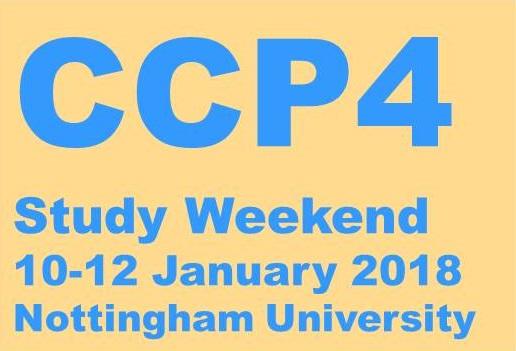
CCP4 Study Weekend: Multi and Serial Crystal Data Collection and Processing
| - |
In Nottingham University
HERCULES 2018 - European School 28 Years of Neutron & Synchrotron Radiation Science
| - |
In Grenoble (and Hamburg, Trieste, Paris-Saclay, and Villigen)
The 1-month school includes lectures (60%), hands-on practicals and tutorials at partner institutes (Elettra and FERMI in Trieste, Italy; ESRF, ILL in Grenoble; Soleil and LLB in Paris-Saclay; PSI in Villigen, Switzerland) and Grenoble Laboratories (CEA, CNRS, EMBL, IBS). (*)
(*)Â also, participation of DESY and the European XFEL to be confirmed for 2018 due to scheduled down-time.
The school includes a common part and two parallel sessions:
- Biomolecular, soft condensed matter structure & dynamics
- Physics and chemistry of condensed matter
- to learn new techniques using neutron and synchrotron radiation
- to expand your theoretical and practical knowledge, not only for your present research but for your scientific career
- to experiment these techniques on world-class instruments & beamlines
- to build a network of relations with fellow young researchers and experienced teachers from all around the World

FRISBI/ Profi Proteomics meeting
|
In Gif-sur-Yvette
FRISBI annual user meeting
|
In Gif-sur-Yvette
MOOC: Biological Crystallography Course
| - |
This course, entitled "Voyage au cÅ"ur du vivant avec les rayons X : la cristallographie", is run as a collaboration between the CEA, the Synchrotron Soleil, the Ecole Polytechnique, the CNRS, and the University Paris Sud. The course will focus on the teaching of biological crystallography to biology students, from the history of the method to its application.
The course, which starts on 6th November 2017, is open to biologists at all levels (from Master's level up to full-time researchers).
Access to the course is free on the France University website:Â https://www.fun-mooc.fr/courses/course-v1:ParisSaclay+71002+session01/about
The course language is French.Â
Â
The Astbury Conversation 2018
| - |
In Leeds
The Astbury Conversation is designed to give an insight into life in molecular detail - whether you are a researcher wanting to know about the latest developments, or you are simply interested in learning more about the hidden - but fascinating â€" world of macromolecules.
The second biennial Astbury Conversation aims to bring together leading researchers from across the globe to discuss the most recent progress in the field of structural molecular biology in its broadest sense. This event is inspired by the pioneering work at Leeds of the Braggs (Nobel prize 1913), and in the 1930s to 60s of Professor Bill Astbury, FRS, a field of research continued today in the Astbury Centre for Structural Molecular Biology.
It is fitting that more than 100 years after the Braggs’ Nobel Prize winning breakthrough we celebrate discoveries in structural molecular biology both within the University and across the wider scientific community by hosting the Astbury Conversation as one of the highlights of the University calendar.
The programme includes;
- An academic Symposium themed around “Allostery in Biology†to include prestigious talks, selected presentations and poster sessions
- Plenary Public Lecture by Nobel Laureate Professor Brian Kobilka of Stanford University,
- A Public Engagement Event themed around “Understanding More about the Secret Life of Moleculesâ€, followed by a wine reception.
Other confirmed speakers include:
Professor David Agard (University of California)
Professor Dame Carol Robinson (University of Oxford)
Professor Hagan Bayley (University of Oxford)
Professor Katrin Rittinger (The Francis Crick Institute, London)
Professor John Briggs (University of Cambridge)
Professor Riki Eggert (King’s College, London)
Professor Babis Kalodimos (University of Minnesota)
Professor Jim Naismith (University of Oxford and Director of the Research Complex at Harwell)
Professor Matthias Rief (Technical University of Munich)
The registration fee for the Symposium is just £49 (no accommodation) or £139 (including overnight accommodation). This includes access to all talks, event materials and meals, including beer and pizza at the poster evening.
Places are limited
Â
Biophysical Society Annual Meeting. Fueling Discovery through Biophysics
| - |
In San Francisco
Fourth joint DLS/CCP4 workshop on MX data
| - |
In Diamond Light Source
Please consider applying for the fourth joint DLS/CCP4 workshop on MX data
collection and structure solution, to be held at Diamond Light Source, UK
from the 30th November to the 7th December 2017.
This course offers the opportunity for you to work alongside leaders in the
field of MX on data from your own crystals. For more details please check
here:
http://www.ccp4.ac.uk/schools/DLS-2017/
The application period is now open and will close on the 6th October.
Applicants will be required to submit a CV/resume, describe their projects
and obtain a letter of support from a supervisor, so please do not wait
until the last minute to apply! Those with crystals and/or data will be
given priority.
Protein Crystallography web course at Birkbeck College
|
In Web
Registration is currently open for the postgraduate certificate course in Protein Crystallography via the web at Birkbeck that begins on Monday, October the 2nd.
It is for the duration of 1 year during which all aspects of protein crystallography will be covered from the fundamentals of protein structure to model validation. The emphasis is very much on techniques and the underlying principles so is ideally suited to students currently enroled on PhD programs or those who wish to expand their skills in structural biology. Information on registration and course content can be found at: http://px17.cryst.bbk.ac.uk/px/course/course.htm under
"General course information"
Although a stand-alone course, the postgraduate certificate in protein
crystallography can also be taken as part of the MSc in Structural
Molecular Biology. For more details, please see
http://www.bbk.ac.uk/study/2017/postgraduate/programmes/TMSBISCL_C/
MXIS 2017: Practical course on in-plate crystallography, with special focus on ligand screening. Part 2
| - |
In EPN campus, Grenoble
Part 1: 8-10 Nov., at the CNRS campus, Montpellier, France
The MXIS training course is dedicated to in situ protein crystallography, with a special emphasis on ligand screening. This workshop is organized in two parts, each one lasting for 3 days. It includes:
- Part 1 (Montpellier): full lectures at the “Centre de Biochimie Structurale†followed by practicals. Topics: plate pre-coating for “Dry†co-crystallization [1], in situ screening on a lab source).
- Part 2 (Grenoble): full lectures at the “Institut de Biologie Structurale†and practical sessions at the ESRF, on beamlines FIP-BM30A and ID30B. Full classes will be done in day 1 while practical sessions will be organized in subgroups, from day 2 to day 3. Topics: in situ diffraction for crystal screening and structure resolution, in situ data processing.
Possibility will be given to participants to practice on their own samples. A fragment library may be available to be used on your sample (to be confirmed later on).
The workshop is limited to 6 and 8 participants for Part 1 and 2 respectively.
No fees are required.
The application period will close on the 8th of October.
Applicants will be required to submit a short CV and a motivation letter to jean-luc.ferrer@ibs.fr.
MXIS 2017: Practical course on in-plate crystallography, with special focus on ligand screening. Part 1
| - |
In CNRS campus, Montpellier
Part 2: 29 Nov. - 1 Dec., at the EPN campus, Grenoble, France The MXIS training course is dedicated to in situ protein crystallography, with a special emphasis on ligand screening. This workshop is organized in two parts, each one lasting for 3 days. It includes:
- Part 1 (Montpellier): full lectures at the “Centre de Biochime Structurale†followed by practicals. Topics: plate pre-coating for “Dry†co-crystallization [1], in situ screening on a lab source).
- Part 2 (Grenoble): full lectures at the “Institut de Biologie Structurale†and practical sessions at the ESRF, on beamlines FIP-BM30A and ID30B. Full classes will be done in day 1 while practical sessions will be organized in subgroups, from day 2 to day 3. Topics: in situ diffraction for crystal screening and structure resolution, in situ data processing.
The workshop is limited to 6 and 8 participants for Part 1 and 2 respectively.
No fees are required.
The application period will close on the 8th of October. Applicants will be required to submit a short CV and a motivation letter to jean-luc.ferrer@ibs.fr