Topics
General
Ultrafast Phenomena in Cooperative Systems. Gordon Research Conference
| - |
In Lucca (Barga)
Chemistry: Responding to key global challenges - a Science and Society Lecture
|
In Liverpool
Professor Catlow will discuss recent developments relating to CO2 conversion and utilisation, the development of renewable energy technologies, food security, global health and safe water. He will look at how chemistry in the UK and internationally is making decisive contributions to key societal challenges; and how problems posed by contemporary issues provide fundamental scientific challenges for the discipline.

The Seventh Brazil School for Single Particle Cryo-EM
| - |
In Sao Paulo
course/workshop, in which theory and practice are tightly intertwined.
The understanding of the principles of cryo-EM data processing stands
central in this event and a few pioneers will explain the approaches to
the participants to the level where they can apply it themselves. The
spectrum of topics covered suits attendees who are new to the field as
well as those for whom the cryo-EM technique is of growing importance
and who wish to acquire an in-depth understanding of its fundamental
principles.
The final days of the meeting will be devoted to advanced topics such as
high-resolution refinements and the processing of heterogeneous data
sets ("4D cryo?EM?). Advanced topics will include:
- Optimizing data collection with direct electrons detectors and exploiting movies.
- Full data set automatic CTF correction.
- Correction of anisotropic magnification.
- Reaching atomic resolution without reference bias: alignment-by-classification (ABC) refinement procedures.
- Unbiased "Random Startup" of 3D and 4D reconstructions.
- 4D refinement procedures for high resolution results using IMAGIC-4D and/or Frealign.
- Fitting and refining atomic coordinates in high-resolution cryo-EM maps (~4? or better) using programs like REFMAC and Coot.
- Validation of the final results.
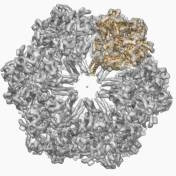
COHERENCE2016. International Workshop on Phase Retrieval and Coherent Scattering
| - |
In Saint Malo

Advanced Methods in X-ray Powder Diffraction
| - |
In Newtown Square, PA
ICDD X-ray Diffraction Clinics
Session II
- Brief review of fundamentals
- Factors affecting accuracy of measured 2theta values: intensity aberrations, specimen displacement, specimen transparency, diffractometer alignment, and the use of external and internal standards
- Factors affecting intensities of diffraction peaks: structure-sensitive properties, specimen-sensitive effects, and measurement-sensitive effects
- Use of computer methods for data reduction and qualitative phase identification: peak-hunting methods, alpha2 stripping, search/match techniques and the Powder Diffraction File™, use of elemental data, error windows and probability searching, and scoring algorithms
- Advanced data mining with the PDF
- Exploration of powder pattern indexing methods
- Quantitative analysis: specimen preparation considerations, Reference Intensity Ratios, absorption correction methods, matrix-flushing methods, and whole-pattern analysis using the Rietveld method
- Structure solution and refinement using the Rietveld method
Fundamentals of X-ray Powder Diffraction
| - |
In Newtown Square, PA
ICDD X-ray Diffraction Clinics
Session I
- Production and properties of X-rays: continuous and characteristic radiation, absorption, scatter and diffraction
- Production of monochromatic X-radiation: choice of source conditions, use of beta-filters, proportional detectors and pulse height selection, monochromators, use of the Si(Li) and Ge(Li) detectors
- Components of the diffraction pattern: expected reflections, Miller indices, unexpected reflections, effect of scatter and fluorescence, factors affecting peak positions and intensities
- The powder diffractometer: optical arrangement, factors affecting instrumental profile widths; choice and function of divergence slits, calibration and alignment, detectors, X-ray optics
- Acquisition of good diffraction data: specimen requirements, preparation techniques, use of standards, and proper operation of powder diffractometers
- Qualitative phase identification: the Powder Diffraction File™, quality of reference patterns, the Alphabetical, Hanawalt, and Fink Indexes, automated methods, and specialized subfiles
- Industrial applications of X-ray powder diffraction
- Hands-on use of personal computers for demonstration of the latest software
- Data mining with the PDF
Practical X-ray Fluorescence
| - |
In Newtown Square, PA
Lectures
- Fundamentals of X-ray Physics
- WDX and EDX X-ray spectrometry instrumentation
- Qualitative and semi-quantitative analysis
- Introduction to quantitative analysis
- Types and sources of error
- Precision and accuracy
- Calibration strategy
- Drift, line and interelement correction application
- Fundamental parameters
- Maintaining instrument integrity
- Specimen preparation
Workshops:
- XRF instrumentation, components, scope, and comparison using live and disabled WDX and EDX instrumentation.
- Selection of parameters for operation
- Demonstration of personal computer exercises in qualitative and semi-quantitative WDX and EDX analysis
- Demonstration of personal computer exercises employing polynomial regression, line overlap, empirical and fundamental parameter corrections during calibration
- Specimen preparation lecture and demonstration of the use of mixers, grinders, presses, fusion apparatus, etcetera
- Discussion of problems encountered by participants
TAILOR2016. TAILored surfaces in Operando conditions: structure and Reactivity
| - |
In Fontainebleau
This meeting will be devoted to recent advances in the operando investigation of reactivity at surfaces from both experimental and theoretical points of view.
The sessions of the workshop will cover various topics, mainly related to operando studies of the structure and the reactivity of a large range of catalytic tailored materials, including model surfaces, well-defined supported nanoparticles and electrochemical systems. The oral presentations and poster sessions will be open to a wide list of experimental techniques including spectroscopy, microscopy, X-ray scattering and scanning probes, new developments of instrumentation, and also to recent advances in the field of theoretical approaches and models of surface science and heterogeneous catalysis.
Confirmed invited speakers:
- Matteo Amati, Elettra Sincrotrone, Trieste, Italy
- Hiroshi Kondoh, Keio University, Yokohama, Japan
- Frances M.Ross, Thomas J. Watson Research Center, Yorktown Heights, USA
- Alexander Schluger, University College London, England
- Oleg Shpyrko, University of California, San Diego, USA

11th SOLEIL Users' Meeting
| - |
In Polytechnique (Palaiseau) and at SOLEIL
Plenary speakers
- Susumu Yamamoto - Inst. for Solid State Phys. - Univ. of Tokyo (Japan)
"Probing carriers and molecules on oxide surfaces by X-ray" - Emmanuelle Schmitt - Polytechnique (France)
"Structural and functional studies of the translation initiation factor e/alF2" - Serena DeBeer - Max Planck Institute (Germany)
"X-ray spectroscopic studies of Biological Dinitrogen Reduction"
Topics
- Biology / Health
- Chemistry and Physico-chemistry â€" in situ reactivity â€" Soft matter
- Electronic and magnetic property of matter â€" Surfaces and Interfaces
- Diluted Matter
- Matter & material properties: Structure, Organisation Characterisation, Elaboration
- Cultural heritage, archaeology, environment, geosciences
- Temporal resolution and dynamics
- Spatial resolution
- Multi beamline Measurements
A satellite workshop will be held on Tuesday 19th and Wednesday 20th of January, 2016 at SOLEIL:
HI-SPEARÂ (HIgh resolution SPEctroscopies for Applied Research)
Hi-SPEAR. SOLEIL 2016 satellite workshop
| - |
Various spectroscopic techniques such as infrared spectroscopy, X-ray photoelectron spectroscopy, XAFS (NEXAFS / XANES), X-ray magnetic circular dichroism and inelastic X-ray Scattering will all be presented and discussed during the meeting. Potentials for further developments in these fields will be greatly welcomed. Ample opportunities for discussion will be available during coffee and lunch breaks and also at the poster session.
Â
International School on Charge and Spin Density: From Experimental Determination to Interpretation
| - |
In Nancy
Robert F. Stewart school on electron density and related properties
High resolution X-ray diffraction and polarized neutron diffraction are the most relevant methods for respectively modeling charge density and magnetic moment (spin) distributions. Combining both experimental methods in a joint refinement leads to a precise spin resolved electron distributions in magnetic materials.
The aim of this School is to teach all participants the basic knowledge about paired and unpaired electron density distributions using neutron and X-ray diffraction methods and to practice existing refinement software.
This school is dedicated to electron density and its analysis with the emphasis on the combination of complementary experimental methods to enrich the electron density models leading to more complete description of the electronic behavior of crystalline solids.
The school will end with a round table about application of topological analysis and electrostatic properties of a charge distribution in chemistry, biochemistry and physics. Also we will discuss the role of the spin density in material science and how to combine experimental and theoretical methods for a better electron density modeling.
Target Audience: The audience will be typically early career scientists e.g. assistant professors, post-doctoral research fellows, and graduate students of crystallography, medicinal chemistry, solid state and materials science, biochemistry, theoretical, quantum and computational chemistry.
The number of participants is limited to 50.
The bursaries application can be made for ECA and AFC
9th K.H. Kuo Summer School of Electron Microscopy and 2016 Kuo Symposium on 3D Cryo-EM Molecular Imaging
| - |
In Beijing
ISC Granada 2016. 5th International School on Crystallization: Drugs, Foods, Agrochemicals, Minerals, New Materials (ISC2016)
| - |
In Granada
Topics of the School
- Solution properties
- Nucleation: classical and non-classical approaches
- Crystal growth kinetics and mechanisms
- Crystallization routes
- Crystallization techniques
- Crystal morphology
- Mineral textures
- Polymorphism
- Hydrates and solvates
- Crystallization screening
- Industrial (mass) crystallization
- Chirality
- Biomineralization
- Co-crystals
- Diamonds growth

6th Meeting on X-ray and Other Techniques in Investigations of the Objects of Cultural Heritage
| - |
In Krakow

2nd International Symposium on Nanoparticles-Nanomaterials and Applications. 2nd ISN2A-2016
| - |
In Caparica, Lisbon
Symposium Subjects:
- Nanoparticles/Nanomaterials in Environmental Sciences
- Nanoparticles/Nanomaterials in Medicine
- Nanoparticles/Nanomaterials in Biology
- Nanoparticles/Nanomaterials in Chemistry
- Toxicology of Nanoparticles/Nanomaterials
- Nanoparticles/Nanomaterials in Innovation
- Computational Studies in Nanoparticles/Nanomaterials
- Nanoparticles/Nanomaterials for Energy Storage
AIAA Science and Technology Forum and Exposition (SciTech 2016)
| - |
In San Diego, CA
AIAA/ASCE/AHS/ASC Structures, Structural Dynamics, and Materials Conference

Joint European Magnetic Symposia (JEMS)
| - |
In Glasgow

Ligand Recognition & Molecular Gating. Gordon Research Conference
| - |
In Lucca (Barga)
Molecular Basis of Ligand Recognition and Gating in Transmembrane Signaling and Transport
Ligand Recognition & Molecular Gating. Gordon Research Seminar
|
In Lucca (Barga)