Topics
Biological macromolecules
8th European Crystallography School
| - |
In Berlin
ECS8, the 2023 European Crystallographic School, is planned as an in-person event.
The school will be held in Berlin, at the site of the BESSY II electron storage ring operated by the Helmholtz-Zentrum Berlin.
Up to 100 young international students and scientists will have the chance to meet with renowned lecturers and tutors and become acquainted with the most up-to-date principles and applications of X-ray crystallography.
Topics
- Fundamentals of Crystallography
- Single Crystal Diffraction
- Powder Diffraction
- Synchrotron Radiation in Crystallography
- Macromolecular Crystallography
- Applications of CrystallographyÂ
Fundamental lectures will be taught during the mornings. Afternoons will be dedicated to lectures on applications and hands-on tutorials.
Application for ECS8 is open until 28 February 2023.
Frontiers of Structural Biology in Complex Environments, a symposium at the ACS National Meeting
| - |
In Indianapolis, IN & Hybrid
Decades of careful experimentation and analysis by biophysical chemists have formed a foundation for contemporary scientists to understand the structure and function of proteins in the incredibly complex environments of living organisms. Recent advances in experimental and computational approaches have made it possible to describe and predict the structure, dynamics, and interactions of biomolecular assemblies in complex environments in vitro, in situ, in cells, and in the extracellular environment. Despite these exciting advances, many challenges remain in integrating techniques and approaches that span multiple time and length scales, and in understanding how atomic level changes drive functional biological outputs in the cellular environment. The symposium will bring together experimentalists and theorists who apply cutting-edge methods to determine the structure of biomolecules at or near atomic level precision in such environments. Speakers will discuss recent progress in the field and future challenges in the areas (1) atomic resolution studies of large complexes, (2) biomolecular condensation, (3) in situ studies in cell and cell-like environments, (4) in vitro cellular environments, and (5) biophysical experiments in multi-cellular environments.
Â
The abstract deadline is October 17, 2022
Hot Topics in Contemporary Crystallography 5: Experimental advances in macromolecular crystallography
| - |
In Dubrovnik
Since 2014, the Hot Topics in Contemporary Crystallography (HTCC) workshops have tackled the most fascinating achievements in both experimental methods and theoretical approaches that have recently brought structural research to the forefront of natural sciences. HTCC 5 will explore structural research of biological macromolecules (proteins, nucleic acids and complexes) from a highly practical perspective, putting special emphasis on crystallization, data processing and database (PDB and NDB) digging.
The lecturers are a mix of academic researchers, university teachers, software developers and dedicated equipment manufacturers with a rich history of practical work in and around macromolecular crystallography. Students - from both industry and academia - will be encouraged to present their own work, either on a poster or by holding a short discussion-triggering presentation (DTP). In addition, they are encouraged to bring any protein (or nucleic acid) samples that have been found to be particularly resistant to crystallization to the workshop, where they will benefit from state-of-the-art technology and expert help.
Diamond-CCP4 Data Collection and Structure Solution Workshop 2022
| - |
In Diamond Light Source
2022 MicroED workshop
| - |
In Los Angeles
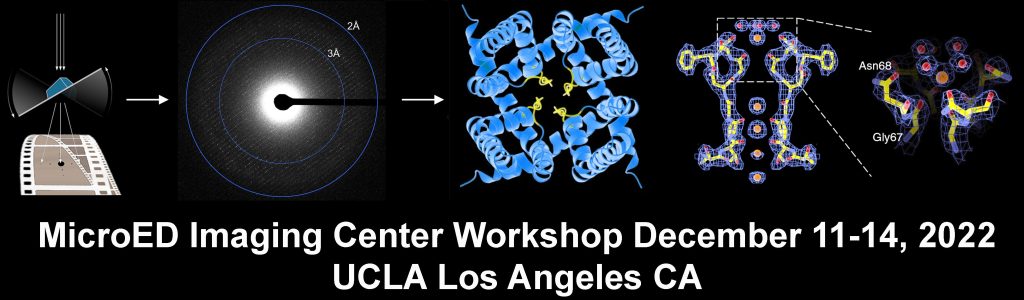
This workshop will be held at the MicroED Imaging Center at UCLA and will contain both lectures and hands on demonstrations and training. It is open to both academia and industry. The cost for academic attendees is $500. The cost for attendees outside academia is $1,500.
Â
Topics covered
- Sample preparation methodologies for proteins and small molecules
- MicroED data collection
- Camera performance
- Cryo-FIB-milling procedures for MicroED
- Data analysis software, structure solution, and refinement
S2C2 half-day virtual workshop on Integrative Structural Biology
|
In Online
This workshop is being held as part of a suite of workshops during the SSRL/LCLS Annual Users' Meeting.
There is no cost to attend.
Â
EMBO Workshop In situ structural biology: from cryo-EM to multi-scale modelling
| - |
In Heidelberg
MC2023. Microscopy Conference
| - |
In Darmstadt
Organized by the German Society for Electron Microscopy
There are highly prominent plenary speakers from the Material and Life Science EM community scheduled:
Ralf Bartenschlager (Heidelberg/DE)
Sarah Heigh (Manchester/UK)
Peijun Zhang (Oxford/GB)
Mathieu Kociak (Paris/FR)

EMBO practical course: Volume electron microscopy by automated serial SEM
| - |
In Lausanne
2nd ARC CCeMMP Research Symposium
|
In Monash University Parkville Campus
In-person only. 10am-5pm with networking 5pm-6.30pm AEST.
2022 Icknield Workshop
| - |
In Harwell
This course is largely aimed at structural biologists with high/medium resolution EM maps for modelling building and refinement. This four-day course (6th-9th September) will host some of the leading software developers and provide ample contact time to allow delegates to discuss their data in detail alongside traditional lectures and tutorials. This is a comprehensive course for EM model building covering advanced use of ARP/wARP, Buccaneer, CCP-EM, Coot, FlexEM, ISOLDE, LocScale, MolProbity, Refmac, Privateer and new validation tools. It will cover all aspects of modelling building including: map optimisation, automated model building, medium-resolution refinement, high resolution refinement, interactive refinement, validation and deposition.
Â
The course will be held at the RAL / Diamond campus, Harwell, UK, site of the eBIC national facility. Registration fee is £360.00 and we will provide food and three nights accommodation. Delegates are asked to meet their own travel costs.
Â
The course is limited to 20 delegates which will be selected from all applicants. A maximum of 40 applicants can register interest.
Â
* Confirmed tutors / topics:

Arjen Jakobi, Alok Bharadwaj (TU Delft) : LocScale

Kevin Cowtan, Soon Wen Hoh (University of York) : Buccaneer

Grzegorz Chojnowski (EMBL) : ARP/wARP, findMySequence, checkMySequence

Judit Debreczeni (Astrazeneca), Lucrezia Catapano (MRC-LMB Cambridge) : Coot

Keitaro Yamashita, Rangana Warshamanage, Rob Nicholls (MRC-LMB Cambridge) : REFMAC, Servalcat, EMDA

Maya Topf, Tristan Cragnolini, Aaron Sweeney (CSSB Hamburg) : Flex-EM, TEMPy

Tristan Croll (University of Cambridge) : ISOLDE

Jon Agirre (University of York) : Privateer

Jane Richardson (GCB Duke) : Model validation, Molprobity

Jack Turner (EBI) : EMDB

Mihaly Varadi (EBI) : AlphaFold-DB, 3D-Beacons
* Registration:
https://urldefense.com/v3/__https://cvent.me/42xnY9__;!!Mih3wA!FECYFrFcZ1zLd2iXpFHaabT1MX3mIIYYU37FRgaKyZ-1gwc5YmKLdbLVxho0pkOfgcJ9TDc8lI5N_xwJBS8uaGNczG_kWo5o$
Instruct-ing Structural Biologists Towards Integration
| - |
In Online
Organized by CERM/CIRMMP Italy centre.Â
During three practical sessions (9:00-13:00 CEST) the participants will be
trained on different software for integrating multiple types of Structural
Biology experimental data.
On the final day (13:00-19:00 CEST), renowned researchers in the field will
present examples of studies for which Integration of different techniques
proved to be the only way to achieve their goals. Psychological aspects of
science communication and the philosophical implications of integrative
approaches will also be discussed.

SESAME-Africa Online Workshop
|
In virtual
Diffraction Methods in Structural Biology Gordon Research Conference
|
In Lewiston, ME; USA
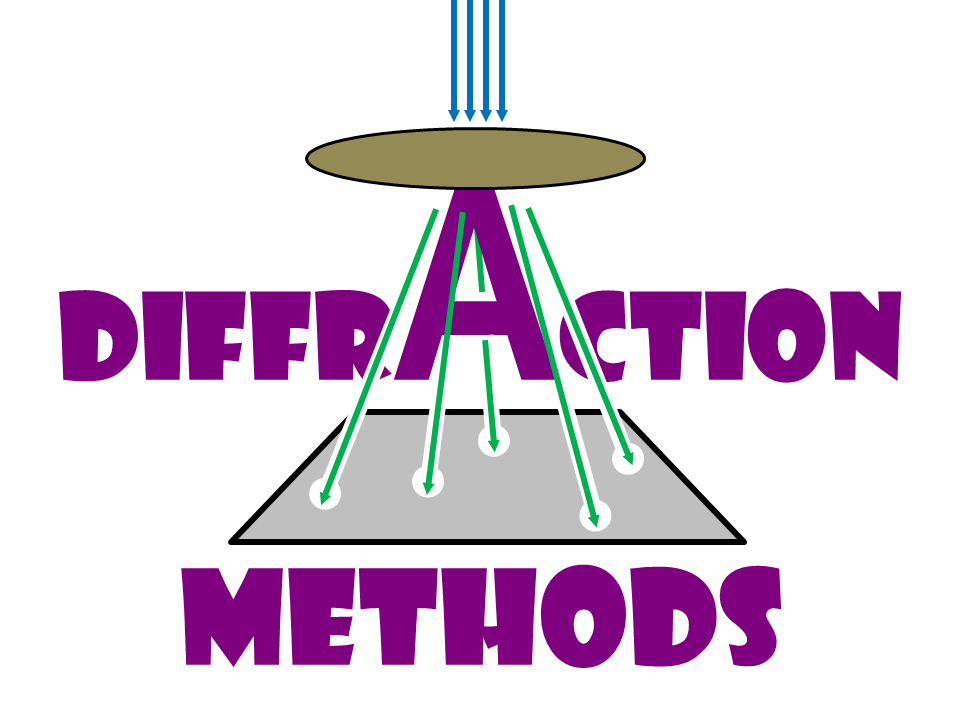
Structural biology is entering a new era. Not just the virus and biomedicine, not just astounding breakthroughs in prediction, but new and complimentary approaches are exploding onto the scene. It is time to imagine what could be achieved if there were no barriers to structural information, and to contemplate how we will combine our diverse strengths to overcome obstacles we always believed were insurmountable. An excellent place to start is crystallization, where the impact of any improvement would be very high, but predictive theory remains elusive. Preparation of electron microscopy grids faces a similar challenge. Each session will focus on a critical barrier in structural biology, and the goal will be formulating the best advice to newcomers to the field who will face these challenges. Where possible, test data with a clear scoring system will be defined, and friendly competition between proponents of different approaches will be encouraged. Current best practices will be described, evaluated and compared and the relative effectiveness of alternative approaches will be announced at the meeting. Open discussion is expected to uncover new insights, new approaches, new algorithms, and no doubt flaws in the tests. By the end of the meeting we will have established not only new best practices, but also improved the criteria we use to assess them.
28th Croatian-Slovenian Crystallographic Meeting
| - |
In PoreÄ, Croatia
I2PC â€" INSTRUCT COURSE: Introduction to model building
| - |
In Online
Remote course
June 22th to June 24th (2022) (3 days):
*3 Mornings: Presentations and training.
*2 Afternoons: Personal work.
Â
Hands-On Training Course that introduces the fundamentals and main tools needed to build an atomic model in the context of cryo-EM, starting from a 3D map and the aminoacid sequence of each protein chain. The tools will be used inside the Scipion framework (de la Rosa-Trevin et al. 2016) and examples will focus on the modeling by homology scenario, including AlphaFold2 prediction models.
Expected impact for young researchers
Atomic models based on high-resolution density maps are the ultimate result of the cryo-EM structure determination process. In this course, we introduce the basic tools needed to perform this task. Ph.D. students, as well as post-docs, will undoubtedly benefit from approaching this technique since atomic models guide our mechanistic interpretation of cryo-EM structures.
 Registration Fee: 50€
Â
CryoEM Current Practices webinar: Cryo-EM study of cardiac ATTR fibrils and structure-based design of clinical tools for ATTR amyloidosis
|
In Online
Time: Thursday, May 26, 2022 at 9 AM pacific / 12 PM eastern time
From NIH Transformative High Resolution CryoEM Program sponsored service centers

Speakers: Lorena Saelices Gomez & Binh Nguyen, Center for Alzheimer's and Neurodegenerative
Diseases, Department of Biophysics, UT Southwestern Medical Center.
Second annual Cryo-EM Course at LBMS, BNL
| - |
In Online
A four-day VIRTUAL Cryo-Electron Microscopy
This course will introduce high-resolution Cryo-EM to the structural biology research community. It will include image formation and three-dimensional reconstruction theories and available software, tutorials, and demonstrations for data collection and analysis.
Confirmed speakers and instructors include:

David DeRosier, Brandeis University
Chen Xu, Umess
Tamir Gonen,UCLA
Gabriel Lander, Scripps Research
Oliver Clarke, Columbia University
Dongyan Tan, Stony Brook University
Jun Liu, Yale University
Digvijay Singh, UCSD
Jianfeng Lin, Yale University
Raphael Park, Yale University
Muyan Chen, Baylor College of Medicine
Yong Xiong, Yale University
Qun Liu,Brookhaven National Laboratory
Guobin Hu,Brookhaven National Laboratory
Liguo Wang, Brookhaven National Laboratory
Â
https://www.bnl.gov/cryoemcourse/files/pdf/agenda.pdf
Kenneth A. Taylor Symposium on Cryo-EM and Muscle Biology
| - |
In Tallahassee, FL
A symposium in Dr. Kenneth Taylor's honor to celebrate his lab's accomplishments and to highlight advances in cryo-EM and muscle research. The symposium will feature many notable National Academy investigators whose research focusses on muscle biology and cryo-EM.
It will run 8:30 AM - 5:30 PM on May 13th and 14th and will be in person only. Lunch and coffee breaks will be provided. Registration is required, and attendance will be capped. Please secure your spot by submitting your registration ASAP here.
Frederick National Laboratory Cryo-EM Training Workshop
| - |
In Frederick, MD
Frederick National Laboratory will host a new training program in
Frederick, Maryland, September 12-16 for cancer researchers who want to
build expertise in cryo-electron microscopy. The workshop will cover topics
from grid preparation, imaging, and data processing. This workshop will be
in-person and attendees will have the opportunity to gain hands-on
experience with all stages of the cryo-EM workflow.