Events
Training courses
Instruct course on Image Processing for Electron Microscopy in the cloud
| - |
In Madrid
EMBO Practical course Cryo Electron Microscopy and 3 Dimensional Image Processing (CEM3DIP 2018): of Macromolecular assemblies and Cellular tomography
| - |
In New Delhi
The course will focus on structural biology using Transmission Electron Microscopy and aims to teach the participants the basic principles and practical aspects of specimen preparation, Image processing and 3D reconstruction in Single Particle Cryo Electron Microscopy (SPCryoEM) and Cellular Tomography. This is a hands-on course, in which theory and practicals are tightly intertwined. There will be practical session to teach sample preparation for Single particle â€"ve stain and cryoEM. The topics covered will suit both the new entrants to the field as well as those who wants to acquire an in-depth understanding of the fundamental principles and practical aspects.
Applications are invited from PhD students, Post Docs and Researchers (Faculties/PI’s and protein crystallographers) who wish to acquire knowledge in SPCryoEM and Cellular Tomography. Applicants from all over the world are encouraged to apply.
The basic format of the course will be theoretical lectures in the mornings followed by hands on practical session on specimen preparation and image processing on computer workstations in the afternoon. Evenings will be reserved for poster presentations by the participants and research talks by the participants/instructors.
The instructors/speakers for the course will include:
- Tony Crowther (MRC-LMB),
- Wah Chiu (Stanford University),
- Jack Johnson (TSRI),
- Marin van Heel (Leiden University),
- Edward Morris (ICR),
- Paula da Fonseca (MRC-LMB),
- Peter Rosenthal (TFCI),
- Carsten Sachse (EMBL Heidelberg),
- Sara Sandin (NTU),
- Ardan Patwardhan (EMBL-EBI),
- Maya Topf (Birkbeck),
- Srinivasan N (IISc),
- Tanmay Bharath (Dunn School of Pathology),
- Agnel Praveen (Birkbeck),
- Tanveer Hussain (IISc),
- Sonja Welsh (FEI - part of Thermo Fisher Scientific),
- Jayati Sengupta (IICB),
- Manidipa Banerjee (IIT Delhi),
- Ramanathan Natesh (IISER Thiruvananthapuram),
- Vinothkumar KR(NCBS),
- Partha Pratim Datta (IISER Kolkota),
- Somnath Dutta (IISc).
MOOC: Biological Crystallography Course
| - |
This course, entitled "Voyage au cÅ"ur du vivant avec les rayons X : la cristallographie", is run as a collaboration between the CEA, the Synchrotron Soleil, the Ecole Polytechnique, the CNRS, and the University Paris Sud. The course will focus on the teaching of biological crystallography to biology students, from the history of the method to its application.
The course, which starts on 6th November 2017, is open to biologists at all levels (from Master's level up to full-time researchers).
Access to the course is free on the France University website:Â https://www.fun-mooc.fr/courses/course-v1:ParisSaclay+71002+session01/about
The course language is French.Â
Â
BioCAT Advanced SAXS Training Course
| - |
In ANL, Chicago, IL
Protein Crystallography web course at Birkbeck College
|
In Web
Registration is currently open for the postgraduate certificate course in Protein Crystallography via the web at Birkbeck that begins on Monday, October the 2nd.
It is for the duration of 1 year during which all aspects of protein crystallography will be covered from the fundamentals of protein structure to model validation. The emphasis is very much on techniques and the underlying principles so is ideally suited to students currently enroled on PhD programs or those who wish to expand their skills in structural biology. Information on registration and course content can be found at: http://px17.cryst.bbk.ac.uk/px/course/course.htm under
"General course information"
Although a stand-alone course, the postgraduate certificate in protein
crystallography can also be taken as part of the MSc in Structural
Molecular Biology. For more details, please see
http://www.bbk.ac.uk/study/2017/postgraduate/programmes/TMSBISCL_C/
MXIS 2017: Practical course on in-plate crystallography, with special focus on ligand screening. Part 2
| - |
In EPN campus, Grenoble
Part 1: 8-10 Nov., at the CNRS campus, Montpellier, France
The MXIS training course is dedicated to in situ protein crystallography, with a special emphasis on ligand screening. This workshop is organized in two parts, each one lasting for 3 days. It includes:
- Part 1 (Montpellier): full lectures at the “Centre de Biochimie Structurale†followed by practicals. Topics: plate pre-coating for “Dry†co-crystallization [1], in situ screening on a lab source).
- Part 2 (Grenoble): full lectures at the “Institut de Biologie Structurale†and practical sessions at the ESRF, on beamlines FIP-BM30A and ID30B. Full classes will be done in day 1 while practical sessions will be organized in subgroups, from day 2 to day 3. Topics: in situ diffraction for crystal screening and structure resolution, in situ data processing.
Possibility will be given to participants to practice on their own samples. A fragment library may be available to be used on your sample (to be confirmed later on).
The workshop is limited to 6 and 8 participants for Part 1 and 2 respectively.
No fees are required.
The application period will close on the 8th of October.
Applicants will be required to submit a short CV and a motivation letter to jean-luc.ferrer@ibs.fr.
MXIS 2017: Practical course on in-plate crystallography, with special focus on ligand screening. Part 1
| - |
In CNRS campus, Montpellier
Part 2: 29 Nov. - 1 Dec., at the EPN campus, Grenoble, France The MXIS training course is dedicated to in situ protein crystallography, with a special emphasis on ligand screening. This workshop is organized in two parts, each one lasting for 3 days. It includes:
- Part 1 (Montpellier): full lectures at the “Centre de Biochime Structurale†followed by practicals. Topics: plate pre-coating for “Dry†co-crystallization [1], in situ screening on a lab source).
- Part 2 (Grenoble): full lectures at the “Institut de Biologie Structurale†and practical sessions at the ESRF, on beamlines FIP-BM30A and ID30B. Full classes will be done in day 1 while practical sessions will be organized in subgroups, from day 2 to day 3. Topics: in situ diffraction for crystal screening and structure resolution, in situ data processing.
The workshop is limited to 6 and 8 participants for Part 1 and 2 respectively.
No fees are required.
The application period will close on the 8th of October. Applicants will be required to submit a short CV and a motivation letter to jean-luc.ferrer@ibs.fr
Instruct-ERIC course on Biophysical Characterisation of Macromolecules and Quantification of Biomolecular Interactions
| - |
In Amsterdam
The course will include theory and practical sessions on thermal shift assays (also label free), Surface Plasmon Resonance, sothermal Titration Calorimetry, Miscroscale Thermophoresis , Fluoresence Methods, Stopped Flow, and the Graphpad/Prism and Kintek analysis software.

The 9th AONSA/The 2nd Neutron and Muon School
| - |
In J-PARC, Tokai
The school provides neutron and muon beam research training for newcomers to the technique from a variety of backgrounds. In addition to lectures, the course provides practical sessions of hands-on experiments and data analysis. The school has a registration fee of JPY 30,000 - this fee includes a room charge and full board throughout the entirety of the school course. Financial support is available for participants travelling from developing countries.
For more information, and registration links, please visit:
http://www.cross-tokai.jp/9thAONSAschool/about.html
Registration deadline: 30th July 2017Â
Â
Nano-scale Materials and Advanced Characterization Techniques. A New European Advanced Training Course
| - |
In Dresden

NEUBIAS Training school on Bioimage Analysis
| - |
In Gothenburg
2nd Training School for Early Career Researchers (TS4)
2nd NEUBIAS. The Bioimage Analysis Community Conference
| - |
In Szeged
2x Training schools: for early career invesigators (27-30 Jan) and for Bioimage Analyst (27-30 Jan).
Taggathon: Bridging Life Science & Image Analysis through online tools (28-30 Jan)
Bioimage Analysis Symposium for Bioimage Analysts, Developers and Life Scientists.
Croissance de cristaux pour l’optique et techniques de caractérisations associées
| - |
In Paris
Thèmes abordés :
- croissance cristalline et caractérisation des défauts
- mise en forme des matériaux
- spectroscopie des ions de transition
- tests laser et qualification des matériaux
- optique non linéaire et thermo-optique
- propriétés électro-optiques
- endommagement laser des cristaux
- micro- et nanostructuration
- intégration dans les dispositifs
CRISTECH2017. Formation àla cristallogenèse
| - |
In Bordeaux

Sixth basic course on symmetry and group theory
| - |
In Tsukuba
The training course is normally held biannually (March and August) and aims at providing a solid background in symmetry and group theory to students and scientists working on crystalline materials. It is divided in two branches:
- Basic course: open to everybody, no pre-requisite apart from basic matrix algebra:
- Advanced course: open to former participants of the basic course.
Both courses usually span five full days. Exercices proposed during the whole course are integral part of the course: participants are requested to actively take part in solving the proposed exercises. Evening sessions are proposed for discussion, practicals, solution to the exercises, questions & answers. Didactic material is distributed before and during the lectures and also made available in electronic form.
ProgramBasic course
- Abstract algebra and the notion of group
- Introduction to crystallographic symmetry and lattices
- Morphological symmetry
- Stereographic projection, with exercises
- Crystallographic point groups and geometric crystal classes
- Symmetry elements with a translational component (screw axes and glide planes)
- Introduction to space groups: basic notions and the Hermann-Mauguin symbolism
- Graphical construction of space groups
- Practicals on the graphical construction of space groups
- Metric tensor and applications
- Matrix representation of symmetry operations
- Change of axial settings and alternative settings of space groups
- Normalizers of point and space groups
- Chirality
- Wyckoff positions, Wyckoff sets
- Factor groups, symmorphic groups
- Crystallographic orbits
- Reciprocal lattice and systematic absences
- Group-subgroup relations
- Structure-substructure relations and applications to displacive phase transitions
Language
The official language of the training course is Japanese. No simultaneous interpretation is provided.
Sokendai Interdisciplinary Lecture
From the fifth basic course, this training course has become part of the education provided by Sokendai, the Graduate University for Advanced Studies: University students can get credits through this university for attending the training course.
Lecture notes
The content of the lectures of the basic course is now partly being published in a series of didactic articles in the Journal of the Crystallographic Society of Japan. The first article is available from the J-Stage webiste at this address.
Venue
The training course is normally held at KEK, Tsukuba campus. Occasionally, alternative venues are considered, depending on the availability of the facilities and local organizers. The third basic was held at the Institute for Protein Research, Osaka University.
Lecturer
Prof. Massimo Nespolo, Université de Lorraine, France (on behalf of MaThCryst)
Local Organizing Committee
Dr. Maki Okube, Tohoku University
Prof. Takashi Kamiyama, KEK
Prof. Noriyuki Igarashi, KEK
Further information
Details are available at the Japanese web site.
MX BAG Training. Training sessions for user of the Macromolecular Crystallography (MX) beamlines
| - |
In Didcot, UK
The aim is to provide MX users with sufficient training to be able to operate any of the Diamond MX beamlines efficiently and to get the most benefit from their beam-time. The training will involve hands-on sessions on the suite of five operational MX beamlines (http://www.diamond.ac.uk/mx-home/) as well as offline software sessions.
Â
Sessions include:
5th July afternoon session hands-on software:
Two tutorial sessions:
- CCP4
- DIALS
6th July, MX beamlines and data room sessions:
- MX software: automation in data analysis
- Multi axis goniometry / SAD Anomalous data collection
- Introduction to VMX-i
- I24 new end station/ In situ diffraction
- Fragment screening â€" I04-1/Lab36
- Experiment database: new ISPyB
Â
Â
Registration is free-of-charge with lunch provided on the 5th and 6th July, and accommodation and dinner for the night of July 5th. Travelling expenses within the UK will also be provided. The training is targeted at all users, and is not limited to students and post docs. It is essential that each BAG sends at least one representative per calendar year.
Â
Places are limited to twenty five participants. The registration deadline is on the June 25th 2017 at 11:59. Registration is now open.
CSHL X-ray Methods in Structural Biology Course
| - |
In Cold Spring Harbor, NY
 June 15th deadline for applications.
This immersive course is an outstanding place to learn both the theoretical
and practical aspects of Macromolecular Crystallography because of the
extensive lectures from world-renowned teachers a continuous and the
hands-on experiments.
This 2017 course is the 30th year that this course has been taught at CSHL
with an All-Star cast of instructors. Along with the return of the
long-time instruction team of Alex McPherson, Gary Gilliland, Bill Furey
and Jim Pflugrath, there are established additional roles for Tassos Perrakis (NKI),
Paul Adams (LBL), Janet Newman (CSIRO), supplemented by many, many others
(see the course flyer linked above for more name dropping) to help us give
the participants an experience in Macromolecular Crystallography learning
that cannot be found anywhere else.
Â

Atomistic Modeling for Neutron Scattering Workshop
| - |
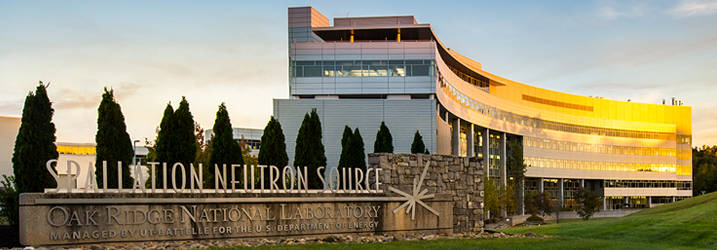
In Spallation Neutron Source, ORNL
This workshop will bring together atomistic modelling experts with neutron scattering users to teach the modelling techniques and also provide the opportunity for the two communities to discuss current limitations, new capabilities, and future developments. Â The workshop will consist of a combination of tutorials and lectures and include practical sessions on CASTEP and CP2K. Â
Further information and registration can be found at:
https://conference.sns.gov/event/76/Â
The workshop is limited to 40 participants and selected applicants will be notified on or before 22nd May.
High-Accuracy CLEM: Applications at Room Temperature and in cryo
| - |
In Heidelberg
Structural Bioinformatics
| - |
In Hinxton