Events
Schools
Spring School on Condensed Phase Spectroscopy. First Photon School at HZB
| - |
In Berlin
Covering:
- Photon Absorption and Photon and Electron Emission
- Ground-State and Excited State Molecular Structure
- Liquid and Solid Phase
- Theory and Experiment
US School on Total Scattering Analysis
| - |
In ORNL Oak Ridge TN
This school is aimed at introducing total scattering data and modelling methods, demonstrating their use in understanding complex functional materials, and reviewing recent developments and future directions in the technique.
Most of the school will be focused on providing hands-on training with total scattering analysis software, with the balance focused on providing a technical foundation and highlighting exemplary work in the community.
CETS2017: 11th Central European Training School on Neutron Techniques
| - |
In Budapest
We welcome PhD and master students, post-doc scientists, as well as newcomers to neutron research from the field of structural research in physics, chemistry, biology, material science etc.
The training consists of 2 days of lectures and 3 days of experimental work. Available instruments:
Small Angle Neutron Scattering (YS), Reflectometer (GINA), Prompt Gamma Activation Analysis (PGAA), Neutron imaging (RAD/NIPS-NORMA) and Neutron diffractometer (MTEST)
Grants (in limited number) for EU students are available.

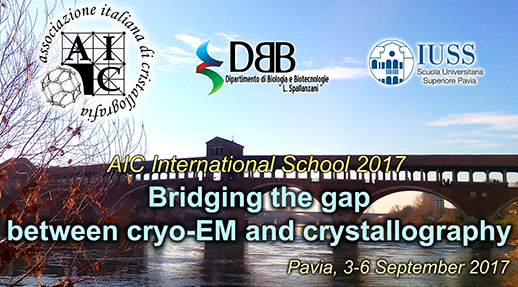
AIC International Crystallography School (AICS2017)
| - |
In Pavia
Bridging the gap between cryo-EM and crystallography
AICS2017 "Bridging the gap between cryo-EM and crystallography" will offer
the opportunity to young researchers in biochemistry or structural biology
at the PhD/postdoctoral level to approach the fundamental questions arising
from the cryo-EM experiment setup. Central topics will include evaluation of
sample suitability for analysis and its preparation, choice of appropriate
instrumentation for single particle, tomography or electron diffraction
approaches, data processing and interpretation of results. A showcase of
recent results will contour the tutorial sessions.
Deadline for registration: 15 June 2017
São Paulo School on Light, Neutrons and X-Rays
| - |
In São Paulo
The main objective of the São Paulo School on Light Neutrons and X-ray (1st SPSLNX) is to introduce young PhD students, postdocs and researchers, from different areas and background, to the applications of light, neutrons and X-rays scattering. In this school, worldwide experts will teach the theoretical aspects and discuss advanced applications using scattering techniques for structural characterization.

JCNS Laboratory Course Neutron Scattering
| - |
In Munich
The course will consist of one week of lectures and exercises and one week of practical training at the neutron scattering facilities of Heinz Maier-Leibnitz Zentrum MLZ. It is the aim of the course to give a realistic insight into the experimental technique and its scientific power.

15th Oxford School on Neutron Scattering
| - |
In Oxford

10th annual CCP4 crystallographic school â€Å"From data collection to structure refinement and beyondâ€Â
| - |
In Argonne, IL
To be held at Advanced Photon Source, Argonne National Laboratory.
The school comprises:
Data collection workshop: beamline training; data collection on GM/CA@APS beamlines 23ID-D and 23ID-B equipped with Pilatus3 6M and Eiger 16M detectors, respectively; and data processing. For data collection, only the participants' crystals will be used.
Crystallographic computation workshop: will feature many modern crystallographic software packages taught by authors and other experts. The daily schedule will be organized in three sections â€" lectures, tutorials, and hands-on, interactive trouble-shooting of the technical difficulties the participants face in their projects. We have had considerable success resolving these problems in past years, attested by resulting publications
Applicants: Graduate students, postdoctoral researchers and young scientists at the assistant professor level, along with commercial/industrial researchers are encouraged to apply. Only 20 applicants will be selected for participation. Participants of the workshop are strongly encouraged to bring their own problem data sets or crystals so the problems can be addressed during data collection and/or computation workshops.
Application: Application deadline is April 19. For the application form, the program, contact info and other details click here.
Registration fees: The registration for application is free but there is $500 participation fee for the selected academic students and $950 for the industrial researchers. The link for the on-line payments and instructions will be provided once the selection process is completed. The students will be responsible for their transportation, lodging and breakfast. The workshop organizers can assist in making the reservations at economical lodging at the Argonne Guest House. The workshop will cover all other expenses.
31st Annual ResMed: Residential School on Medicinal Chemistry and Biology in Drug Discovery
| - |
In Madison, NJ
4th Course of the Erice School: Neutron Science and Instrumentation
| - |
In Erice, Sicily
This course is primarily aimed at young researchers, instrument and development scientists at international and national neutron facilities who have a basic understanding of neutron scattering but have less background in polarized neutron instrumentation. Lectures on theory, sources, and neutron instrumentation, and tutoring on various scattering techniques will be provided. Graduate students or postdocs at universities with an interest in neutron instrumentation projects are also highly welcome.
Registration is now open via the form at the link below. and closes on 10th May 2017.

Ultrafast X-ray Summer School (UXSS2017)
| - |
In Hamburg
UXSS is an annual event jointly organized by the Center for
Free-Electron Laser Science (CFEL) at DESY and the PULSE institute at
SLAC National Accelerator Laboratory. As you can see from the list of
speakers below, the program will be highly interdisciplinary, with
topics ranging from accelerator physics to molecular biology. There
will also be a coursework exercise involving a mock proposal for the
European XFEL, with the help of experienced mentors.
Registration will open on the 31st January 2017. Please
note that the number of summer school participants will be limited. In
order to facilitate the selection of participants, we ask applicants to
provide a short description of their educational and scientific
background and their motivation for applying for participation in UXSS
2017. The registration deadline will be the 31 March 2017.
Financial support for UXSS 2017 is very kindly provided by the Joachim
Herz Stiftung, meaning that participants will be asked to pay a
registration fee of only 100 EUR. Accepted applicants will receive
a financial contribution towards travel and accommodation expenses.
List of lecturers:
Rasmus Ischebeck (PSI), FEL diagnostics
Hae Ja Lee (SLAC), matter in extreme conditions
Filipe Maia (Uppsala University), coherent diffractive imaging
Giorgio Margaritondo (EPFL), fundamentals of X-ray sources
Arwen Pearson (CUI & University of Hamburg), structural biology
Robin Santra (DESY, University of Hamburg), X-ray - matter interactions
Joachim Stohr (SLAC, Stanford University), condensed matter and magnetism
Simone Techert (DESY & Göttingen Campus), structural dynamics
Linda Young (Argonne/UChicago), atomic and molecular physics

Macromolecular Crystallography School 2017
| - |
In Madrid
The eighth edition of the Macromolecular Crystallography School is to be held at the Institute QuÃmica-FÃsica Rocasolano - CSIC (Madrid).
 Invited speakers and tutors:
- Paul Adams, Berkeley, USA
- Pavel Afonine, Berkeley, USA
- Armando Albert, Madrid, Spain
- Roeland Boer, Barcelona, Spain
- Jose M Carazo, Madrid, Spain
- Kay Diederichs, Konstanz, Germany
- Paul Emsley, Cambridge, UK
- Rafael Fernández-Leiro, Cambridge, UK
- Carmelo Giacovazzo, Bari, Italy
- Xavier Gomis-Ruth, Barcelona, Spain
- Juan A. Hermoso, Madrid, Spain
- Eugene Krissinel, Oxford, UK
- José MartÃn-GarcÃa, Arizona, USA
- Rob Nicholls, Cambridge, UK
- Maria Solá, Barcelona, Spain
- Isabel Usón, Barcelona, Spain
The workshop has been designed for postgraduate, postdoctoral and research scientists that deal with macromolecular crystallography but need further knowledge on the routine uses, the state of the art and fundamentals that underlie the modern techniques for macromolecular crystallography. The topics will cover crystallographic computing and fundamentals using XDS, CCP4 and Phenix, as well as the state of the art on topics such as the strategies for protein production, data collection,phasing and refinement with ARCIMBOLDO, SHELX and SIR2014 and modeling with COOT.
This year a full-day on breakthrough techniques such as XFEL and cryo EM has been introduced.
MCS2017 will provide six days of lectures and workshops. The course is designed for 25 highly motivated attendants.
Requests to participate must be sent by a free-formated E-mail, before March 10, 2017 to the following address: cursos@fgua.es, indicating the motivation to participate and experience on macromolecular crystallography and including a letter of recommendation from PhD Director (only for PhD students).
Accepted participants will be notified by e-mail before March 17, 2017.
Organizers: Armando Albert (xalbert@iqfr.csic.es), Juan A. Hermoso
(xjuan@iqfr.csic.es) and Isabel Usón ( iufcri@ibmb.csic.es).
13th Canadian Neutron Scattering Summer School
| - |
In Chalk River Laboratories, Deep River
Â
The school is aimed at graduate students and post-docs with backgrounds in physics, chemistry, or materials science who may have no prior knowledge of how to use neutron beams to study materials. Undergraduate students, professors and other researchers are welcome as well. The curriculum covers a wide range of scientific areas, such as magnetism, industrial alloys, and thin films, and will incorporate both lectures and experimental training.
Â
Early registration deadline is Feb 28, 2017.
Â
For more information, including the list of topics included in the program, Â please visit the school webpage:Â http://cins.ca/ss2017/

International Autumn School on Fundamental Crystallography and Electron Crystallography (IASFEC)
| - |
In Sofia
Necessary background (assumed achieved by all participants)
- Basic matrix algebra (matrix multiplication, calculation of determinant and trace)
- Interaction of radiation with matter.
- Elementary physics of scattering and diffraction. Fourier transform, atomic scattering factor and structure factor.
- Reciprocal lattice
- Bragg's law and Ewald's sphere.
ACA Summer Course
| - |
In Northwestern University, Evanston IL
Topics to be covered will include:
- Crystallography overview/X-ray generation/Methods of Crystallization
-
This lecture will present an overview of the diffraction experiment and what data a researcher might obtain from a structure; primarily structural details â€" atomic connectivity intermolecular interactions, finger-printing. Discussion on methods of X-ray generation (sealed-tube, rotating anode and synchrotron) and methods for crystal growth (single crystal) will also be presented.
 -
The History of X-Rays
The lecture will describe Roentgen’s discovery of X-rays, the time period when the discovery was made, and how it transformed the opaque world.
-
The Diffraction Experiment
The lecture will introduce properties of X-rays, hkl indices, lattice planes, Bragg’s law, and factors that influence the intensities of the diffracted beams.
- Crystallization Techniques
-
Space Groups and Symmetry
Nature has given us 230 three-dimensional space groups. Some are very common while others have few literature examples. For molecular structures, the top six space groups yield a combined 80% frequency throughout crystallographic literature and databases. This interactive presentation will focus on teaching the symmetries for this subset to provide a basic understanding and as a gateway to understand all space groups. The symmetry elements comprising all space groups are the identity, the rotation, the mirror, the screw axis, the glide plane, the inversion and the roto-inversion operations. Special positions (inversions, rotations, and mirrors) will be considered. Finally, consideration will be given to why this subset of space groups is so common while others are not.
-
Structure Refinement
Least squares is the method of choice to refine a crystallographic model determined by Patterson or direct methods. These beginning models are crude with atoms placed in approximate locations and an assumed isotropic displacement parameter. The goal is to expand the refinement to include anisotropic displacement parameters where appropriate, geometrically place or refine hydrogen atoms where appropriate, and model disordered species (subject of later lecture). Ideally, least-squares refinements will converge leaving no significant shifting of any parameters. Residuals, GOF, and weighting schemes, and calculation of standard uncertainties will be discussed.
- Powder Diffraction Techniques
- Twinning
- Modulation
-
Structure Finalization
This lecture will give an overview of the finalization of structure refinement and publication of the resulting data. The general questions, “When is the structure refinement complete?†and “How is the data published?†will be reviewed. The creation of publication materials, including the crystallographic information file (CIF), figures, and the description of refinement details as well as structure validation with checkCIF will also be discussed.
-
Crystallographic Databases
This lecture will cover the databases available to crystallographers, including the Cambridge Structural Database, the Inorganic Crystal Structure Database and the ICDD Powder database. Helpful techniques for database searching and data mining will be described and demonstrated.
16th European Conference on Solid State Chemistry
| - |
In Glasgow

Macromolecular Crystallography School 2017
| - |
In Montevideo
Structural Biology to Enhance High-Impact Research in Health and Disease
Intended for advanced PhD students, postdocs and young scientists
Theoretical and in-depth tutorial training on state-of-the-art methods in macromolecular crystallography
Main topics
- Diffraction data processing
- Phasing and structure determination
- Model refinement and validationÂ
Preliminary list of speakers
- Alejandro Buschiazzo
- Kay Diederichs
- Paul Emsley
- Richard Garratt
- Eugene Krissinel
- Andrey Lebedev
- Garib Murshudov
- Clemens Vonrhein
International School on Fundamental Crystallography and Workshop on Structural Phase Transitions
| - |
In Odisha
Satellite School of the 24th IUCr Congress 2017
The main focus of the event is the symmetry analysis of structural phase transitions in functional materials like ferroics and multiferroics. The first four days would cover fundamental crystallographic topics related to space group symmetry and its representation in International Tables for Crystallography, symmetry relations between space groups including group-subgroup and group-supergroup relationships, structure descriptions and comparison, crystal structure relationships. The last two days would be devoted to brief introduction to space group representations and their application in the analysis of structural phase transitions. The lecture sessions will be accompanied by hands on practical sessions on description of space groups in International Tables for Crystallography, Vol. A and online training for determination of subgroups of space groups, crystal structure relations and pseudosymmetry, representations of space groups and symmetry-mode analysis using Bilbao Crystallographic Server.
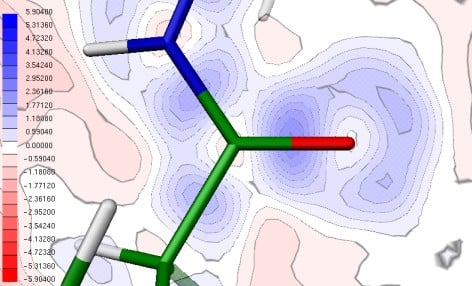
School on Charge Density and MoPro
| - |
In Mexico City
1. Benoît Guillot, Universite de Lorraine, France
2. Christian Jelsch, Universite de Lorraine, France
Shanghai International Crystallographic School Working with Bilbao Crystallographic Server
| - |
In Shanghai
Shanghai International Crystallographic School
working with Bilbao Crystallographic Server
http://www.cryst.ehu.es
The aim of the school is to provide an introduction to group theoretical methods and tools necessary for appropriate applications of symmetry properties in solid state material science. Special emphasis is given to tutorials on computational crystallography using the Bilbao Crystallographic Server (BCS) (www.cryst.ehu.es) for the study of specific problems in solid state physics, like phase transitions, and their symmetry-mode analysis, comparison between crystal structures, magnetic symmetry and its applications in the description of magnetic structures, etc. The applications of BCS tools to ab initio calculations is specifically discussed for the study of ferroelectric polarization in organic and inorganic crystalline structures, phonon properties and computational materials design by structure prediction.
The school is intended for scientists in Material Science, Solid State Physics and Crystallography in general and specifically for graduate students and young researchers interested in a deep and practical knowledge of group theory and crystallography as applied in material science. The maximum number of participant is limited to 70. Official language of the School is English. Location: The school will take place LeHu Hotel in Shanghai University (Baoshan Campus) http://www.lhljt.shu.edu.cn