Events
Schools
The Eighth Brazil School for Single Particle Cryo-EM
| - |
In Maripora, SP
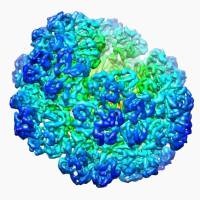
This single-particle data processing school is an intensive hands-on course/workshop, in which theory and practice are tightly intertwined. The spectrum of topics covered suits attendees that are new to the field as well as those for whom the technique is already of growing importance in their research and who wish to acquire an in-depth understanding of the methodology. Topics range from data collection and three-dimensional reconstruction techniques to the final interpretation of the cryo-EM maps by (flexible) fitting of X-ray structures. The last days of the meeting will be devoted to advanced topics such as dealing with heterogeneous data sets ("4D" cryo electron microscopy) and high-resolution refinements.Â
The attendees are expected to bring along a modern notebook computer onto which all necessary software will be installed. Most processing will take place in the context of the IMAGIC software system but other software packages such as Frealign will also be used. Cryo-EM data sets will be distributed for processing during the course. The participants may bring their own data sets for processing and discussion.Â
It is planned to stay at the 2016 school venue which was located in the country side of Mairiporã at the border of the Rio Juqueri (state of São Paulo).Â
22nd Laboratory Course Neutron Scattering
| - |
In Juelich and Garching
The course consists of two parts: a series of lectures, combined with the opportunity to take part in neutron scattering experiments. The lectures encompass an introduction to neutron sources, along with scattering theory and instrumentation. Furthermore, selected topics of condensed matter research are be presented.

Synchrotron Radiation School (SR school 2018)
| - |
In Oxford and Diamond Light Source
The school will be co-located at Diamond and Jesus College, Oxford, with participants staying in Oxford.
The SR School provides postgraduate students and post-doctoral researchers, who have little experience of Synchrotron Radiation (SR), a broad-based introduction to many of the different types of experiments conducted using SR. It is largely aimed at physical scientists, but life scientists are welcome to apply. The school gives the attendees the opportunity to obtain hands-on practical experience of performing an experiment on several of the Diamond beamlines. At least 14 Diamond beamlines will be particpating in the school (see below for details).
 Topics covered in the course lectures
- X-ray Scattering
- Symmetry and Crystallography
- The Diamond Synchrotron
- X-ray optics and detectors
- An introduction to the data analysis program DAWN
And the synchrotron use of:
- Infrared Microspectroscopy
- Powder Diffraction
- Resonant and Magnetic Scattering
- Small-Angle Scattering
- Surface Diffraction
- X-ray Absorption Spectroscopy
- X-ray Imaging
- X-ray Photoelectron Spectrocopy
BCA/CCP4 Summer School in Protein Crystallography
| - |
In Didcot (Diamond), UK
he BCA/CCP4 Protein Crystallography Summer School is intended for students
and researchers new to crystallography. Its dual aims are to provide
comprehensive training in crystallography and to promote best practise
within the British crystallographic community. The lectures cover the gamut
of techniques required for a structure solution, from protein expression
through to structure validation. Intensively supervised computer tutorials
enable students to relate the theory presented in the lectures to practice.
Although CCP4 programs will primarily be used in these tutorials, the aim
will be to approach crystallographic questions in a software-agnostic
manner. There will also be a crystal manipulation and cooling workshop.
Note that the course is scheduled during Diamond synchrotron downtime, so
there will not be active data collection at the Diamond beamlines.
Up to 10 places for those with BBSRC studentships will be fully funded.
Penn State Summer Microscopy School: one- or two-week options
| - |
In University Park, PA
Are you a microscopist in the life sciences interested in learning about EFTEM, STEM and spectrum imaging (EDS & EELS) techniques? Or are you a materials science microscopist interested in learning about cryo-EM, low-dose imaging, and new sample preparation/handling techniques? If so, join Thermo Fisher Scientific (formerly FEI) and Penn State University for a joint cryo-EM course starting August 13, with one-week and two-week options. This course will emphasize TEM methods that can be applied across both life and materials sciences. For example:
- Employing spectroscopy, used in materials science, to provide key elemental information within biological samples.
- Using low-dose and cryo instrumentation designed for life sciences for polymers and weakly-bonded materials.
Week 1 (13-17 August) will consist of topical lectures and live demonstrations.
Week 2 (20-24 August) (optional) will provide hands on training using Penn State's microscopy facility.
Space is limited, so register now.
School on X-ray and Neutron Diffraction Techniques
| - |
In Ghent
Modern Methods in Rietveld Refinement for Structural Analysis
| - |
In Lemont IL
The fourth “Modern Methods in Rietveld Refinement for Structural Analysis†will be held at the Advanced Photon Source of Argonne National Laboratory in close partnership with Bruker-AXS, ANL, and the National Science Foundation. Â

European Crystallographic Computing Forum
| - |
In Mieres
ECACOMSIG - the European Crystallographic Association's Computing Special Interest Group is organising a three-plus-two-half day Computing Forum.
The Forum will be held in Mieres, Spain, 18th - 22nd August 2018 (preceding the ECM). We invite both beginners (from graduate level) and experienced software developers from all crystallographic disciplines.
Participants can bring their own software development project to work on it in teams, interspersed with tutorials and lectures. There will be opportunity to exchange and connect with other crystallographic software developers.
The registration fee (360 €) includes: accommodation (4 nights), full board and refreshments and transfer to the ECM. We offer childcare and family rooms. Bursaries are available.
Neutrons and Biology
| - |
In Carqueiranne
The aim of the school is to present an overview of the use of neutrons to probe the structure and dynamics of biological systems, including basic tutorials on neutron diffraction and scattering and instrumentation, accompanied by practical courses.
For further details please visit:Â https://sites.google.com/view/bioneutrons2018
Registration deadline: 30th June 2018
The registration is free of charges for CNRS employees.Â
Summer School on the Fundamentals of Neutron Scattering
| - |
In Gaithersburg, MD
This year's summer school is devoted to methods and applications of small angle neutron scattering (SANS) and neutron reflectometry, and is targeted at those who have no or little previous experience with neutron scattering methods. The school will consist of a combination of introductory lectures and training in scattering techniques and will provide participants with an unique opportunity to become familiar with neutron scattering methods and their application to current research topics.
Attendance is limited to 35 students and to people affiliated with US universities and US industry. Financial support for PhD students, postdoctoral fellows and junior faculty members will be made available, on request.
For further information and more contact details, please visit:Â https://www.ncnr.nist.gov/summerschool/ss18/index.html
Application deadline: 2nd April 2018
PCG Intensive School in Physical Crystallography: From Phonons to Phase Transitions
| - |
In Cosener's House, Abingdon
Translational Symmetry and Reciprocal Space â€" Mike Glazer, Oxford
Phonons and the Theory of Soft Mode Phase transitions â€" Martin Dove, QMUL
Irreducible Representation Analysis â€" Mark Senn, Warwick
Landau Theory  â€" Michael Carpenter, Cambridge
Modulated Crystal Structures and 3d+n space groups â€" John Claridge, Liverpool
4th CENEM Summer School for X-ray Scattering
| - |
In Erlangen
The 4th CENEM Summer School for X-ray Scattering will be held at the Institute for Crystallography and Structural Physics (ICSP) from 16th to 19th of July 2018. The school will provide a perfect opportunity to get a detailed insight into theory and practice of several modern scattering methods as X-ray powder diffraction (XRD), small angle X-ray and neutron scattering (SAXS/SANS), surface scattering using a grazing incident X-ray beam (GISAXS/GIXD), and X-ray reflectometry (XRR). This includes lessons about the basics of scattering of X-rays, methodological background of the diverse methods, but also data reduction and data evaluation. Additionally an extern guest will give a talk about experiments at large-scale facilities. During hands-on trainings at our state-of-the-art laboratory instruments the participants will learn to apply X-ray scattering techniques by performing their own measurements on selected samples and by analyzing the experimental data.
It is intended to include a discussion with the participants of the school about the application of X-ray scattering in their own research. The participants are therefore requested to complement their application with a short abstract highlighting their research interests in the context of X-ray scattering.
Due to limitations of our capacity for the hands-on training sessions, only 16 researchers can be accepted. The summer school is mainly dedicated to doctoral candidates but is also open to Bachelor and Master degree students, postdoctoral researchers, and employees.
We expect the completely filled application form including the abstract to be sent to klaus.klagoe.goetz@fau.de not later than the application deadline 8th of June 2018.
Application deadline: June 8th 2018
Decision about participation: June 15th 2018
Fee: 400 €; Members of EAM and FAU exempt from charge
5th Superconductivity Summer School
| - |
In Oxford
This summer school is the fifth in a series on superconducting materials and applications targeting students and specialists and will include:
- Fundamentals of superconductivity
- Materials
- Small and large applications
- Modelling
- Measurements
- Visit to Oxford Instruments
Â

Solution Scattering from Biological Macromolecules
| - |
In Hamburg
The course participants will have the possibility to learn the basics of SAXS/SANS, sample preparation, experiment design, data interpretation and will get hands-on experience with the latest modelling programs. The participants are encouraged to bring their own samples to perform synchrotron solution scattering experiments on-site; the results will be used for practical tutorials and discussed on the last day of the course.
The course is limited to 26 participants. Application deadline is 31st August 2018.
For more information and registration, please visit:Â http://meetings.embo.org/event/18-sas#Register
Neutrons for Chemistry and Materials Science Applications
| - |
In Erice
The primary aims of this school are to educate the next generation of scientists in the field of instrument design and promote collaboration between large scale facilities. The school is therefore relevant to anyone involved in any aspect of instrument and sample environment design and software development.
All registration details can be found online at:Â http://sons.uniroma2.it/ericeneutronschool/v-course-2018/registration-and-fees/
Registration deadline: 4th June 2018Â
XVII Russian Conference on Electron Microscopy and V School for young scientists "Modern electron and probe microscopy methods in nanomaterials and nanostructural research
| - |
In Chernogolovka (near Moscow)
32nd Annual ResMed: Residential School on Medicinal Chemistry and Biology in Drug Discovery
| - |
In Drew University, Madison NJ
ResMed is a week-long graduate level course organized to provide an accelerated program for chemists, biologists and other industrial and academic scientists who wish to broaden their knowledge of drug discovery and development. The School's aim is to concentrate on the fundamentals that are useful in drug discovery spanning initial target validation through clinical development. The program provides ample opportunity for discussions with distinguished faculty from industry and academia.
The purpose of the School is to provide a strong background in the principles of drug discovery and development to enhance collaborative drug discovery programs. Previous attendees with backgrounds in macromolecular crystallography have found the course of great value in their research projects.
Â
Â
Topics for 2018 ResMed
- Principles of Med Chem
- Enzyme Inhibition
- Kinase Inhibitors
- G-Protein Coupled Receptors
- Receptor Binding Assays
- Drugs Affecting Ion Channels
- Epigenetics
- Bioisosteres
- Hit-to-Lead Process in Drug Discovery
- Princ. of Lead Optimization
- Drug-like Properties in Drug Discovery
- Fragment-based Drug Design
- Chemoinformatics
- Molecular Modeling
- Structure-Based Drug Design
- Protein-Protein Interactions
- Pharmacokinetics
- Drug Metabolism
- Improving Drug Candidates by Design
- Designing Around Toxicophores
- Preclinical Toxicology
- Clinical Development
- Four Case History Presentations
2018 Kuo Symposium/Workshop on 3DEM of Cells and Molecules and the 11th K.H. Kuo summer School of Electron Microscopy and Crystallography
| - |
In Hangzhou
The 2018 Kuo Symposium/Workshop on 3DEM of Cells and Molecules, which will be held at Zhejiang University, Hangzhou, China. Major topics of the Symposium include recent developments in cryoEM sample preparation and data acquisition, advances in cryoEM image analysis and reconstruction, advances in cryoET and in situ structural biology, and correlative and hybrid methods for cellular structural analysis.
The cryoEM meeting and workshop series is named after K.H. Kuo (1923-2006), a prominent Chinese scientist, who is among the pioneers discovered several types of quasicrystals in 1980s. Dr. Kuo was also an important educator and mentor who had fostered a generation of electron microscopists in China, Asia and across the world. Since 2008, the Kuo summer school of electron microscopy has provided numerous opportunities for a new generation of scientists to learn the technique of cryoEM through close interactions with many leading scientists in the field during workshop and symposium.
Workshop and K.H. Kuo Summer School: 24-26 August 2018
2018 Kuo Symposium: 26-29 August 2018

11th annual CCP4 crystallographic school *â€Å"From data collection to structure refinement and beyond
| - |
In ANL, Chicago, IL
The school comprises two parts: *data collection workshop* and *crystallographic computing workshop*.
Data collection workshop includes beamline training, data collection on GM/CA@APS beamlines 23ID-D and
23ID-B equipped with Pilatus3 6M and Eiger 16M detectors respectively, and data processing.
For data collection, only the participants' crystals will be used. Crystallographic computation workshop will feature many modern crystallographic software packages taught by authors and other experts. The daily schedule will be organized in three sections â€" lectures, tutorials, and hands-on (interactive trouble-shooting of the technical difficulties the participants face in their projects). We have had considerable success resolving these problems in past years, attested by resulting publications (see http://www.ccp4.ac.uk/schools/APS-school/publications.php).
MSC2018. Eighth edition of the Macromolecular Crystallography School 2018
| - |
In Madrid
Invited speakers and tutors:
- Paul Adams, Berkeley, USA
- Pavel Afonine, Berkeley, USA
- Armando Albert, Madrid, Spain
- Jose M Carazo, Madrid, Spain
- Kay Diederichs, Konstanz, Germany
- Paul Emsley, Cambridge, UK
- Rafael Fernández-Leiro, Madrid, Spain
- Carmelo Giacovazzo, Bari, Italy
- Xavier Gomis-Ruth, Barcelona, Spain
- Juan A. Hermoso, Madrid, Spain
- Eugene Krissinel, Oxford, UK
- Jose. A. Marquez, Grenoble, France
- Airlie J. McCoy, Cambridge, UK
- Rob Nicholls, Cambridge, UK
- Santosh Panjikar, Australia
- Maria Solá, Barcelona, Spain
- Isabel Usón, Barcelona, Spain
The MCS2018 is directed to 25 graduate students and/or researchers with some previous expertise in crystallography which need a deeper insight into most advanced crystallographic techniques to carry out their research projects. The school program covers aspects such as sample preparation, phasing, model building, crystallographic refinement, validation, and analysis of the structural results, as well as an overview on the newest technologies.
We are planning to include an extra day on May 20th devoted to Fundamentals on Crystallography by Carmelo Giacovazzo. Applicants interested in attending to this extra day, please indicate it so in both, the registration letter and registration form.
Â
