Topics
Small-angle scattering
BornAgain School and User Meeting
| - |
In Garching
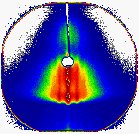
BornAgain (http://bornagainproject.org) is a novel software package to simulate and fit small-angle neutron and x-ray scattering at grazing incidence. It provides a generic framework for modeling multilayer samples with smooth or rough interfaces and with various types of embedded nanoparticles.
This School will introduce students, instrument scientists, and both novice and experienced researchers working in the field of GISAS or reflectometry at large to new opportunities for simulating and fitting their data. In compact introductory lectures, we will outline the theory implemented in BornAgain, and explain the design of the software. Extensive hands-on tutorials will highlight practical aspects of GISAS simulation.
Registration is available at https://webapps.frm2.tum.de/indico/event/34/
At the User Meeting, users of BornAgain are kindly invited to share their experiences, to present first results, but also to report on difficulties, to suggest improvements and to request missing features. This feedback offers a unique opportunity to influence the further development of BornAgain.
For convenience of colleagues from overseas, this event is scheduled as a satellite of the GISAXS2016 workshop (https://indico.desy.de/conferenceDisplay.py?confId=14264), which takes place on November 16-18 in Hamburg.

Combining Simulation and Experiment in Molecular Imaging
|
In Southampton
GISAS Summer School: experiments and data analysis
| - |
In Munich
Novel, smart thin film materials are the focus of many research projects ranging from sensing to displays and from wireless communication to energy conversion and energy storage. These are all active research fields where understanding of material properties will lead to innovation. Although the list of resulting applications is very wide, all these novel materials have something important in common: the physical properties, and therefore the industrial usefulness, is closely related to the molecular and nano-morphology of these materials.
Therefore, methods of characterizing such thin film materials are needed. Grazing incidence scattering techniques have proven here to be very successful. With this method the morphology inside thin films can be probed on the nanometer scale â€" not just on small micron spots â€" but on macroscopic areas of the sample, yielding industrially relevant information.
To aid students to carry out successful grazing incidence scattering measurements this summer school will kick-start beginners and introduce new data analysis tools for students with scattering experience.
The school takes place at the TUM Garching Campus and can be easily reached using public transport from Munich.(U6 Garching Forschungszentrum).
http://www.hg.mse.tum.de/en/gisas/Â
Â
4th Annual CCP-SAS Project Meeting
| - |
In Gaithersburg, MD

III International Conference on Small Angle Neutron Scattering
| - |
In Dubna
The Third International Conference on Small Angle Neutron Scattering is dedicated to the 80th anniversary of Yu. M. Ostanevich (1936â€"1992), an outstanding neutron physicist and the founder of small-angle neutron scattering (field, group, and instrument).

BioSAXS Essentials 6: Getting Started in Biological Small-Angle X-ray Solution Scattering
| - |
In Ithaca, NY
While the primary purpose of the course is educational, students may bring a limited number of their own research samples. Prepared standard protein samples will be available to all students for practice.
This course now accepts remote students. These students will receive digital copies of all lectures, tutorials, and sample data, and will have access to a live stream of the course lectures. Remote students will not have data collection time during the course. This option is intended for current MacCHESS BioSAXS users who want a refresher, or for new users who have scheduled beamtime this May but cannot come to CHESS twice.
Course topics:
- Â Basic principles and processing methods
- Â Critical sample preparation and data collection procedures
- Â Evaluating data quality
- Â Computing envelopes and data modeling
- Â Online size-exclusion chromatography (SEC-SAXS)
- Â Overview of advanced and emerging methods
- Â What you need to know for publication

18th National School on Neutron & X-ray Scattering. NX School
| - |
In Oak Ridge, TN AND Argonne, IL
The school will take place July 30-August 13, 2016. The school will start at Oak Ridge National Laboratory (ORNL), Oak Ridge, TN and will continue at Argonne National Laboratory (ANL), Argonne, IL after roughly one week. Students will be housed and transportation will be provided from lodging to the school. Lodging accommodations will be available starting July 30, 2016. Lectures and hands-on experiments will be held during normal working hours, but some experiments will be conducted during evening sessions. Social events will be arranged for participants.
Â
 Program
The program of the school focuses on the following areas:
- The fundamentals of the interaction of X-rays and neutrons with matter
- X-ray and neutron production and experimental instrumentation
- Theory and practical application of various X-ray and neutron experimental techniques
- Hands on experience gained through experiments at the Advanced Photon Source (APS), Spallation Neutron Source (SNS) and High Flux Isotope Reactor (HFIR).
Lectures are given by prominent scientists drawn from universities, several national laboratories, and industry. Subjects for lectures include:
- Interactions of X-rays and Neutrons with Matter
- Neutron Generation and Detection
- Neutron Instrumentation
- X-ray Generation and Detection
- X-ray Instrumentation
- Single-Crystal and Surface Diffraction
- Powder Diffraction
- Inelastic Scattering
- Reflectivity
- Magnetic Scattering
- EXAFS
- Small Angle Scattering
- Diffuse Scattering
- Nuclear Resonant Inelastic X-ray Scattering
- Coherent X-ray Scattering
- Amorphous Scattering
Experiments are led by the staff of the beamlines at the APS and the staff of SNS and HFIR. Students will be divided into groups and will do six experiments. Experimental areas include:
- Powder Diffraction
- Small Angle Scattering
- Reflectivity
- Inelastic Scattering
- Quasi-elastic neutron scattering
- Liquids and Amorphous Scattering
- Stress/Strain/Texture
- EXAFS
- Single Crystal Diffraction
- Magnetic Dichroism
- Coherent X-ray Scattering
- X-ray Microprobe
GISAXS2016
| - |
In Hamburg
From November 16 to November 18, 2016, the international workshop GISAXS2016 will be held in Hamburg, Germany http://gisaxs2016.desy.de). It is a continuation of the very successful series of several international GISAXS workshops at DESY (in 2005, 2007, 2011, 2013) and the satellite conferences to the SAS conference series in Oxford (in 2009), in Kyoto (in 2012) and in Nice (in 2015). This workshop brings together different communities working in the field of thin films, nanostructures, surfaces and interfaces, to gain insights to the very powerful method of grazing incidence small angle X-ray scattering and related techniques. In keynote and invited lectures the possibilities and new trends in GISAXS and GISANS will be highlighted with a special emphasis on real-time investigations and data analysis. As in all the years, we expect about 100 participants from all over the world.
Keynote and invited lectures will highlight the possibilities and new trends in GISAXS and GISANS.
Poster sessions will allow for a profound discussion among the participants.
This workshop addresses students, experienced researchers, senior scientists working in the field of and exploiting the potentials of GISAXS and GISANS in the area of thin film technology.
The program is divided in two parts: Introductory lectures will be combined with expert lectures by leading expert's scientists of grazing incidence technology and application. In the second part of the workshop we will on hands-on GISAXS, namely on-line treatment and simulation of GISAXS data. Additionally, we will offer a visit to the new micro-and nano-focus beamline dedicated to GISAXS at the 3rd generation synchrotron radiation source PETRA III.
VUVX2016. 39th International conference on Vacuum Ultraviolet and X-ray Physics
| - |
In Zurich
VUVX2016 is the third conference following a merger of two long standing conference series â€" the International Conference on Vacuum Ultraviolet Radiation Physics (last meeting was the 15th in that series, VUV-15 in Berlin, Germany in July 2007) and the International Conference on X-ray and Inner-shell Processes (last meeting was the 21st in that series, X-08 held in Paris in June 2008).Â
This international conference will bring together scientists from all over the world, working in fields involving electromagnetic radiation in the vacuum ultraviolet (VUV), soft X-ray and hard X-ray spectral regions generated by synchrotron, laser, or plasma based sources. Topics to be covered range from instrumentation and methods development to applications in a variety of fields.
Topics
- New Sources: diffraction limited storage rings, free electron lasers, ultrashort pulse XUV lasers and X-ray tabletop sources
- Resonant elastic and inelastic X-ray scattering
- X-ray absorption spectroscopy incl. linear, circular and magnetic dichroism spectroscopy
- Photoemission (angle/spin/time resolved, soft X-ray, hard X-ray, resonant, etc.)
- Imaging with nanoscale resolution: X-ray microscopy, coherent diffraction imaging, scanning small-angle X-ray scattering etc.
- Coincidence spectroscopy
- Theory of X-ray spectroscopy and diffraction
- Advanced data analysis methods
- Time-resolved spectroscopy
- In situ and operando applications
Synchrotron Radiation to study Atomic Layer Deposition
| - |
In Bellaterra (ALBA)
The three-day workshop will consist of different parts. On the first two days there will be three topical sessions with invited (introductory) lectures and contributed talks, and one evening poster session. On the third day we plan a visit to the beamlines of ALBA and tutorial sessions on the treatment and analysis of SR-data.
Tutorials on synchrotron experiments, data treatment and analysis
The participants will have the opportunity to register for three interactive tutorials that will be given in small groups on June 15th. The goal is to demonstrate how to prepare an experiment, and then treat and analyze XAS, GISAXS and PES data having some hands-on experience.
XANES and EXAFS
• Overview of the technique. How to organize a XANES and/or EXAFS experiment.
• Overview of available open-source software to treat XANES and EXAFS data.
• Introduction on how to use Athena.
• Practicing with Athena.
GISAXS
• Overview of the technique. How to organize a GISAXS experiment.
• Overview of available open-source software to treat GISAXS data / simulate GISAXS patterns.
• Introduction on how to use IsGISAXS.
• Practicing with simulating in IsGISAXS.
PES
• Overview of the technique. How to organize a photoemission experiment.
• Overview of available open-source software to fit photoemission spectra.
• Introduction on how to use Fityk.
• Practicing with Fityk.
5th School of SAXS Data Analysis
| - |
In Campinas, São Paulo
The 5th SAXS school will be held in May 2016 at the Laboratório Nacional de Luz SÃncrotron and is intended to motivated post-graduate students and early career scientists willing to learn Small-Angle X-ray Scattering. The main objective of the school is to provide an opportunity for young scientists developing their research in areas related to Biology, Physical Sciences, Materials Science and Chemistry, to have a contact with the technique, acquiring both theoretical and experimental skills.
The course will offer an overview of SAXS theory, data reduction and analysis tools, as well as modelling techniques. It will include hands-on experiments at the LNLS SAXS facilities and tutorials.
The last day of the school will be dedicated to the new SAXS beamline, CATERETÊ @ SIRIUS, the 4th generation synchrotron in construction in Campinas), and the new techniques proposed such as coherent SAXS and coherent imaging techniques.
VI-th National Crystallographic Symposium (NCS2016)
| - |
In Sofia
We are happy to announce VI-th National Crystallographic Symposium (NCS2016) that will be held on October 05-07, 2016, Sofia, Bulgaria.
As you may have already recognized this is will be the sixth "NCS" of the series started in 2009.
We have already started the preparation of the next issue of the conference (submitted manuscripts will be published in the journal “Bulgarian Chemical Communicationsâ€, a special issues due April 2017).NCS16 papers will also be online available in full text via the present platform.  You are warmly invited to come and join us!
NCS2016 is held under the auspices of BCS and is the major event on Crystallography, crystal growth, structure analyses and related techniques in Bulgaria. The Symposium aims at the applications of different crystallographic techniques in combination with other methods in the fields of materials sciences, mineralogy, biology, environmental engineering, computational methods etc. Bringing together researchers from different areas NCS16 will provide them with a high-qualified platform for them to share their latest studies and to assist further findings and collaboration.
With passionate participants from the world, NCS2016 Â would be perfect for you to present your research and find collaboration for your future work.

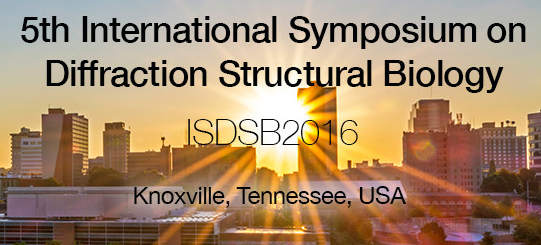
5th International Symposium on Diffraction Structural Biology (ISDSB2016)
| - |
In Knoxville, TN
This symposium will report on the latest discoveries in structural biology using X-ray, neutron, and electron diffraction, and complementary techniques such as small-angle scattering, nuclear magnetic resonance spectroscopy, electron microscopy, and advanced computational approaches. Scientific insights at the molecular level allow structure guided drug discovery and protein engineering for improved biocatalysis. This basic research is important for supporting applications in the pharmaceutical industry and for new, sustainable, and environmentally friendly approaches to the production of chemical reagents and biofuels.
Session topics include:
- Bioenergy Drug Design
- Enzyme Mechanism and Allostery
- Macromolecular Complexes
- Membranes
- Membrane Proteins
- New Instruments and Methods
- Sources and Facilities
The Symposium will be accompanied by two optional 1-day workshops on August 6, focused on Neutron Protein Crystallography and on Small-Angle Scattering, respectively.
Future Applications of Small-Angle Scattering to Soft Matter
|
In Swindon
Future Applications of Small-Angle Scattering to Soft Matter
Thursday May 5, 2016 Museum of the Great Western Railway, Swindon, Wiltshire, UK
Organised by the Society of the Chemical Industry and the Royal Society of Chemistry, with support from the Institute of Physics and the STFC ISIS Pulsed Neutron and Muon Source.
A 1-day meeting that will focus on state-of-the-art applications of SANS across a range of Soft Matter systems, and the future scientific opportunities that will come from new facilities, new instruments, and technical advances.
The meeting will also celebrate the retirement of Dr Richard K Heenan, principal scientist in SANS at ISIS and author of the FISH model-fitting software.
For more information, and to register, please visit: https://www.soci.org/Events/Display-Event?EventCode=COLL468
Confirmed Speakers:
Prof Julian Eastoe, University of Bristol Dr Fabrizia Foglia, Imperial College London Prof Peter Griffiths, University of Greenwich Dr Martin Hollamby, Keele University Assoc Prof Andrew Jackson, European Spallation Source Prof Jayne Lawrence, King's College London Prof Luigi Paduano, University of Naples Prof Adrian Rennie, Uppsala University Dr Sarah Rogers, ISIS Pulsed Neutron Source Dr Richard Heenan, ISIS Pulsed Neutron Source

10th Central European Training School on Neutron Techniques (CETS2016)
| - |
In Budapest
Location: Budapest KFKI Campus of Hungarian Academy of Sciences
Application deadline: 20th March
We are welcoming PhD and master students, post-doc scientists as well as newcomers to the neutron research from the field of structural research in physics, chemistry, biology, material science etc.
The training consists of 5 days of lectures and experimental works.
Available instruments:- Small Angle Neutron Scattering (YS)Â
- Reflectometer (GINA)
- Triple Axis Spectrometer (TAS)
- Neutron Diffractometer (ND)Â
- Prompt Gamma Activation Analysis and Neutron Induced Prompt Gamma-ray Spectroscopy Station (PGAA/NIPS-NORMA)
Grants are available.

Small-angle X-ray Scattering and Diffraction Studies (BioSAXS workshop)
| - |
In Stanford, CA
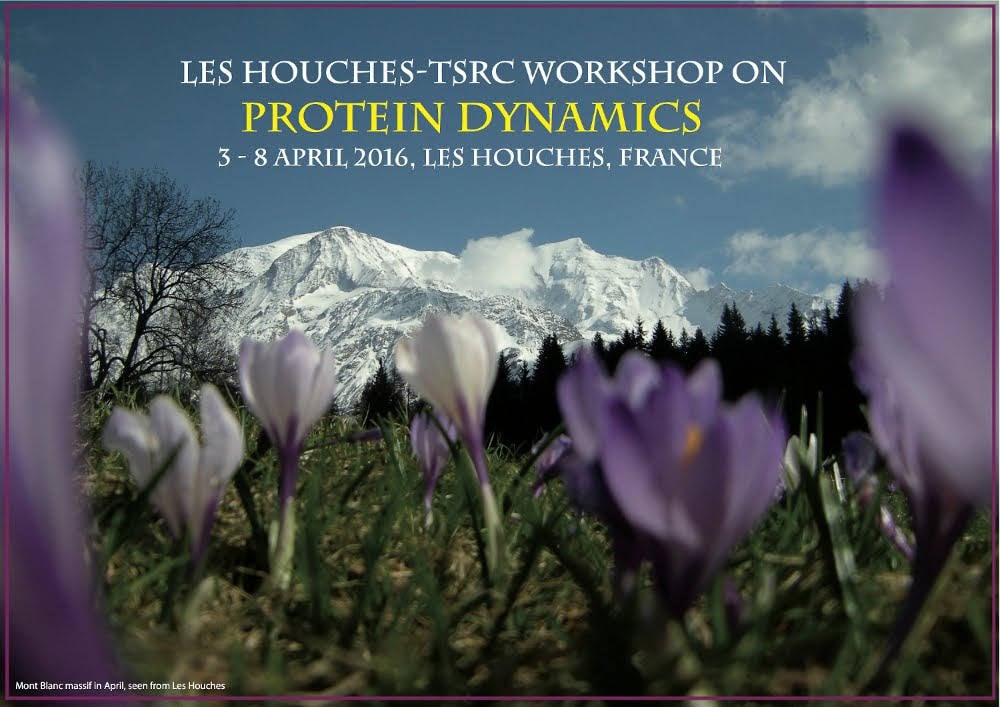
Les Houches-TSRC Workshop on Protein Dynamics
| - |
In Les Houches
This workshop is a forum for presenting, teaching and discussing results
from the application of state-of-the-art experimental and theoretical
and computational approaches to studying protein dynamics, including
optical spectroscopy, NMR spectroscopy, X-ray crystallography, XFELs,
electron microscopy, AFM and scattering methods.
 Confirmed speakers
Bai, Xiaochen (LMB Cambridge, UK)
Barends, Thomas (MPI Heidelberg, Germany)
Blackledge, Martin (Institut de Biologie Structurale, France)
Cammarata, Marco (U de Rennes, France)
Colletier, Jacques-Philippe (Institut de Biologie Structurale, France)
Fenimore, Paul (Los Alamos NL, USA)
Havenith, Martina (U Bochum, Germany)
Hilser, Vincent (Johns Hopkins University, USA)
Heyden, Matthias (MPI Mülheim, Germany)
Ishii, Kunihiko (Riken, Japan)
Katona, Gergely (U Gothenburg)
Klostermeier, Dagmar (U Münster, Germany)
Lindorff-Larsen, Kresten (U Copenhagen, Denmark)
Lewandowski, Jozef (U Warwick, UK)
Mulder, Frans (U Aarhus, Denmark)
Palmer, Arthur (Columbia University, USA)
Parrinello, Michele (ETH Lugano)
Schanda, Paul (Institut de Biologie Structurale, France)
Schirò, Giorgio (Institut de Biologie Structurale, France)
Sprangers, Remco (MPI Tübingen, Germany)
Stock, Gerhard (U Freiburg, Germany)
Uchihashi, Takayuki (U Kanazawa, Japan)
Van den Bedem, Henry (Stanford University, USA)
Van Thor, Jasper (Imperial College London, UK)
Wand, Josh (U Pennsylvania, USA)
Computational Approaches to the Structural Modelling of Biological Macromolecules using Small Angle Scattering
|
In Denver, CO
A workshop (WK.02) at the ACA meeting
This one-day workshop will focus on computational approaches to structural modelling and analysis. In the first session, a brief reprise of fundamental concepts will be provided, with a focus on pitfalls in data acquisition and reduction that can affect subsequent data analysis and modelling. The remainder of the day will be allocated to the hand-on application of the leading software packages to the analysis of solution scatter. This workshop will feature direct participation from the creators of the most prevalent software packages currently used (including BioSAXS(EMBL), SIBYLS, CCP-SAS, FoXs and IMP). The participating groups will present their software, including the basis for the algorithms employed, and further deliver guided hands-on tutorials for workshop participants. This approach will introduce and train participants on the appropriate application of these tools, including experimental design, model preparation, comparison of structural models using both SAS and complementary information, validation, and most importantly the limitations of interpretation with regards to the biological conclusions that can be made.
The workshop format will include lectures, and a selection of hands-on practical exercises. Students will be expected to bring laptops with appropriate pre-installed software as necessary. Prior to the workshop, a website will be made available containing installation instructions and
software for each tutorial.
Australasian Soft Matter Scattering Workshop
| - |
In Melbourne
This scattering workshop is for those with an interest in soft condensed matter as found in biology, polymer science, the colloidal domain and interfacial science.
The workshop has some leading experimentalists giving tutorials on light scattering, small-angle scattering, grazing incidence scattering, pulsed field gradient NMR and reflectivity.
We will also host a small number of science talks but the primary focus of the meeting is to introduce researchers to a range of scattering techniques, with emphasis on their application to research in soft matter.
The workshop will be held at RMIT University's Melbourne city campus from the 11th to the 12th of Feb. Attendance is free but registration is necessary. There is some support available for students to attend the meeting from Australia and New Zealand.
Organisers: Dr Chris Garvey (cjg@ansto.gov.au) or Prof Gary Bryant (gary.bryant@rmit.edu.au)

NIST Summer School on Methods and Applications of Small Angle Neutron Scattering and Neutron Reflectometry
| - |
In Gaithersburg, MD
This school provides participants the opportunity to learn about small angle neutron scattering (SANS) and neutron reflectometry (NR) at the NCNR. Â
These powerful experimental techniques are used by researchers in a variety of scientific disciplines to probe the microstructure of materials at length scales ranging from 1nm to 20 mm.ÂThe NCNR is home to world class SANS, USANS (Ultra Small Angle Neutron Scattering), and NR instruments that are available to qualified researchers through the NCNR’s peer review proposal system. Â
The school emphasizes hands-on training in the use of SANS, USANS, and NR instruments in addition to a thorough theoretical overview of these measurement techniques.
Applications of SANS and NR will be illustrated by specific examples drawn from recent cutting-edge research in polymer science, complex fluids, microporous media, and so on. ÂThe course will enable attendees to assess the applicability of the techniques to their own research, and will provide technical information needed to prepare effective experiment proposals.
The Summer School is sponsored in part by the National Science Foundation, and limited support for graduate students, postdocs and junior faculty will be available.  Attendance will be limited to 35 participants, and only applicants from North American institutions will be accepted.  For further information, and/or to apply, please go to: https://www.ncnr.nist.gov/summerschool/ss16/index.html  Early application is advised since attendance is strictly limited: typically we receive many more applications than the maximum number of participants.  Deadline: April 3, 2016.  Yamali Hernandez and Yiming Qiu National Institute of Standards and Technology 100 Bureau Drive, Stop 6102 Gaithersburg, MD 20899-6102 Tel: (301)975-5295 (YH), (301)975-3274 (YQ)