Topics
Small-angle scattering
BioCAT Advanced SAXS Training Course
| - |
In ANL, Chicago, IL
The 14th European Summer School on Scattering Methods Applied to Soft Condensed Matter
| - |
In Carcans-Maubuisson, Gironde
The school aims to provide advanced training of neutron, X-ray, and light scattering experiments for young post-graduates and post-doctors in the field of soft matter science. A primary focus will be on the methodology of static and dynamic scattering techniques and provide information on data interpretation and recent applications and developments.
Registration for the school is now open, with a deadline of 21st February 2018.
https://indico.ill.fr/indico/event/86/page/5
The school is limited to 35 students. There is an estimated participation fee of 850 euros, which includes the cost of accommodation with full board and additional recreational activities.
XIV School on Synchrotron Radiation: Fundamentals, Methods and Applications
| - |
In Muggia
The main topics will be:
- Production and properties of synchrotron radiation;
- Free electron lasers;
- Basics of the interaction between matter and radiation;
- X-ray absorption spectroscopy (EXAFS and XANES);
- X-ray diffraction (single crystal and powder diffraction, anomalous scattering);
- Small angle X-ray scattering;
- X-ray microscopy;
- Photoemission (from valence and from core levels; angular, time and spin resolved);
- IR spectroscopy and microscopy;
- Imaging;
- Resonant spectroscopy and diffraction;
- Inelastic X-ray scattering.
- Applications in the fields of materials, nanoscience, magnetism, catalysis, earth science, environmental science, cultural heritage, biology and medicine will be presented.
7th Telematic School: Structural Analysis by X-ray Diffraction and Contributions of Total Diffusion to Structure Determination
| - |
In Nancy
This school will focus on the basics of of crystalline structure determination, by use of X-ray diffraction, and on the relevant refinement and analysis methods used in such determination.
The primary languages of the school are both English and French.
Registration deadline: 10th June 2017.
For more information and registration, visit:
http://crm2.univ-lorraine.fr/lab/fr/education/congres/nancy2017/informations-generales/
5th CCP-SAS Project Workshop
| - |
In Cardiff
The workshop, to be held at the University of Cardiff, will focus on the work of the CCP-SAS Project and the SASSIE software suite in the form of seminars and poster/presentation sessions. Â Past and current projects will be reviewed; there will also be a planning session for future projects. Â On Wednesday 21st June a tutorial session will take place to provide a learning platform for beginner users of the SASSIE software.
Attendees are encouraged to bring posters showcasing their modelling work of biological and soft matter systems or illustrating their need for modelling capability. Registration, limited to an attendance of around 100 for the main event on Monday 19th June, is mandatory and must be completed by 5th June.
Registration is also required for the tutorial session on 21st June. Â
JCNS Workshop 2017
| - |
In Tutzing
Trends and Perspectives in Neutron Instrumentation: Probing Structure and Dynamics at Interfaces and Surface
This workshop will aim to highlight the recent approaches and developing ideas on the adaption of neutron reflectometry, small angle neutron scattering, neutron imaging and depth profiling and neutron spin echo spectroscopy, in the context of using such techniques to probe the interfacial kinetics and dynamics of materials. Â
Participants are welcome to contribute to the meeting in the form of an oral or poster presentation - the abstracts must be submitted by 15th June 2017.
Successful applicants will be notified by 15th July 2017.

PROTEINS IN ACTION biophysical techniques for protein research
| - |
In Ceske Budejovice
BioSAXS Essentials 7: Getting Started in Biological Small-Angle X-ray Solution Scattering
| - |
In Ithaca, NY
MacCHESS is offering its seventh intensive HOWTO course in BioSAXS. Students will have a day and a half of lectures and hands-on software tutorials on the basics of BioSAXS data collection and processing from expert practitioners in the field. This will be followed by real data collection on MacCHESS beamlines (F1 and G1 stations).
While the primary purpose of the course is educational, students may bring a limited number of their own research samples. Prepared standard protein samples will be available to all students for practice.
Remote students are welcome, and will receive digital copies of all lectures, tutorials, and sample data, and will have access to a live stream of the course lectures on the first day. Due to the hands-on nature of the sessions, remote students will not have access to instructors during the software tutorial (though they will receive the tutorial documents). They also will not have data collection time during the course.
Course topics:
- Basic principles and processing methods
- Critical sample preparation and data collection procedures
- Evaluating data quality
- Computing envelopes and data modeling
- Online size-exclusion chromatography (SEC-SAXS)
- Overview of advanced and emerging methods
- What you need to know for publication
- Hands-on tutorial with data processing software
Students will be assigned into small groups for 6 hour data collection slots starting Wednesday afternoon and running through Friday morning. If you are coming as a group or if you need a particular time slot (due to early departing flight), please notify Richard Gillilan (reg8@cornell.edu) for scheduling. Lectures and tutorials are finished by 11:30am on Wednesday. There are no other officially scheduled activities besides your data collection slot, so you may wish to make your travel arrangements once you know when your slot will be.
SEC-SAXS will be available to students during the workshop. However, due to the time intensive nature of the technique, not everyone will be able to use it. The use of the SEC-SAXS setup will be prioritized for students/groups with appropriate samples. If you think your sample may benefit from SEC-SAXS, please notify Richard Gillilan (reg8@cornell.edu) for scheduling.
Structural and biophysical methods for biological macromolecules in solution
| - |
In Singapore
The EMBO course will include lectures on:
SAXS Excites: The International SAXS Symposium 2017
| - |
In Graz University of Technology
The symposium us now open for registration and abstract submission.Â
Registration to attend the event is open until 30th June 2017.
Registration deadline for an oral or poster presentation is 30th May 2017.

AUC 2017 - The 23rd International AUC Workshop and Symposium
| - |
In Glasgow, Scotland
The focus of AUC 2017 is on solution studies of biological macromolecules, interacting systems, synthetic polymers, nanoparticles and colloids. Techniques such as analytical ultracentrifugation (AUC), dynamic and static light scattering (DLS, MALLS), small angle X-ray and neutron scattering (SAXS, SANS), NMR, SPR, field flow fractionation (FFF), and calorimetry (ITC, DSC) are featured.
AUC 2017 will open with several workshops, which begin on the afternoon of Sunday 23rd July, and end on the afternoon of Tuesday 25th July. These workshops will be given by leading experts in the workshop topics.
A symposium will follow the workshop, starting in the evening of Tuesday 25th July with our keynote lecture and continue until the afternoon of Friday 28th July. The symposium will offer two poster sessions, an exhibitor fair, and round-table discussions.
EMBO Practical Course SAXS/SANS
| - |
In Grenoble
Taking advantage of the facilities at the European Synchrotron Radiation Facility and Institut Laue Langevin, this one week theoretical and practical course will cover both basics and applications of small-angle X-ray scattering and small-angle neutron scattering on biomacromolecular solutions.
More information, including the application requirements, can be found at: http://meetings.embo.org/event/17-small-angle-scattering
Application deadline is 15th June 2017.

SAXS Software Packages Irena and Nika -- Winter 2017 Course
| - |
In Lemont , IL
canSAS: Small Angle Scattering Workshop
| - |
In San Fransisco CA
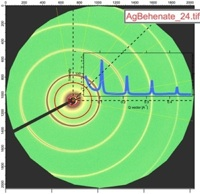
The collective action for nomadic small angle scatterers (canSAS) is an ongoing activity to provide the small-angle scattering user community with shared tools and information.
Bristol BioSAXS workshop
| - |
In Bristol
We invite you to join the 2016 Bristol BioSAXS workshop, which will run over two days on the 17th-18th November 2016 in the School of Biochemistry at Bristol University. The workshop will be led by Dr Robert Rambo, the Principal Beamline Scientist for B21, a dedicated solution state Small Angle X-ray Scattering (SAXS) beamline at Diamond Light Source, UK. This workshop is a great opportunity for those interested in using SAXS for biological structure elucidation in solution. No prior SAXS or synchrotron experience is required but the workshop will also be useful for more experienced users. Attendees will be invited to submit samples for measurement on the B21 beamline prior to the workshop. Day one will cover theoretical and practical aspects of SAXS measurement, with day two focusing on analysis of your own data from the B21 beamline using the ScAtter, a bioSAXS analysis application developed by Dr Rambo. Â
If you are interested in attending the workshop, please RSVP using the Eventbrite ticket system.Â
 https://www.eventbrite.co.uk/e/bristol-biosaxs-workshop-2016-tickets-27252635366
Samples must be ready before the 1st of October, and may submitted by post to B21, or in person at the University of Bristol.  Please contact Kristian Le Vay (kristian.levay@bristol.ac.uk)  with any questions and for details regarding sample requirements and submission. For more information on solution structure elucidation using SAXS, please see http://www.bioisis.net/tutorial
BioCAT Advanced SAXS Training Course 2016
| - |
In Chicago, IL
Small-angle X-ray Scattering (SAXS) is an increasingly important tool for the structural biology and biochemistry community but many are unfamiliar with the technique. In this workshop, participants will be given, through a series of lectures and hands-on practical tutorials, a comprehensive training on how to use collect, analyze and model SAXS data using the BioCAT Beamline 18ID at the Advanced Photon Source, Argonne National Laboratory. Lectures will cover both the basics of SAXS and the specialized techniques supported by BioCAT including size-exclusion chromatography SAXS and time-resolved approaches. This will be followed by a hands-on session where participants are encouraged to bring their own samples for SAXS measurements as well as using samples provided by BioCAT. Finally, participants will be given hands-on training in use of the ATSAS software suite covering almost all aspects of SAXS data reduction, data analysis and modeling. This will provide a basic knowledge on the principles of the various methods underlying the individual ATSAS programs. Participants will be expected to leave the course with a good understanding of the strengths and limitations of the SAXS technique and be able to model and interpret SAXS data properly.
Application deadline: September 30, 2016
How to apply: please send a cover letter and CV to Weifeng Shang (
wshang3@iit.edu)
How to pay: A nominal fee ($200) to cover coffee and lunch will be charged. After the selection process, the participants will be notified with payment information.
7th annual SIBYLS bioSAXS workshop
| - |
In Berkeley, CA
The 7th annual SIBYLS bioSAXS workshop will cover frontiers in Biological SAXS. The two-day workshop will provide participants with software tutorial sessions for biological SAXS in addition to hands-on training in experimental techniques. The latest advances in SAXS studies on biological systems will be discussed with particular focus on advances in synchrotron scattering techniques, dynamic and flexible structures in biomolecule, membrane protein scattering, and complementary methods in crystals and in solution. Updates on current developments of software for SAXS analysis pertaining to structural biology will be illustrated.
The first day of the workshop will begin with a brief run-through on current updates. Greg Hura, Berkeley Lab’s SAXS Beamline Scientist, will introduce the capabilities of the new detector and the future of high throughput SAXS at the SIBYLS Beamline 12.3.1. The keynote speakers, Frank Gabel (IBS, Grenoble), Hayden Mertanes (EMBL, Hamburg), and Robert Rambo (Diamond, Oxford) will continue Dr. Hura’s and Hammel’s discussion by elaborating on the basics of bioSAXS.

Atomistic Modeling of Small-Angle Scattering Data Using SASSIE-web. A BioCAT CCP-SAS workshop
| - |
In Chicago, IL
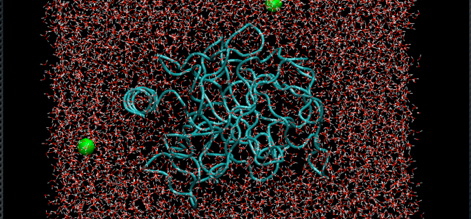
Molecular simulation is an important technique to analyze and interpret molecular phenomena across many disciplines. Small-angle scattering (SAS) utilizing either X-ray or neutron sources is a valuable method to characterize shape, interactions, and properties of many soft-matter systems. Modeling of SAS data is typically done using analytical functions and/or dummy-ball (DB) models. While these methods are simple, they have proven to be quite robust and have allowed for a tremendous expansion of SAS studies to a wide variety of systems. Atomistic modeling can be used to interpret SAS data and inherently provides structural and atomic interactions that are unavailable using analytical or DB models. In additional, atomistic models can allow the use of experimental and computational constraints on the SAS data.
The goal of this three day introductory course is to use modern simulation methods and software tools to predict and analyze small-angle scattering data of soft-matter systems, focussing particularly on biological systems. Participants will be gain experience with modern simulation tools such as VMD, NAMD. The latter half of the course will introduce SASSIE, a software framework designed to facility the use of atomistic modeling to interpret scattering data.
The course will involve a mixture of lectures and examples with student lessons. Examples will involve various protein, dna, and their complexes. Advanced simulation methods for glycosylated proteins, lipidic systems and coarse-grain methods can be accommodated depending on demand. The emphasis will be on structure building, ensemble molecular simulation, calculation of scattering profiles and comparison to experimental data.
Day 1: Introduction to molecular modeling using force-fields
Day 2: Intermediate MD, SASSIE and advanced building methods.
Day 3: Advanced SASSIE and student projects.
Students are encouraged to contact the course organizers in advance to discuss their systems as a portion of the course will involve helping students set-up initial models for their own projects.
SAS2018. XVII International Conference on Small-Angle Scattering
| - |
In Traverse City, MI
Themes and Scientific Sessions
Scientific Themes
- Energy
- Environment
- Health
Special Scientific Sessions or Initiatives
- Biomolecular: Complex Nucleoproteins Cellular Machines
- Energy Storage and Production
- Renewable Energy
- Soft-Matter Self-Assembly: Pathways and Kinetics
- Polymers, Colloids
- Material Science
- Magnetic Materials
- Catalysis
- Grazing Incidence Techniques
- Combined Techniques (includes in situ)
- Dynamics, Kinetics, and Time-Resolved
- Educating the Community (for small-angle scattering teachers)
- Advances in Modeling and Data Analysis (especially two-dimensional)
X-ray Methods in Structural Biology Course at Cold Spring Harbor Laboratory
| - |
In Cold Spring Harbor, NY
