Topics
Small-angle scattering
Integrating X-ray crystallography and scattering with electron microscopy
| - |
In Oeiras (NOVA ITQB)
The course covers a multidisciplinary approach to study the structure of
challenging proteins, focusing on membrane proteins and large complexes.
The basic principles will be provided for each addressed technique
(Macromolecular Crystallography, Mass Spectrometry and Electron
Microscopy); their applications in biological systems, major benefits
and limitations will also be discussed.
The Workshop is organized with lectures in the mornings followed by
hands-on training. The course is aimed primarily at PhD students and
young Post-Doctoral researchers interested in Structural Biology.
Confirmed speakers are Jose Maria Carazo, Dmitri Svergun and Isabel de
Moraes.
 Participants will be limited to 20. Candidate selection will be based on
a short CV, a motivation letter from the applicant, and a recommendation
letter from the supervisor.
Registration deadline is February 23. Please send your application to
combstruct2016@itqb.unl.pt. Registration fee is 180Eur including
accommodation.
Â

Introduction to ISIS and Diamond facilities for CDT students 2016
| - |
In Rutherford Appleton Laboratory
Diamond Light Source and the ISIS neutron and muon facility will host a four-day general introduction to these facilities, aimed at first-year PhD students within UK research-council funded Centres of Doctoral Training.
The course will provide an introduction to facilities and techniques, based on the following techniques: Imaging & Tomography; Small Angle Scattering & Disordered Systems; Surfaces, Films & Multilayers; Powder & Single Crystal Diffraction; Electronic & Molecular Spectroscopy; Muon Studies.  The School will be comprised of numerous short introductory talks and selected tutorial/practical sessions, plus evening research seminars given by experienced facility users. It will be suitable for first-year PhD students who have a broad interest in science, and will require no prior experience of the techniques. (Note that ISIS and Diamond provide specialist training in specific techniques, with information available via facility web pages).XTOP 2016 â€" 13th Biennial Conference on High-Resolution X-Ray Diffraction and Imaging
| - |
In Brno
Scientific programme
Methods and techniques:
- High resolution diffraction and topography
- X-ray reflectometry and small-angle scattering
- Microdiffraction and nanodiffraction
- Coherent diffraction imaging
- Absorption and phase contrast imaging and tomography
- Resonant (anomalous) scattering
- Fluorescence imaging
- Time resolved methods
- Theory and simulations of X-ray scattering
Applications:
- Material science (from 0D to 3D objects)
- Nanomaterials and nanoscience
- Life and environmental sciences
- Non-destructive testing (including industrial needs and cultural heritage)
Instrumentation:
- X-ray optics and instrumentation
- Advances in laboratory instrumentation and applications
- Advances in synchrotron instrumentation and applications
- Experiments at X-ray free-electron lasers
Structural and Biophysical Methods for Biological Macromolecules in Solution
| - |
In Suwon
- small-angle X-ray and neutron scattering (SAXS/SANS),
- nuclear magnetic resonance (NMR),
- static and dynamic light scattering (SLS/DLS),
- analytical ultracentrifugation (AUC),
- differential and isothermal calorimetry (DSC/ITC),
- spectroscopic approaches,
- cryo-electron microscopy (cryo-EM),
- bioinformatic tools to analyse protein-protein interactions,
- interdisciplinary approaches.
HERCULES 2016 - European School. 26 Years of Neutron & Synchrotron Radiation Science
| - |
In Grenoble
HERCULES is a European course for PhD students and young researchers using Neutrons and Synchrotron Radiation for applications in Biology, Chemistry, Physics, Hard & Soft Condensed Matter.
   The 1-month school includes lectures (60%), hands-on practicals and tutorials at partner institutes (DESY and European XFEL in Hamburg, Ellettra and FERMI in Trieste, ESRF, ILL in Grenoble, Soleil and LLB near Paris, SLS in Switzerland) and Grenoble Laboratories (CEA, CNRS, EMBL, IBS).
   The school includes a common part and two parallel sessions:
- Biomolecular, soft condensed matter structure & dynamics
- Physics and chemistry of condensed matter
  Â
   Why join Hercules ?
- to learn new techniques using neutron and synchrotron radiation
- to expand your theoretical and practical knowledge, not only for your present research but for your scientific career
- to experiment these techniques on world-class instruments & beamlines
- to build a network of relations with fellow young researchers and experienced teachers from all around the World
Deadline for application:Â Â 31 October 2015
Bursaries/reduced costs: a limited number of bursaries will be available either to reduce registration fees or cover travel costs.
Common Lectures:
- Interaction of X-rays and neutrons with matter (absorption, elastic and inelastic interactions, ...)
- Sources (neutron, synchrotron, XFEL)
- Detectors
- Optics &instrumentation
- Diffraction (single crystal, powder..)
- Scattering (elastic, inelastic..)
- Spectroscopy
- Imaging (Absorption, coherent,..)
- etc.
Session A: Applications to Biomolecular, Soft Condensed matter, Structure and Dynamics
- Protein structure and dynamics
- Studies in solutions
- Partially ordered systems
- Membranes, fibres and muscles
- Crystallography of viruses and ribosomes
- Structural genomics
- Biomedical applications (imaging, therapy)
- Time-resolved and ultra-fast X-ray science
- Biology with 4th generation sources
- etc.
Session B: Applications to Physics and Chemistry of Condensed Matter
- Neutron and X-ray (and UV and IR) spectroscopies
- X-ray reflectivity and diffraction of nano systems
- Single crystal and powder diffraction
- Coherent imaging and tomography
- Neutron and X-ray magnetic scattering
- Polarized X-rays and neutrons
- FEL and ultra fast X-ray science
- etc.

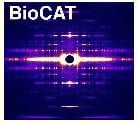
BioCAT Advanced SAXS Training Course
| - |
In Chicago IL
Structure Analysis using SAXS and WAXS
|
In EMPA Dübendorf

Small- and Wide-Angle X-ray Scattering, SAXS and WAXS for short, are increasingly popular techniques for structural investigations.
The workshop will provide a platform for users of the SAXS and WAXS techniques to present their research as well as for interested individuals to gain information on possible solutions for their own applications.
Synchrotron Radiation User Meeting 2015. SRUM2015
| - |
In Diamond Light Source
Featuring five parallel workshops representing a wide range of research interests, the Diamond Synchrotron Radiation User Meeting offers opportunities to hear about the latest in synchrotron research and technique developments, along with the chance to network with colleagues from Diamond and the synchrotron user community.
Workshops
• Current Issues in Energy Research
• MX and Small Angle X-ray Scattering (SAXS)
• PDF Analysis: The Local Point of View of Materials Development
• Soft X-ray Full-field Imaging and Scanning Microscopy
• Transition Metal Oxides, Superconductivity and Interfaces
6th edition of the MX user workshop at the Annual Diamond Synchrotron Radiation User Meeting
| - |
In Diamond Light Source
This year's edition will be a joint MX and Small Angle X-ray Scattering (SAXS) workshop.
Day one will have updates from the MX and SAXS beamlines on capabilities, software and access. Day two will have a number of user talks highlighting the use and development of SAXS and MX data to address challenging scientific questions. The second day will also include a user discussion session.
Microfluidics, Physics & Chemistry of. Gordon Research Conference
| - |
In West Dover, VT
Microscale Technology for Advancing and Translating Discovery
3rd International GISAS Conference
| - |
In Nice

EMBO Practical Course. Small angle neutron and X-ray scattering from proteins in solution
| - |
In Grenoble
This EMBO Workshop will cover the use of small angle scattering (SAS) of both neutrons and X-rays for the determination of the structures of biological macromolecules. Particular attention will be paid on this course to sample preparation and the analysis and interpretation of SAS data in a biological context. The aim of this course is to enable the participants to maximise the information gained from the SAS technique in their future experiments.
Small angle scattering is a powerful technique for determining the structures of biological molecules in solution. Not only can small angle scattering provide precise information concerning the size, molecular weight, volume and shape of single molecules but it can also provide detailed information from large, multi-component macromolecular complexes. For these purposes the scattering properties of neutrons are particularly well suited. Through the use of specific isotope labeling techniques and solvent contrast variation it is possible to determine the structural organisation of specific components within a large macromolecular assembly.
Taking advantage of the location of the European Synchrotron Radiation Facility (ESRF) and the Institut Laue Langevin (ILL) on the same scientific campus in Grenoble, this course will focus on the complimentary use of X-ray and neutron small angle scattering for the determination of the structures of biological macromolecules. Through the use of lectures, tutorials and practicals it is intended to teach scientists new to the technique how to optimize their experiments to gain the maximum amount of information from these techniques. In particular the course will focus on:
- Small angle scattering theory
- Sample requirements for a successful small angle scattering experiment
- Data analysis, model building and interpretation
- Isotope labelling strategies for small angle neutron scattering
- Analysing small angle scattering in conjunction with data obtained from other techniques (NMR, AUC, EM, SEC-MALLS)
Register by: 1 March 2015
6th Workshop on Neutron Scattering Applications in Structural Biology
| - |
In Oak Ridge, TN
The workshop aims at enabling structural biologists to fully exploit the latest instrumentation and software development at the SNS and HFIR facilities at Oak Ridge National Laboratory. Attendees will participate in lectures and tutorials focusing exclusively on neutron techniques applied in structural biology. The workshop is designed for graduate students, post-doctoral fellows and faculty new to or with limited experience of neutron scattering.
General Information
The unique potential of neutron scattering in structural biology arises from the strong interaction of neutrons with hydrogen (H) and its deuterium (D) isotope. This property makes the information available from neutron scattering unique and a valuable complement to data obtained from other structural techniques. Individual hydrogen/deuterium atoms are visualized in neutron density maps from crystallographic data at the resolution typical of most protein structures (2.0 -2.5 Ã...).Using H/D exchange  and contrast variation, proteins and nucleic acids are sequentially modeled and mapped in large biological complexes using small angle neutron scattering, protein-membrane interactions are revealed using Reflectometry and protein and water dynamics measured using spectroscopy.
The workshop includes a symposium, lectures and tutorials and tours of the High Flux Isotope reactor and Spallation Neutron Source, the world’s leading neutron research facilities.
The workshop is designed for graduate students, post-doctoral researchers and faculty with knowledge of protein function and structure but no or limited experience of neutron sciences.
Subjects include:
- Crystallography
- Small Angle Scattering
- Reflectometry
- Spectroscopy
- Imaging
- Labeling techniques
Course Objectives
- Educate participants in neutron scattering techniques, instrumentation and data collection, analysis and interpretation.
- Expose participants to cutting-edge research in neutron structural biology.
- Build interactions between participants, their university groups, and ORNL neutron scattering experts to develop new research projects.
Application deadline: April 10, 2015
Travel and accommodation expenses are supported for selected participants from the United States. International applications are welcome. However the course organization is not able to support travel or accommodation.
The number of participants will be limited to 15. There is no registration fee for all selected participants.
Â
The application package consisting of 1) Information form, 2) CV, 3) Applicant motivation letter (1/2 to 1 page), 4) Principal Investigator letter of support (for graduate students only; 1/2 to 1 page), should be sent electronically to meilleurf@ornl.gov before April 10, 2015.

ICSG 2015. International Conference on Structural Genomics 2015
| - |
In Weizmann Institute, Rehovot
Deep Sequencing Meets Structural Biology
The scientific topics to be covered in ICSG 2015 include:- Deep sequencing for modeling and refinement of macromolecular structures
- Membrane protein structure and function using complementary methods
- Technological advances in XFEL, Cryo-EM, NMR, SAXS, MS, MX and macromolecular complexes
- Combining low and high resolution data and modeling for structural biology
- Synergistic use of 3D structures and deep sequencing to realize personalized medicine
- Protein design and deep sequencing
- Cancer, antibiotic resistance and drug discovery
In order to widen the opportunities for younger researchers, we have organized satellite workshops before ICSG 2015 (during the day on June 7, 2015). These include:
- Cryo-EM developments for structural biology [Sponsored by FEI]
- PHENIX: Automated determination of molecular structures
- HKL3000: From X-ray diffraction images to structure determination in minutes
- Approaches to the translation of deep sequencing data into three-dimensions
- Protein expression and characterization workshop
- Proteopedia: A Scientific Wiki Bridging the Rift Between 3D Structure & Function
Five oral presentations will be chosen from the posters, and six poster prizes will be awarded, so be sure to submit your abstracts by April 15, 2015!
Invited Speakers will include:
Keynote Speakers:
Shamil Sunyaev - Harvard Medical School
Janet Thornton â€" EMBL/EBI - The FEBS National Lecturer
Speakers:
Arie Admon â€" Technion, Haifa
Lucia Banci - CERM, University of Florence
Pamela J. Bjorkman â€" CalTech, Pasadena
Samir K. Brahmachari - CSIR-Institute of Genomics & Integrative Biology, Delhi
Susan Buchanan - NIDDK, NIH, Bethesda
Mark Gerstein - Yale University, New Haven
Wayne Hendrickson - Columbia University Medical Center, New York
Yvonne Jones - University of Oxford
Luhua Lai - Peking University, Beijing
Michael Levitt â€" Stanford University
Michal Linial â€" The Hebrew University of Jerusalem
Abraham Minsky - Weizmann Institute of Science, Rehovot
John Moult - IBBR, University of Maryland, Rockville
Nathan Nelson - Tel Aviv University
Stefan Raunser - MPI of Molecular Physiology, Dortmund
Monica Roth - Rutgers University, Piscataway
Dinakar M. Salunke â€" Regional Centre for Biotechnology, Gurgaon
Eran Segal - Weizmann Institute of Science
Philip Selenko - Leibniz Institute of Molecular Pharmacology (FMP Berlin)
Sachdev Sidhu - University of Toronto
Rotem Sorek - Weizmann Institute of Science
Jan Steyaert - VIB, Flanders, Brussels
Dan Tawfik - Weizmann Institute of Science
Gunnar von Heijne - Stockholm University
Soichi Wakatsuki - Stanford University
Shigeyuki Yokoyama - Genomic Sciences Center, RIKEN Yokohama Institute
Ada Yonath - Weizmann Institute of Science
Mingjie Zhang â€" Hong Kong University of Science & Technology
BioStruct-X Industrial Workshop
| - |
In EMBL, Hamburg
BioStruct-X (www.biostruct-x.eu) is an integrated project funded by the Seventh Framework Programme of the European Commission for transnational access to biological synchrotron X-ray radiation facilities. The BioStruct-X consortium coordinated by EMBL-Hamburg has 19 partners from 11 EU member and associated states providing integrated access via 42 installations in four key areas: macromolecular X-ray crystallography, small angle X-ray scattering, X-ray imaging, protein production and high-throughput crystallisation. In addition to the transnational access, BioStruct-X partners are involved in joint research activities aimed at novel developments in synchrotron instrumentation, automation of the experiment and high-throughput software services.
The X-ray based structural biology activities supported in BioStruct-X are core technologies used in many pharmaceutical and biotech companies. The workshop will promote the exchange of knowledge and approaches, either available or being established, between BioStruct-X consortium and industrial partners.
The Workshop will take place at the premises of the DESY synchrotron facility in Hamburg operating the presently world brightest storage ring PETRA III. A tour to the biological beamlines running at PETRA III will be included in the program. There will be a poster session and ample advertizing possibilities for the companies.
Workshop de Cristalografia e práticas de Difração de Raios-X
| - |
In São Paulo
Â
 Em comemoração ao Ano Internacional da Cristalografia convidamos você para inscrever-se no Workshop de Cristalografia e práticas de Difração de Raios-X, onde nosso laboratório de aplicação estará aberto para práticas laboratoriais.
Â
 O workshop será realizado na semana do dia 02 a 04 de Dezembro de 2014 na PANalytical Brasil em São Paulo, Rua Laguna, 276 â€" Jd. Caravelas.
Â
 Palestrantes: Prof. Rômulo Angélica â€" UFPA, Prof. Lisandro Pavie Cardoso â€" UNICAMP, Prof. Fábio Andrade Dias â€" USP Geo, Profa. Marcia Fantini â€" USP FÃsica, Prof. José Marcos Sasaki â€" UFC, Dr. Luciano Gobbo - PANalytical, e MSc. Leandro Almeida - PANalytical
Â
 Programação:
Â
 1º DIA â€" 02/10/2014 8:00h as 17:30h
 • Introdução à Cristalografia
 • A evolução dos sistemas de difração de raios-X
 • 100 anos de cristalografia
 • SAXS (Small Angle Scattering)
 • Configurações Ã"pticas e preparação de amostras
 • Coleta de Dados: Aitvidade Prática
Â
 2º DIA â€" 03/10/2014 8:00h as 17:30h
 • Introdução ao método de Rietveld
 • Aplicações de difração de raios-X na indústria farmacêutica
 • Cristalografia e a sociedade
 • Difração de raios-X para analisar materiais mesoporosos
 • Determinação da microestrutura em amostras policristalinas homogêneas
 • Software HighScore Plus
Â
 3º DIA â€" 04/10/2014 8:00h as 17:30h
 • Aplicações industriais de Difração de Raios-X
 • Cristalografia não-ambiental
 • Práticas: Investigação de transição de fases em alta temperatura
Â
 Será solicitado a cada participante que envie um breve currÃculo e um comentário sobre a sua motivação em participar deste workshop e os participantes receberão um certificado de participação.
Â
 O evento será gratuito, bem como todo o material e equipamentos utilizados neste evento.
Â
 As despesas de locomoção e estadia serão por conta de cada participante.
Â
 No reservamos o direito de cancelar o evento caso o mÃnimo de 10 participantes não seja alcançado. Se o número exceder a 40 participantes, uma seleção será feita baseada na motivação em participar deste evento.
Â
 Após a inscrição você receberá um e-mail de confirmação bem como outras informações necessárias.
Â
 Data limite para inscrição 30 de Novembro de 2014
To.Sca.Lake: Total Scattering Analysis of Nanoscaled Materials
| - |
In Como
The continuously growing interest in Nanoscience and Nanotechnology (inducing the European Commission to consider them Key Enabling Technologie) well merges the new challenges they are able to foster, through the design of novel engineered nanomaterials, their structural aspects and multifunctional applications at a multiple scale, and the need for the development of highly focused, advanced physico-chemical characterization tools. The complexity of state-of-art nano-objects requires the synergistic collaborations of all actors differently contributing to the appealing Nanoworld.
To.Sca.Lake aims at stimulating such a synergy by inviting chemists, physicists, material scientists, biologists, mineralogists and all the interested scientists, from the Academia and the Industry, to join in the fascinating context of Villa del Grumello, a superb location overlooking the Como Lake. This workshop is mainly intended to draw the attention of the “nano†community towards the potentiality of Scattering Methods, spanning from Small and Wide Angle X-ray (SAXS and WAXS) to Low and Wide Angle Light Scattering (LALS and WALS) Techniques. Particular emphasis will be given to innovative Wide Angle X-ray Total Scattering (WAXTS) methods, in the form of the Debye Function Analysis of nanomaterials proposed in the DebUsSy Suite of Program. Theoretical lessons will be dedicated to fundamentals, experimental and computational aspects of the methods, and will illustrate advanced cases of application in strategic fields. Demos and hands-on sessions will constituite a relevant portion of the whole program.
Participation will be limited to a maximum number of 40 attendees on the basis on “first come first served†criterion.
Monday Afternoon:
* Hans-Beat Bürgi (University of Bern, Switzerland)
    The Origin of Diffuse Scattering, Single Crystal Approaches (1.5 h)
* Norberto Masciocchi (University of Insubria, Como, Italy):
    Basics of Powder Diffraction and Non-Bragg Scattering (1 h)
* Antonio Cervellino (Paul Scherrer Institut, Villigen, CH ):
    Physics of X-ray Scattering and the Debye Equation (1 h)
Tuesday Morning:
* Ruggero Frison (ETH Zurich, Switzerland):
    Data Collection Procedures, Instrumental Requirements, Data Reduction Analysis (1 h)
* Antonietta Guagliardi (IC-CNR, Como, Italy):
    The Debussy Approach (Debye Function Analysis) (1 h)
* Maksym Kovalenko (ETH Zurich, Switzerland):
    Inorganic Nanomaterials, Synthesis, Characterization and Applications (1.5 h)
Tuesday Afternoon:
* Hands-on Session on Data Reduction and Database Generation (3 h)
Wednesday Morning:
* Nora Ventosa (CSIC-ICMAB Barcelona, Spain):
    Nanovesicle-based materials: synthesis, characterization and applications (1.5 h)
* Antonietta Guagliardi (IC-CNR, Como, Italy):
    Applications of the Debye Function Analysis (1 h)
* Jan Skov Pedersen (University of Aarhus, Denmark):
    Basics of Small Angle X-ray Scattering, SAXS (1 h)
Wednesday Afternoon:
* Hands-on Session on Model Simulation and Refinement by Debussy 2.0 (3 h)
Thursday Morning:
* Fabio Ferri (University of Insubria, Como, Italy):
    Basics of Light Scattering and Applications (1.5 h)
* Jan Skov Pedersen (University of Aarhus, Denmark):
    Applications and Demo on SAXS Data Analysis (2 h)
SAXS Workbench: 2nd training school for SAXS beginners
| - |
In Guará
Training school for beginners on the small-angle X-ray scattering technique. It will be held at the Brazilian Synchrotron Light Laboratory (LNLS).
The main idea of this training is to help and build up user community at SAXS1 and SAXS2 beamlines at LNLS. The SAXS group will offer comprehensive hands-on training in synchrotron data collection and analysis for first-time synchrotron users.
In this edition, participants will receive information about basic principles of small angle X-ray scattering and learn how to collect data on SAXS1 and SAXS2. This will help participants to strength their proposal and prepare their first experiment.

12th International Workshop on Synchrotron Radiation in Nanomaterials Research
| - |
In El-Gouna, Hurghada, Red Sea
Workshop in celebrating the International Year of Crystallography (IYCr2014), aims to provide a forum for exchange of knowledge in order to get the latest developments in structure determination and characterization of nanomaterials. The main objective is to highlight the powerful capabilities of Synchrotron radiation (SR) in nanomaterials research aspects. During this occasion, Nanomaterials fabrication methods will be demonstrated and combined with the advanced SR applications covering different techniques such as X-ray Diffraction (XRD), Small Angle Scattering (SAXS) and Extended X-ray Absorption Fine Structure (EXAFS). Hands-on computer training on some programs in the field will be also arranged.
- Synchrotron Radiation Concepts and Applications.
- Synchrotron applications in Nanomagnetic Materials
- High-Performance Computing for Synchrotron Applications
- Small Angle X-ray Scattering of Nanomaterials
- EXAF: From Theory to Applications
- Nanomaterials ab initio Structure Determination
- Microstructure Determination
- RDF Applications in Amorphous and Nanocrystalline Materials
- Synthesis Techniques for Nanomaterials Preparation