Topics
Materials
Virtual Neutron Scattering School
| - |
In Canada
CNL's first Virtual Neutron Scattering School (VNSS)
November 30 until December 4, 2020
The curriculum covers a broad range of neutron scattering methods applicable to a variety of scientific areas, including magnetism, thin films, structural materials, and soft materials. The school is aimed at graduate students, post-doctoral fellows, and early-career researchers with backgrounds in physics, chemistry, materials science, engineering, biology, or mineralogy, with little or no prior knowledge of neutron scattering techniques.
Program
The School consists of morning lectures and afternoon interactive experimental simulation sessions.
Lectures
Lectures will be presented by national and international experts and will provide in-depth coverage of neutron scattering theory, methods, and applications. Several lectures will also illustrate applications of neutrons beyond neutron scattering, including materials irradiation and testing, isotope production, and boron neutron capture therapy.
Lecture topics will include:
Properties of neutrons
Basic theory of neutron scattering (elastic and inelastic)
Powder diffraction
Strain measurement and stress determination
Crystallographic texture measurements and analysis
Triple-Axis Spectroscopy (TAS)
Small-Angle Neutron Scattering (SANS)
Neutron reflectometry
Neutron imaging
Advances in neutron instrumentation
Application of neutron scattering (industrial, biological, surface sciences, and quantum materials)
Other applications of neutrons beyond scattering (irradiation, nuclear forensics, isotope production and boron neutron capture therapy)
Neutron sources (research reactors, spallation, and compact accelerator based)Â
Experimental Simulations
The afternoon experimental simulation sessions will cover several thermal-neutron scattering techniques to reinforce the concepts presented in the morning lectures. There will be ample opportunity to interact with experts and to learn first-hand how data are acquired and analyzed.
Simulation sessions will include:
Powder diffraction (Monday)
Reflectometry (Tuesday)
Stress/strain/texture measurements and analysis (Wednesday)
Inelastic scattering (Thursday)
Students will be able to attend all or only a selection of the lectures and simulations based on their interests and availability. We recommend the students to attend all the experimental simulation sessions to gain experience in these important neutron scattering methods.
Certificate of Attendance
A Certificate of Attendance will be issued to participants who attend ALL sessions. Course credit may be offered to students at the discretion of their educational institution. CNL staff will be able to register this training in CNL's online Learning Management System (LMS) using the Self-Reported Training feature.
Registration
There is no registration fee and the School is open to all. Space is limited and will be allotted on a first come-first served basis.
Registration is now open until October 30, 2020. Â
Contact us
Address further inquiries to school organizer Dr. Zahra Yamani (zahra.yamani@cnl.ca).
Looking forward to (virtually) seeing you at CNL’s First Virtual Neutron Scattering School!

#TheLightStuff: The MIEZE technique and its application towards examining magnetic materials
|
We introduce MIEZE, a variant of the spin-echo technique optimized for the study of dynamic processes in magnetic materials. We show how MIEZE can be applied to these materials with the help of several examples: fluctuations around the Curie point in iron, spin dynamics in paramagnetic Ho2Ti2O7 and weak crystallization of fluctuating skyrmion textures in MnSi.
Presenter: Dr Johanna Jochum from Technical University Munich, Germany
Organized by Bundesanstalt fur Materialforschung und -prufung and Diamond Light Source, UK.
Each in this series of online lectures on scattering and diffraction is free and can be attended via Zoom by to up to 100 attendees.
The lectures will be recorded and (with permission of the presenter) will be made available online afterwards for a broader educational reach.
To participate, use the meeting join link here.
#TheLightStuff: Probing Gel Structure using Scattering â€" an Insight into Designing New Soft Materials
|
In order to be able to design new soft materials, such as gels, understanding how they form is a critical first step. Bulk measurements, like rheology, provide excellent information on their properties, but understanding their structure can be more challenging. In this talk I will show how combining small-angle X-ray and neutron scattering can give insight into gel formation and how seemingly subtle changes in the molecular chemistry of gelators can lead to sometimes unexpected new outcomes.
Dr Annela Seddon from University of Bristol, UK
Organized by Bundesanstalt fur Materialforschung und -prufung and Diamond Light Source, UK.
Each in this series of online lectures on scattering and diffraction is free and can be attended via Zoom by to up to 100 attendees.
The lectures will be recorded and (with permission of the presenter) will be made available online afterwards for a broader educational reach.
To participate, use the meeting join link here.
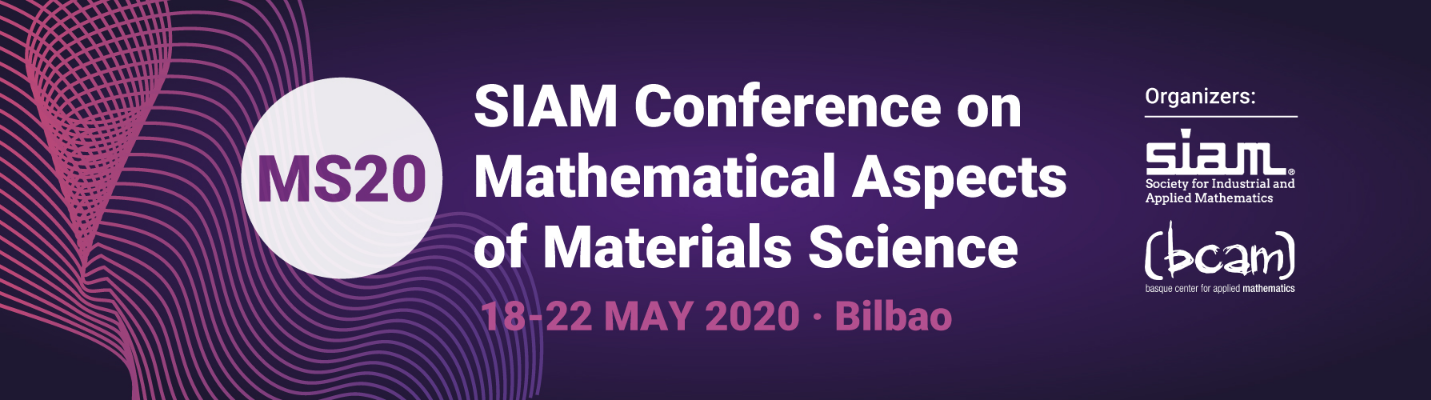
SIAM Conference on Mathematical Aspects of Materials Science
| - |
In Bilbao
Focus themes
- Calculus of variations and partial differential equations
- Continuum mechanics
- Homogenization theory
- Inverse problems
- Liquid crystals and active materials
- Machine learning and data science in materials
- Optical materials
- Pattern formation in materials science
- Phase transitions
- Quantum chemistry and electronic structure
- Soft condensed matter
- Topological materials
Introducing photons, neutrons and muons for condensed matter physics and materials science. A PSI course for master students 2020
| - |
In Paul Scherrer Institut
- Interaction of photons, neutrons and muons with matter
- Production of photons, neutrons and muons
- Experimental setups: optics and detectors
- Crystal symmetry, Bragg's law, reciprocal lattice, structure factors
- Elastic and inelastic scattering with neutrons and photons
- X-ray absorption spectroscopy, x-ray magnetic circular dichroism
- Polarized neutron scattering for the study of magnetic materials
- Imaging techniques using x-rays and neutrons
- Introduction to muon spin rotation
- Applications of muon spin rotation
Modern Trends in Computational Material Discovery - 18th USPEX workshop
| - |
In Isfahan

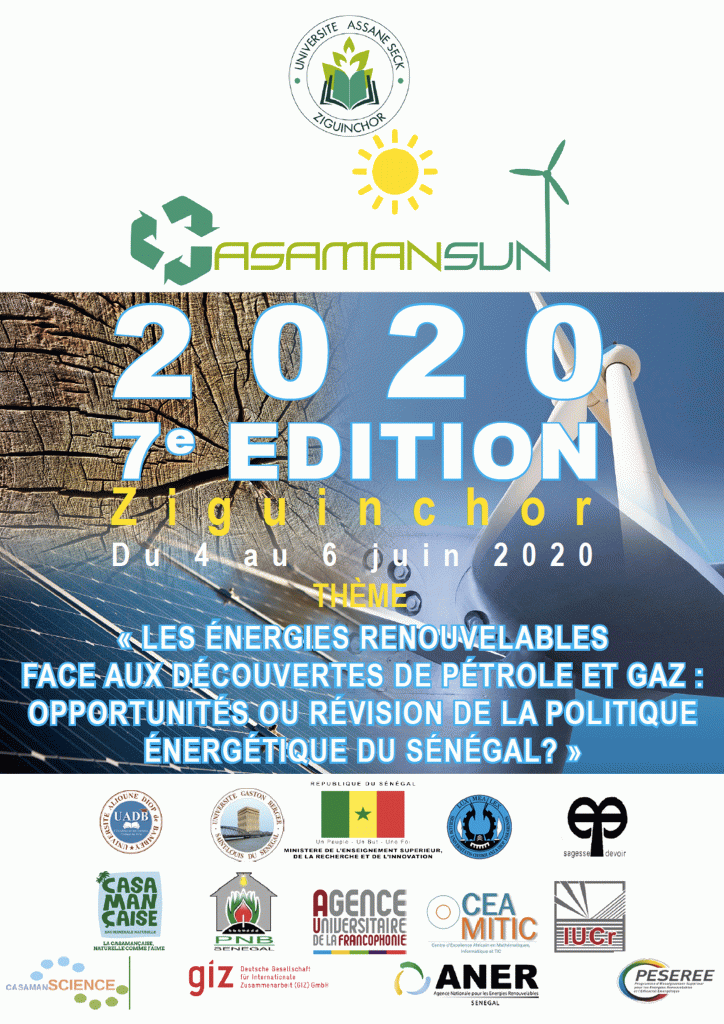
7th edition of the Workshop Renewable Energy and Sustainable Development â€Å"Casamansun 2020â€Â
| - |
In Ziguinchor
14th European Conference on Surface Crystallography and Dynamics (ECSCD-14)
| - |
In Grainau
Topological materials
Magnetic structures
Designer materials at surfaces
Adatoms and molecular adsorbates
Nanostructures and self-assembly
Oxide surfaces and oxide-based heterostructures
Phase transitions at surfaces
Dynamic processes and catalysis

HERCULES European School: Neutrons & Synchrotron for Science
| - |
In Grenoble
This one month course, coordinated by the Université Grenoble Alpes, is designed to provide training for students, postdoctoral and senior scientists from European and non-European universities and laboratories, in the field of Neutron and Synchrotron Radiation for condensed matter studies (Biology, Chemistry, Physics, Materials Science, Geosciences, Industrial applications). It includes lectures, practicals and tutorials, visits of Large Facilities and a poster session (each participant puts up a poster about her/his thesis or research topic for a day).
- PART I: BASIC METHODS AND INSTRUMENTS :
(This part is common for all the participants - 1.5 weeks) - PART II is divided into two parallel specialized sessions (3.5 weeks) :
- Session A: PHYSICS AND CHEMISTRY OF CONDENSED MATTER
- Session B: BIOMOLECULAR STRUCTURE AND DYNAMICS
The language of the course is English.

ITMNR-9: 9th International Conference on Neutron Radiography
| - |
In Buenos Aires
This edition of the conference will focus on "Applications of Neutron Imaging for Science, Industry and Heritage". This will be the 9th conference in the ITMNR series being coordinated by the International Society for Neutron Radiology (ISNR). The meetings are an international gathering of researchers, students and users who are interested in neutron imaging (radiography and tomography) and its applications.
Oral and poster contributions within the following topics will be particularly welcome:
- Electrochemistry: batteries, fuel cells, etc
- Nuclear: fuel, structural materials, moderators, etc
- Hydrogen/processes: hydrogen storage, processes involving fluids
- Materials engineering: new materials, welds, cracks, stresses, texture, etc
- Heritage: study and conservation
- Concrete/rocks: porous media, porosity, permeability
- Agriculture/wood: plants physiology, wood study and conservation
- Palaeontology: fossils, there is an interested community in Argentina.
- Instruments: new instruments and gained experience.
- Methods/analysis: NGI, Bragg edges, neutron microscope, etc
- Tomography: dual X-ray+neutron, novel software, methodical problems, etc.
More information on Buenos Aires, tourism packages or accommodation will be available soon on the conference website via the Official Travel Agency "Covitour".Â
Abstract Submission Deadline: 31st March 2020
Early Registration Deadline: 14th August 2020
Final Registration Deadline: 10th September 2020Â

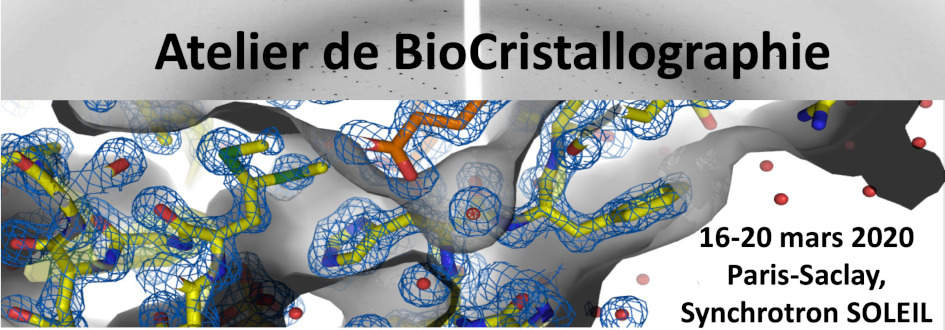
3rd National Bio-crystallography Workshop: Atelier de BioCristallographie
| - |
In SOLEIL, Paris
This workshop is aimed at PhD students, post-doctoral fellows and any researchers or engineers involved in the field of bio-crystallography.Â
The workshop will contain lecture classes and hands-on experimental sessions, which will include time for the collection and processing of X-ray diffraction data collected on the Proxima-1 and Proxima-2A beamlines at SOLEIL.
Participants are invited to attend a MOOC session, which is accessible here, prior to attending the workshop.
Registration is limited to 12 participants. Registration deadline: 31st January 2020.Â
A Tribute to Isabelle Grillo: The Extraordinary Structure of Ordinary Things
| - |
In ILL, Grenoble
Isabelle Grillo dedicated her scientific life to the art of mixing surfactants, nanoparticles, polymers, emulsion droplets, as seen through the eyes of small-angle scattering. She showed that it is the most elegant method to go to the heart of colloidal interactions, by probing the intricate balance of colloidal forces, the morphology and the evolution of complex fluids.
Through the words of her closest collaborators, this symposium will highlight her outstanding contribution spanning from fundamental approaches to very practical industrially relevant questions on everyday products.
Registration and abstract submission for posters is now open. The deadline for abstract submission is 23 February 2020.Â
Batteries. Gordon Research Conference
| - |
In Ventura, CA
Understanding Coupled Behaviors of Energy Storage Beyond Energy and Power
Batteries (GRS)
| - |
In Ventura, CA,
Interplay Between Internal Interfaces and External Environment on Battery Performance
Colloidal, Macromolecular and Polyelectrolyte Solutions
| - |
In Ventura, CA
Engineered Response in Soft Matter
Multifunctional Materials and Structures. GRC
| - |
In Ventura, CA
Progression from Integrated Multifunctionality to Neuromorphic Networks for Autonomy
7th International School of Crystallization: Pharmaceuticals, Foods, Agrochemicals, Minerals, New Materials (ISC2020)
| - |
In Granada
Multifunctional Materials and Structures (GRC)
| - |
In Ventura, CA
Materials Research Society 2020 Spring Meeting and Exhibition
| - |
In Phoenix, AZ
Advanced Materials for Sustainable Infrastructure Development (Gordon Research Conference)
| - |
In Ventura, CA