Topics
General
IWXM 2015 - International Workshop on X-Ray Optics and Metrology
| - |
In Berkeley, CA

3D solutions in Cryo-Electron Microscopy 2015
| - |
In Maastricht
The aim of this workshop is to show, through lectures and practical courses, the Solutions for 3D reconstruction in Cryo-Electron Microscopy.
Methodology
The lectures will cover single particle analysis, cryo-tomography of isolated specimens and cryo-tomography of structures inside a vitreous cryo-section or lamella and cryo-CLEM. The practical courses will show to the participants how to do sample preparation (high pressure freezing, plunge freezing, vitreous sectioning and cryo-fibbing), image acquisition in cryo-EM single-particle and cryo-tomography and 3D-reconstruction.
IKZ Summer Course on Crystal Growth 2015
| - |
In Berlin
Defect formation during crystal growth from melt and selected epitaxial processes
This lecture course gives an overview of the important defect types, their origins and interactions during the bulk crystal growth from the melt and selected epitaxial processes. The equilibrium and nonequilibrium thermodynamics, kinetic and interaction principles are considered as driving forces of defect generation, incorporation and ensembling. Results of modeling and practical in situ control are presented. Strong emphasis is given to semiconductor crystal growth since it is from this class of materials that most has been first learned, the resulting knowledge then having been applied to other classes of material. The treatment starts with melt-structure considerations and zero-dimensional defect types, i.e. native and extrinsic point defects. Their generation and incorporation mechanisms are discussed. Micro- and macro-segregation phenomena - striations and the effect of constitutional supercooling - are added. Dislocations and their patterning are discussed next as a central course theme. The role of high-temperature dislocation dynamics for collective interactions, like cell structuring and bunching, is specified. Additionally, some features of epitaxial dislocation kinetics and engineering are illustrated. Next the grain boundary formation mechanisms, such as dynamic polygonization and interface instabilities, are discussed. The interplay between facets, inhomogeneous dopant incorporations and twinning is shown. Finally, second phase precipitation and inclusion trapping are discussed. The importance of in situ stoichiometry control is underlined. Generally, selected measures of defect engineering are given at the end of each chapter. Monday, 13.07.2015, 09:00 - 11:00 Overview, melt structure and point defect formation Monday, 13.07.2015, 14:00 - 16:00 Dislocation background and definitions Tuesday, 14.07.2015, 09:00 - 11:00 Dislocation dynamics Tuesday, 14.07.2015, 14:00 - 16:00 Grain boundaries, faceting and twinning Wednesday, 15.07.2015, 09:00 - 11:00 Second-phase particlesProf. Peter Rudolph, Professor Dr. habil, Dr. Ing., was born at July 1st, 1945 in Gera (Germany). After high-school graduation 1964 in Berlin and subsequent study at the Technical University of Lviv (Ukraine) he received the Diploma of Electronic Technology in 1969. The PhD (Dr. Engineer) of Solid State Physics and Technology he obtained at the same university in 1972. From 1973 to 1993 he was employed at the Institute of Crystallography and Material Science of the Humboldt University in Berlin. In 1978 he prepared μg-crystal growth experiments for the first German manned space flight. In 1979 he obtained the DSc (Dr. habil) of Crystallography at the Humboldt University. Here, in 1980 he became the head of the Laboratory of bulk Crystal Growth and in 1985 the university professor position. From 1991 to 1993 he was member of the expert group of the ESA on μg-melt growth experiments. From 1993 to 1994 and in 1998 he held guest professorships at the Institute for Material Research of the Tohoku University in Sendai (Japan). During these times he also co-laborated with numerous Japanese Companies. Then, from 1994 to 2011 he was employed at the Leibniz Institute of Crystal Growth (IKZ) in Berlin. After his retirement in 2011 he is still related active as crystal technology consultant (CTC) for research and industry. He published about 300 original papers, reviews, book contributions, and is co-author of 35 patents. Recently he edited the 2-nd volume of Elsevier´s Handbook of Crystal Growth. He held diverse guest lecture courses in more than 15 countries around the world. He acted also as lecturer of several International Schools on Crystal Growth of the IUCr and IOCG. Peter Rudolph has held various functions in the VfK (secretary), DGKK (president, head of working group), IUCr and IOCG (executive committee). In 2001 and 2008 his former teams won the Innovation Prize of Berlin-Brandenburg.
Â
NJUST/CCP4 school: From data processing to structure refinement and beyond
| - |
In Nanjing
The first CCP4 Chinese crystallographic school will take place at the Nanjing University of Science and Technology (NJUST). It will focus on macromolecular structure solution, refinement and validation from X-ray diffraction image data.
The school will cover many modern crystallographic software packages including CCP4, XDS and SHELX, taught by authors and other experts. It will be organized in three sections â€" lectures, tutorials and hands-on trouble-shooting.
Applicants: Graduate students, postdoctoral researchers and young scientists at the assistant professor level are encouraged to apply. Only 20 applicants will be selected for participation. Participants of the workshop are strongly encouraged to bring their own problem data sets or crystals so the problems can be addressed during the school.
Application information: The application deadline is Friday August 7th. The application form, the program, contact info and other details can be found at
http://www.ccp4.ac.uk/schools/china-2015/index.php
Fees: There is no fee for the workshop. The students will be responsible for their transportation and lodging. The workshop organizers can help make the reservations for hotel accommodation close to NJUST. The likely total cost for lodging and meals will be in the region of 2500 RMBs.
Data Processing and Structure Solution Workshop
The aim of this workshop will be to cover all aspects of the structure solution process in macromolecular crystallography, starting from data processing, through phasing and refinement, and ending with validation and deposition.
The workshop will cover many popular programs used for data processing and structure solution with the software developers available to help throughout the week. Programs covered will include: Mosflm, Scala, DIALS, XDS, Refmac, ArpWarp, Phaser, Coot, SHELXC/D/E, BALBES, MrBUMP, Buccaneer and many more.
In Situ Serial Crystallography Workshop
| - |
In Paul Scherrer Institut
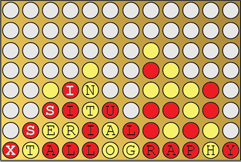
 This workshop is dedicated to the presentation of a novel in meso in situ serial crystallography (IMISX) method (Huang et al. 2015 Acta Cryst. D), which combines the many advantages of glass plates with high-throughput in situ serial data collection capabilities.  The workshop consists of introductory lectures, followed by hands-on practicals on methods for growing crystals of membrane proteins by the in meso or LCP method, for collecting serial diffraction data on micro-crystals directly in situ and for processing the data most efficiently for high-resolution structure determination.  There is no registration fee and all local expenses will be covered, but participants are requested to take care of their travel arrangements. The workshop is limited to 20 students. The application deadline is August 15.
Crystallography Symposium
|
In Liverpool University
Barkla X-ray laboratory of Biophysics was opened on 21st July 2011 by Sir Tom Blundell and Late Dame Louise Johnson. Charles Glover Barkla was a graduate and then a lecturer at the University. He made key contributions to the birth of X-ray physics and crystallography (http://www.biophysics.liv.ac.uk/X-rays_Liverpool.html), for which he received the 1917 Nobel Prize in physics. Arnold Beevers and Henry Lipson, who were also student and staff at Liverpool in the 1930’s invented the Beevers-Lipson strips which became the workhorse of crystallographic calculations (Fourier synthesis) prior to the emergence of calculating machines and computers in the 1960’s. A symposium is organized to celebrate the achievements of Lipson & Beevers in the presence of a number of family members of Henry Lipson. An X-ray exhibition will be opened at the end of the symposium celebrating the achievements of Sir Oliver Lodge (the first Physics Professor of the University, 1881), Barkla, Beevers & Lipson.
Â
Session OneÂ
Chair: Professor Anthony Hollander, Director IIB
10:30 - 10:40
Welcome: Professor Samar Hasnain, Max Perutz Professor of Molecular Biophysics Â
10:40 â€" 11:10
Eleanor Dodson, FRS (University of York) Â
Fourier Maps I have known; from Beevers-Lipson strips to Winograd Fast Fourier Transforms
11:10 â€" 11.20
Peter Strickland (IUCr’s Executive Managing Editor)
Lipson & IUCr
11:20 â€" 12:30
Session Two         Â
Chair: Prof Stephen Holloway, Pro-Vice ChancellorÂ
11:20 â€" 11:45
Mike Glazer, Vice President of IUCr (Oxford University)
Role of Lipson in Crystallography
11:45 â€" 12:10
Stephen Lipson (Technion, Israel)
My youth with Fourier Strips
12:10 â€" 12:30
Hod Lipson (Cornell/Columbia)
Fourier Strips: The dawn of bioinformatics
VOTE OF THANKS & GROUP PHOTOÂ
12:40Â
Professor Janet Beer, Vice Chancellor will open the X-ray exhibition celebrating the achievements of Barkla, Beevers, Lipson and Lodge at Liverpool
12:40 - 14:00
LUNCH & DEPARTUREÂ

3D solutions in Cryo-Electron Microscopy 2015
| - |
In Maastricht
The aim of this workshop is to show, through lectures and practical courses, the solutions for 3D reconstruction in Cryo-Electron Microscopy.
Methodology
The lectures will cover single particle analysis, cryo-tomography of isolated specimens and cryo-tomography of structures inside a vitreous cryo-section or lamella and cryo-CLEM. The practical courses will show to the participants how to do sample preparation (high pressure freezing, plunge freezing, vitreous sectioning and cryo-fibbing), image acquisition in cryo-EM single-particle and cryo-tomography and 3D-reconstruction.
22nd Conference of the Serbian Crystallographic Society
| - |
In Smederevo

Summer School for Big Data in Biology
| - |
In Austin, TX
The Center for Computational Biology & Bioinformatics at The University of Texas at Austin is proud to host the 2nd annual Summer School for Big Data in Biology.
The Summer School offers intensive four-day workshops on diverse topics for analysis of large-scale DNA, RNA, and protein datasets. The summer schools provides a unique hands-on opportunity to acquire valuable skills directly from experts in the field, with courses tailored towards novices or intermediate and advance users.
This year we offer 10 workshops. Each workshop will meet for four half-days (either mornings or afternoons) for a total of twelve hours. Instructors will post lectures, datasets, exercises, and course information on a website accessible to enrolled participants. There will be no examinations, but participants may request certificates of completion. Academic credit will not be issued. Please carefully check the specified prerequisite knowledge before enrolling in a course.

Third CCP4-OIST school: From data processing to structure refinement and beyond
| - |
In Okinawa
Software workshop: the workshop will be taught by authors and other experts, including Garib Murshudov (refmac), Victor Lamzin (arp/warp), Robbie Joosten (pdb_redo) and Phil Evans (aimless). It will be organized in three Sections - lectures, tutorials and hands-on trouble-shooting. We will also be covering the use of DIALS for data processing and the new ccp4 interface.
There will be model data sets available for tutorials but data, provided by participants, will have higher priority for the hands-on sessions.
Applicants:
Graduate students, postdoctoral researchers and young scientists at the assistant professor level are encouraged to apply. Only 25 applicants will be selected for participation. Participants of the workshop are strongly encouraged to bring their own problem data sets so the problems can be addressed during data collection workshop and/or hands-on sessions.
Application:
Application deadline is 22 August. Application form, the program, contact info and other details can be found at http://www.ccp4.ac.uk/schools/OIST-2015
Fees:
There is no fee for the workshop. The students will be responsible for their transportation costs outside Okinawa. Lodging will be provided at the OIST Guest House "Seaside House". The workshop will also cover the expenses for all meals and refreshments.
Atomic Physics. GRC. From Ultracold to Strongly Interacting Quantum Systems
| - |
In Newport, RI
Polymers. Progress Towards Tomorrow's Materials. GRS
| - |
In South Hadley, MA
Serial Crystallography Data Analysis with Cheetah and CrystFEL: Concepts and Tutorials
|
In Philadelphia, PA
The workshop will be held the day prior to the ACA conference
 *Workshop format:*
The workshop will start with an introductory seminar, followed by most of
the day dedicated to detailed, hands-on tutorials with data sets collected
at LCLS using the software suites Cheetah and CrystFEL, two of the most
commonly used packages for SFX analysis.Â
*Target audience:*
This workshop is intended for graduate students, postdocs and young
scientists interested in the details of serial femtosecond crystallography
data analysis. It is not intended as an introduction to crystallography.
Participants will be assumed to have at least a basic knowledge of
conventional crystallographic data analysis, as we will focus on the
specific features of SFX analysis. Participants will also be expected to
have familiarity with Unix commands. Practice data (from cxidb.org <
http://cxidb.org > ) will be available, and participants are welcome to
bring their own SFX data.
Computing resources and temporary data storage space will be provided by
LCLS, SLAC National Accelerator Laboratory. Students will be sent detailed
information prior to the workshop to ensure they have an active Unix
account at SLAC, and should bring laptops with appropriate software
preinstalled.
Â
BioXFEL STC 3rd Annual International Conference
| - |
In San Juan
Conference Co-Chairs: Dr Edward Snell (HWI) and Dr George Phillips (Rice)
Confirmed Speakers
- Andrew Aquila (SLAC)
- Guillermo Calero (U. Pittsburgh)Â
- Marco Cammarata (U. Rennes)Â
- Henry Chapman (DESY)
- Vadim Cherezov (USC)
- Aina Cohen (SSRL)
- Jeffrey Donatelli (LBL)
- Cathy Drennan (MIT)
- Robert Fischetti (Argonne)
- Petra Fromme (ASU)
- Klaus Giewekemeyer (European XFEL)
- Helen  Ginn (Oxford)
- Heinz Graafsma (DESY)Â
- Arjen Jakobi (EMBL)
- Jan Kern (LBL)
- Rick Kirian (ASU)
- Haiguang Liu (Beijing CSRC)
- Osamu Miyashita (RIKEN)
- Henrike Mueller-Werkmeister (U. Toronto)
- Abbas Ourmazd (UWM)
- Ilme Schlichting (MPI)
- Robert Schoenlein (SLAC)
- Joerg Standfuss (PSI)
- Martin Weik (IBS)
- Rahel Woldeyes (UCSF)
Neutrons and Synchrotron Radiation for Magnetism. Hercules Specialized Course HSC18
| - |
In Grenoble
   Practicals will take place at the European neutron (ILL) and synchrotron radiation (ESRF) facilities located in Grenoble.
   The attendance will be limited to 24 participants (mainly PhD students and post-doctoral researchers) to allow an active participation in the practicals, a strong interaction between the participants and the lecturers, as well as among the participants themselves.
Crystal Shape Engineering - Summer School
| - |
In Zurich
Modeling, measuring and controlling crystal shape
The course will be divided into five different topics, held by experts in the field:
Molecular ModelingÂ
Prof. Michele Parrinello and Dr. Matteo SalvalaglioÂ
Università della Svizzera Italiana / ETH Zurich, Switzerland
Mechanistic Growth Models
Prof. Michael F. DohertyÂ
University of California Santa Barbara, USA
Population Balance Modeling Â
Prof. Marco MazzottiÂ
ETH Zurich, Switzerland
Monitoring Particle Size and Shape Â
Dr. Thomas VetterÂ
University of Manchester, UK
Optimization and Control of Crystallization Processes Â
Prof. Zoltan K. NagyÂ
Purdue University / University of Loughborough, USA / UK
ICTMS 2015. 2nd International Conference on Tomography of Materials and Structures
| - |
In Quebec
The ICTMS 2015 is the biannual conference of the IntACT (International Association of Computed Tomography).
This four full day congress is dedicated to CT-Scanning for non-medical applications. The 2nd International Conference on Tomography of Materials and Structures will bring together an international group of scientists to discuss a broad range of issues related to the use of computed tomography in materials and structures and all its related topics.
- X-ray and neutron tomography acquisition hardware, software and set-ups.
- Recent advances in CT imaging.
- Case studies including applications on miscellaneous materials and structures.
Presentations will be made within 2 parallel oral sessions. Contributions from universities, government and industry are welcome.
Themes
Themes of the congress encompass, but are not limited to, the following topics:
1Â X-Ray and Neutron Tomography, acquisition hardware, software and set-up.
- 1.1 â€" Synchrotron. (Chairmen: Robert Winarski & Jan Carmeliet)
- 1.2 â€" Micro-CT. (Chairmen: Matthieu Boone, Jan Van den Bulcke & Adrian Sheppard)
- 1.3 â€" Interferometry. (Chairmen: Leslie Butler & Francesco De Carlo)
- 1.4 -Physics of X-Ray. (Chairmen: Philippe Després & Giovani Grasselli)
2 â€" Recent Advance in CT & Synchrotron Imaging
- 2.1 â€" Advance in reconstruction algorithms. (Chairman: Andrew Kingston) Â
- 2.2 â€" Geotechnic. (Chairmen : Jacques Desrues & Stephen Hall)
- 2.3 â€" Multi-tissue quantitative Imaging technique. (Chairmen : Eric Landis & Sabine Rolland de Roscoat)
- 2.4 â€" 3D imaging. (Chairmen : Dominique Bernard & Khalid Alshibi)Â
- 2.5 â€" Developing image analysis tools for synchrotron imaging and microscopy. (Chairmen : Xianghui Xiao & Ross Harder)
3 â€" Case studies
- 3.1 â€" Hydraulics and sediment transport. (Chairmen : William Arnott & Bernard Long)
- 3.2 â€" Geomaterial, Materials, Structures and Mineralogy. (Chairmen : Jean-Yves Buffière & Yosuke Higo)
- 3.3 â€" Wood. (Chairmen : Dominique Derome, Jan Van den Bulke & Gabor Szathmary)
- 3.4 â€" Sedimentology and Palaeontology. (Chairmen : Richard Ketcham & Patric Jacobs)
- 3.5 â€" Quaternary Deposits. (Chairmen : Pierre Francus & Mathieu Duchesne)Â
- 3.6 â€" Innovative ;Geotechnical Applications. (Chairmen : Jun Otani, Gioacchino Viggiani & Didier Perret)
- 3.7 â€" Rock porosity and gas sequestration. (Chairmen : Patrick Selvadurai & Michel Malo)
- 3.8 â€" Concrete & building rocks. (Chairmen : Jacques Marchand & Veerle Cnudde)
- 3.9 â€" Porous Material. (Chairmen : Nicolas Lenoir & Takafumi Sugiyama)
- 3.10 â€" Hydrogeology, water infiltration and pollution. (Chairmen: Richard Martel, Subhasis Ghoshal)
- 3.11 â€" Archaeology. (Chairmen : Réginald Auger & Geneviève Treyvaud)
- 3.12 â€" Biogenic sedimentary structure and dynamics: marine, fresh water, and terrestrial systems. (Chairmen : Robert Aller & Emma Michaud)
- 3.13 â€" Petroleum core analysis. (Chairmen : Mike London & Caliskan Sinan)

X-ray Science. Gordon Research Conference
| - |
In Easton, MA
X-Ray Science Utilizing the Dramatic Increases in Peak and Average Brightness from Current/Planned Next Generation Accelerator Based X-Ray Sources
The importance of X-ray science across a broad range of areas in science and engineering continues to grow. The Gordon Research Conference on X-Ray Science has a long history of bringing together leading scientists at the forefront of X-ray-based science. Planned upgrades to storage rings and ever increasing capabilities of X-ray lasers drive the growth in the breadth and importance of X-ray science.
There appears to be no end in sight for the unparalleled growth in performance of accelerator-based X-ray sources. New developments in experimental techniques continue to push into uncharted territories in physics, chemistry, biology, materials science, and a host of applied sciences. With the balance between basic and applied science constantly evolving, the conference will provide a unique forum to exchange ideas for the further evolution of X-ray Science.
An international list of speakers will describe the latest scientific and technological achievements in X-Ray Science as well as provide a view into the future. The conference, with its strongly interdisciplinary character, provides a stimulating environment to present the latest research in poster format, engage in discussions in a friendly setting, and exchange ideas with leaders in the field. We especially encourage young scientists early in their careers steps to participate and profit from this unique forum for exchange with leading scientists in a relaxed atmosphere. Selected posters will be given the opportunity for a short talk.
The 2015 GRC on X-ray Science will again be held in conjunction with the Gordon Research Seminar (GRS). The GRS (July 25-26, 2015), a two-day meeting preceding the GRC, is specifically designed for graduate students and early career researchers. The meeting offers an opportunity for young scientists to present their work to their peers. It is expected that GRS participants will participate in the subsequent GRC.
17th iWoRiD. International Workshop on Radiation Imaging Detectors
| - |
In DESY, Hamburg
PPXRD-13. XRD Training for the Pharmaceutical Scientist!
| - |
In Bad Herrenalb