Topics
Free-electron laser
Pittsburgh Diffraction Conference at SLAC
-
In Menlo Park, California, USA
The 2026 Pittsburgh Diffraction Conference will be held at SLAC National Accelerator Laboratory and features two parallel scientific sessions one focused on life sciences and the other on chemistry and materials scienc with shared keynote lectures bringing together the full community for interdisciplinary exchange.
- Opening Reception, September 15
- Parallel Scientific Sessions, September 16-18.
- Poster Session with Student Poster Contest, September 16th
- Conference Banquet, September 17th
- Tours of LCLS and SSRL, September 18th (advanced registration required)
To Register or learn more visit: https://cvent.me/Eaamay
A Pre-conference Workshop on Computational Tools for Structure-based Drug Design will be held on September 15th, with seperate registration.
Twenty-Seventh Congress and General Assembly (IUCr2026)
-
In Calgary
On behalf of the International Union of Crystallography (IUCr), it is with immense excitement and joy that we cordially extend our warmest invitation to you to join the IUCr for the Twenty-Seventh Congress and General Assembly, set to be held in the magnificent city of Calgary, located in the heart of Alberta, Canada from August 11th-18th, 2026.
Calgary, a city renowned for its breathtaking natural beauty and warm hospitality, has been chosen as the host for this remarkable occasion. Nestled amidst stunning landscapes and boasting a rich cultural heritage, this vibrant metropolis promises to provide an unforgettable experience for all attendees.
67th Polish Crystallographic Meeting
|
In Wroclaw
The Scientific Session of the Young Crystallographers Section of PCrA is a forum for exchanging experiences addressed primarily to students, PhD students and young doctors (maximum 5 years after defense).
The topics of the Meeting include basic and applied research on the ideal and real structure of crystals carried out with the use of X-ray radiation obtained both with traditional methods and in synchrotrons, research with the use of neutrons and electrons, problems of symmetry, phase transformations and crystal growth, new research and computational methods and all other aspects of crystallography. The conference is an annual meeting place and a forum for exchanging ideas of all Polish crystallographers.
During the inauguration of the 67th Polish Crystallography Meeting, the winners of the National Crystallography Olympiad will be decorated: http://olimpiadakrystalograficzna.pl.
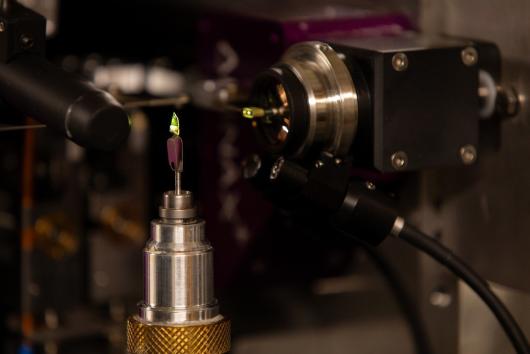
Scientific achievements through serial crystallography: a LINXS-MAX IV symposium
-
In Lund
Scientific achievements through serial crystallography: a LINXS-MAX IV symposium
| - |
In Lund
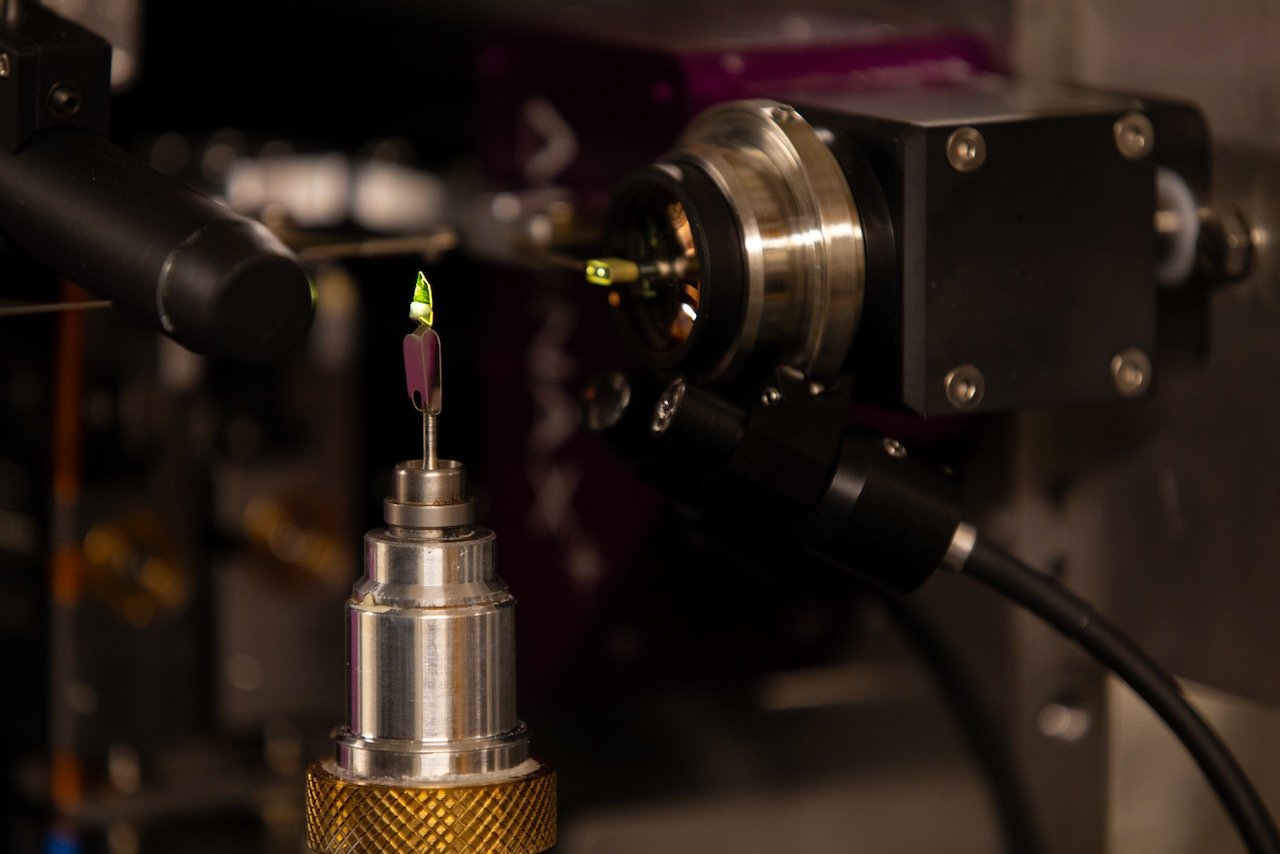
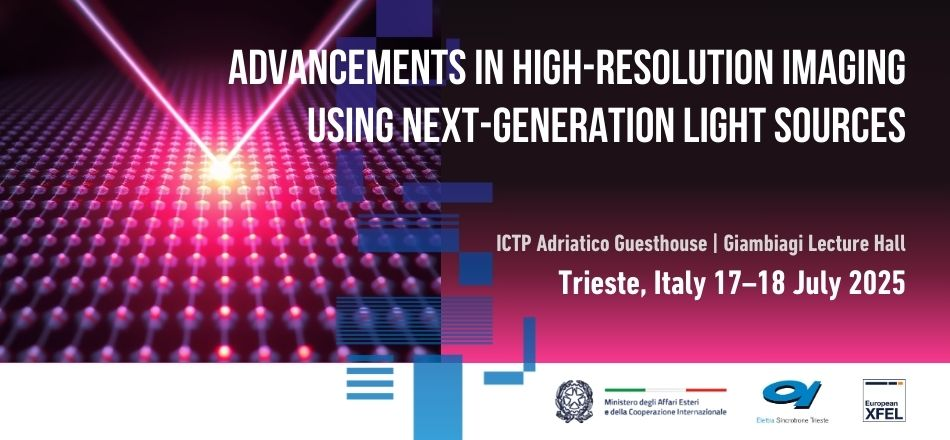
Advancements in High-Resolution Imaging Using Next-Generation Light Sources
| - |
In Trieste
Ultrafast X-Ray Summer School (UXSS)
| - |
In Villigen PSI
The plenary lectures cover the foundational principles and current state-of-the-art in ultrafast X-ray applications across a broad spectrum of scientific domains:
Fundamentals of X-ray free-electron lasers
Theory of x-ray matter interaction
Atomic and molecular physics
Ultrafast chemical dynamics
Condensed matter physics
Structural biology
Matter in extreme conditions
The focus talks and technical notes will cover current topics related to ultrafast X-ray sciences:
Attosecond science
Coherent diffractive imaging
X-ray optics
Detector technologies
Sample delivery systems
Quantum simulations

35 European Crystallographic Meeting
|
In PoznaÃ...„
 At the XXV Congress and General Assembly of the International Union of Crystallography in Prague, it was decided that the 35th edition of the European Crystallographic Meeting would be held in Lviv, Ukraine, in 2025.
 Unfortunately, there is a war in Ukraine, and it is not reasonable to organize a great scientific event in Lviv in 2025. An alternative was thus elaborated where, thanks to a collaboration between the Ukrainian Crystallographic Committee and the Polish Crystallographic Association, the conference site will be Poznan, a city in neighbouring Poland.
65th Polish Crystallographic Meeting - Konwersatorium Krystalograficzne
| - |
In WrocÃ...‚aw
The Polish Crystallographic Meeting, Scientific Workshop and Session of the Young Crystallographers Sections of PCrA will be held at the Institute of Low Temperature and Structure Research of the Polish Academy of Sciences, ul. Okólna 2 in Wrocław.
The Workshop is devoted to selected issues and problems of modern crystallography.
The Scientific Session of the Young Crystallographers Section of PCrAÂ is a forum for exchanging experiences addressed primarily to students, PhD students and young doctors (maximum 5 years after defense).
The topics of the Meeting include basic and applied research on the ideal and real structure of crystals carried out with the use of X-ray radiation obtained both with traditional methods and in synchrotrons, research with the use of neutrons and electrons, problems of symmetry, phase transformations and crystal growth, new research and computational methods and all other aspects of crystallography. The conference is an annual meeting place and a forum for exchanging ideas of all Polish crystallographers.

UK/Japan Symposium on Frontiers of Structural Biology
| - |
In Liverpool
The symposium celebrates the Japanâ€"UK partnership and brings together wide range of experts from Japan covering all of the frontier structural biology approaches including cryo-electron microscopy, synchrotron and free-electron laser X-ray crystallography and neutron crystallography.
The symposium will have two full days of lectures, the first day finishing with a public lecture by the Nobel Laureate Richard Henderson and the second day with lectures (open to the public) from Sir Tom Blundell and Dr Harren Jhoti, FRS (President and Chief Executive of Astex Pharmaceuticals).
The symposium is supported by the University of Liverpool and RIKEN together with BBSRC, STFC and ILL.
Registration is essential and is limited to 125 delegates. A small registration fee of £50 is being set to encourage ECR and PDRAs participation.
See the programme here.Â
Science@FELS 2024
| - |
In Paris and Synchrotron Soleil

European XFEL Users Meeting 2024
| - |
In Hamburg
HERCULES school: neutrons & synchrotron radiation for science
| - |
In Grenoble
Hercules European School is a five week course coordinated by the Université Grenoble Alpes (UGA). The school provides training for students, postdoctoral and senior scientists from European and non-European universities and laboratories, in the field of Neutrons, X-ray Synchrotron Radiation, and Free Electron Laser for condensed matter studies (Biology, Chemistry, Physics, Materials Science, Geosciences, Industrial applications). Neutron and X-ray science is integrated with complementary techniques like (but not only) optical and electron microscopy, NMR, optical spectroscopy.Â
It includes lectures, practical work, tutorials, and visits of Large Facilities: ALBA in Barcelona, KIT in Karlsruhe, DESY and European XFEL in Hamburg, Elettra and FERMI in Trieste, ESRF and ILL in Grenoble, SOLEIL in Paris-Saclay, and PSI in Villigen.Â
Â
The language of the course is English.Â
Â
ECM-34. European Crystallographic Meeting
| - |
In Padova
The flagship of the European Crystallographic Association (ECA) activities is the European Crystallographic Meeting (ECM), held every year, except when there is an IUCr Congress. The ECMs are the main meeting point for crystallographers in the ECA area to show their recent research. Microsymposia at ECMs are proposed and organized by ECA SIGs.
ECM 34 will be organized at the Padova Congress Centre on behalf of ECA and AIC. It will include all topics of interest to crystallography and it will be organized in synergy with EPIDC 18, which will follow ECM 34 in the same location.
10th Anniversary Meeting of the Young Crystallographers
|
In Hamburg, Germany
The Young Crystallographers are a working group within the German Society for Crystallography (DGK). For 10 years, we meet regularly in autumn at different universities or the STOE facilities.
These meetings specifically aim to provide a platform for networking and scientific exchange for young scientists with an interest in crystallography, as well as to establish contacts with industry and research institutions.
We want to give young scientists the opportunity to gain early experience in scientific presentation in a relaxed atmosphere and without the stress of a larger conference.
For our grand anniversary, we are happy to meet at the DESY facilities! We are working hard to allow you deep insights as well as a great overview of the possibilities at this large-scale facility.
During the 3-day meeting, you willÂ
- present your own work as a poster (A0 portrait) and lightning talk (~5 min.)
- have the DESY campus tour
- participate in an experiment and get a hands-on experience at a beamline of your choice at PETRA III (see The Experiments)
- hear academic talks from senior scientists
- hear industry talks from our sponsors/partners
At the end of the meeting, you will also have the chance to join a tour of the European XFEL Campus. If you intend to participate, please indicate so during registration. Note that you will need to get to the XFEL facilities by public transport as it is a bit outside the main DESY campus.
The registration fee of 60 € includes the tours and experiments at DESY, coffee breaks as well as lunch and BBQ on Thursday.
Deadline for registration is 22.08.23.
International BioXFEL Conference and Workshop
| - |
In San Juan, Puerto Rico

Diffraction Methods in Structural Biology Gordon Research Conference
|
In Lewiston, ME; USA
Structural biology is entering a new era. Not just the virus and biomedicine, not just astounding breakthroughs in prediction, but new and complimentary approaches are exploding onto the scene. It is time to imagine what could be achieved if there were no barriers to structural information, and to contemplate how we will combine our diverse strengths to overcome obstacles we always believed were insurmountable. An excellent place to start is crystallization, where the impact of any improvement would be very high, but predictive theory remains elusive. Preparation of electron microscopy grids faces a similar challenge. Each session will focus on a critical barrier in structural biology, and the goal will be formulating the best advice to newcomers to the field who will face these challenges. Where possible, test data with a clear scoring system will be defined, and friendly competition between proponents of different approaches will be encouraged. Current best practices will be described, evaluated and compared and the relative effectiveness of alternative approaches will be announced at the meeting. Open discussion is expected to uncover new insights, new approaches, new algorithms, and no doubt flaws in the tests. By the end of the meeting we will have established not only new best practices, but also improved the criteria we use to assess them.
14th International Conference on Biology and Synchrotron Radiation (BSR14)
| - |
In Lund
MAX IV, the pioneer in multi-bend achromat synchrotron technology, would like to invite the synchrotron and free electron laser (FEL) life science community to Lund to discuss the latest and hottest developments in the field at the 14th BSR.
By 2022, several other synchrotron facilities will also have upgraded their sources or have defined upgrade plans and the organizers feel it would be opportune to discuss and highlight the latest developments and the possibilities for biological experiments at the next generation of synchrotrons and FELS.
Main themes
- Membranes: lipids and proteins
- Synchrotrons and FELS for pandemic research
- Hybrid or correlative approaches to complex biology
- Scientific computing for life sciences
- Coherence approaches
- Environmental and bioeconomy/industrial and pharma
- Tissues and cells
- Dynamics and ultrafast science

9th International BioXFEL Conference
| - |
In Online
The 9th Annual International Conference will be chaired by Tonya Kuhl, UC-Davis, and Thomas Grant, UB. The meeting is currently virtual but we are investigating the potential for a hybrid format.
Registration is now open.
Â
Robert Buecker (CSSB-Hamburg)
Sarah Bowman (HWI)

Henry Chapman (DESY)

Ahmad Hozzeinedeh (UWM)

Hyotcheryl Ihee (KAIST)

Richard Kirian (ASU)

J. Mia Lahey-Rudolph (Lubeck)

Filipe Maia (PSI)

Valerio Mariani ((SLAC)

Fivos Perakis (Stockholm)

Megan Shelby (LLNL)

Jason Stagno (NIH)

Pablo Villaneuva-Perez (Lund)

Nadia Zatsepin (LaTrobe)

Jian-Min Zuo (U of IL-Urbana Champagne)
International School of Crystallography. 46th Course, Crystallography under extreme conditions: the future is bright and very compressed
| - |
In Erice
Subjecting matter to extreme conditions reveals a multitude of fascinating phenomena, and is applicable to a wide range of disciplines. From the extremophiles that exist in the deepest depths of our oceans to the exotic new materials that are made when atoms are pushed ever closer together, understanding the structure of materials at extreme conditions affects Biology, Chemistry, Physics, Geoscience and Material Science. In order to achieve its goals, high pressure research has been always at the vanguard of technical progress. It is a discipline in which equipment plays a particularly important role. State-of-the-art diamond anvil cells can now achieve megabar ranges of pressure, millions of times atmospheric pressure, with this beaten by an order of magnitude in dynamic compression experiments. In this manner, scientists are able to mimic the conditions in the interiors of giant planets. Nature is even more ambitious, as in the stars petapascal pressures (the order of tens to hundreds billion atmospheres) are reached. In the laboratory, we can even create conditions of pressure, temperature and magnetic fields that are not found naturally, allowing us to complement nature to explore more exotic phases of matter.
Therefore, the course will cover broad ground in the application of extreme conditions crystallography. The topics will span from fundamentals of high-pressure single crystal and powder diffraction, to presenting the many flavors of static and dynamic compression, to reviews of sources for extreme conditions work (synchrotrons, neutrons and free electron lasers). Complementary experimental (Mössbauer spectroscopy, X-ray magnetic circular dichroism, X-ray absorption spectroscopy, inelastic scattering) and computational methods will also be discussed. Diffraction analysis on the structure of liquids, glasses and nanocrystalline materials as well as multigrain crystallography will also be introduced. The lectures will be harmonized with the related sessions of interactive tutorials, providing hands-on experience to the attendees. These workshops will be focused on basic laboratory skills and the elements of data processing software related to the high pressure.