Events
Symposia
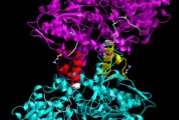
The 28th Annual Symposium of The Protein Society
| - |
In San Diego, CA
ISMB Symposium 2014
| - |
In London
At the interface of Structural, Chemical, Computational and Cell Biology
6th Symposium of the Institute of Structural and Molecular Biology.
5th CSHA Symposium: Structural Biology - From Atoms to Molecules
| - |
In Suzhou
We are pleased to announce Cold Spring Harbor Asia Symposium on Structure Biology which will be held at the Suzhou Dushu Lake Conference Center in Suzhou, China, located approximately 60 miles west of Shanghai. The conference will begin at 7:00pm on the evening of Monday June 9, and will conclude after lunch on June 13, 2014.
The conference will include eight oral sessions and one poster session covering the latest findings across many topics in Structural Biology. Many talks will be selected from the openly submitted abstracts on the basis of scientific merit and relevance. Social events throughout the conference provide ample opportunity for informal interactions.
Major Topics:- Novel Imaging Techniques
- Emerging methods
- Dynamic ensembles and biological function
- Frontiers in Structural Biology (1) - Macromolecular machinery
- Frontiers in Structural Biology (2) - membrane proteins
- Frontiers in Structural Biology (3) - Pathogens and Viruses
- Frontiers in Structural Biology (4) - Signaling complexes

University of Malaya Chemical Crystallography Symposium 2014
|
In Auditorium Bangunan Makmal Kimia (New Chemistry Building), University of Malaya
The University of Malaya organizes a one-day symposium on chemical crystallography entitled "Celebrating the International Year of Crystallography, IYCr2014".
Guest of honour: Prof. Dr Gautam R. Desiraju, IISc (Bangalore), current President of the International Union of Crystallography and UM HIR Academic Icon.
Venue: Auditorium Bangunan Makmal Kimia (New Chemistry Building), University of Malaya.
​Fees (inclusive of tea breaks and lunch, Abstract book; payment on the day): RM10 students (under-graduates, free); RM20 others.
Registration​ (name, status and institution) to Miss Nabihah (bha_namn@yahoo.com.my) by May 25th - limited to 130 participants.
Offers of Oral Presentations with titles (10-15 minutes) to Dr Nadiah (nadiahhalim@um.edu.my) as soon as possible. Students are especially encouraged to offer to present.
Offers of Poster Presentations (with titles and Abstract) to Miss Wani (haz_wani87@hotmail.com) by May 25th - limited to 50 presentations.Â
Thanks to the Department of Chemistry for sponsorship and to MoE High Impact Research scheme for hosting Prof. Desiraju.
Joint Congress of Asian Crystallization Technology Symposium-2014 and 11th International Workshop on Crystal Growth of Organic Materials
| - |
In Nara
- Mechanism of Nucleation and Crystal Growth
- Crystallization at Extreme Conditions and in External Fields
- In-situ Monitoring and Control of Nucleation and Crystal Growth Process
- Technologies for Purification, Waste Treatment and Recovery
- Crystallizer
- Modeling of Crystallization Process
- Crystallization Process Design, Simulation and Control
- Stabilization of Amorphous
- Epitaxial Growth
- Polymorphism
- Phase Transitions
- Crystal Structure
- Intermolecular Interactions
- Chirality and Resolution
- Cocrystal
- Growth of Biological Materials and Biologically-Directed Growth
- Biomineralization,
- Nanostructures and Nanoporous Crystals
- Liquid Crystals
- Novel Materials and Structure
The program will take place in two parallel sessions (ACTS & CGOM) and will include plenary and invited lectures, invited communications, oral communications, poster presentation and an exhibition.
Â
Impact of Crystallography on Modern Science
|
In Turin
The Academy of Sciences of Turin is organizing a one-day interdisciplinary conference - celebratory of IYCr2014 - involving speakers operating in Biology, Chemistry, Physics, Materials Science and Earth Sciences, as well as more applied areas such as Cultural Heritage and Environment. The CrisDi Interdepartmental Center for Crystallography of the University of Turin sponsors the organization of the conference.
Program:
9.30 - Giovanni Ferraris (giovanni.ferraris@unito.it, Emeritus, University of Turin, Academy of Sciences of Turin) - Introduction: Crystallographers at the Accademia delle Scienze di Torino.
10.00 - Robert Huber (huber@biochem.mpg.de, Max Planck - Institut fuer Biochemie Emeritusgruppe Strukturforschung D- 82152 Martinsried - Germany) - Beauty and Fitness for Purpose: the Architecture of the Proteins Building Blocks of Life.
10.45 - Gianfranco Gilardi (gianfranco.gilardi@unito.it, University of Turin, Accademia delle Scienze di Torino) - Structural Basis of Cytochrome P450 Function in Cell Defense and Sexual Development.
11.15 - Interval
11.30 - Piero Ugliengo (piero.ugliengo@unito.it, University of Turin) - Quantum Mechanical Modeling as a Virtual Microscope to Understand Biomaterials.
12.00 - Alessia Bacchi (alessia.bacchi@unipr.it, University of Parma) - Crystallography, Chemistry and Drugs: a New World at the Nanoscale.
12:30 to 14:30 Lunch Break
AfternoonÂ
14.30 - Livio Battezzati (livio.battezzati@unito.it, University of Turin, Accademia delle Scienze di Torino) - Topology and Chemistry in the Frustrated Symmetry of Quasicrystals.
15.00 - Carlo Lamberti (carlo.lamberti@unito.it, University of Turin) - Combining Crystallographic and Spectroscopic Approaches to Understand Complex Materials.
15.30 - Marco Truccato (truccato@to.infn.it, University of Turin) - The Combined Use of X-rays and Electrical Measurements to Explore (and Modify) Superconducting Oxide.
16.00 - Interval
16.15 - Mauro Prencipe (mauro.prencipe@unito.it, University of Turin) - Unraveling the Secrets of the Inner Earth by Means of a Computer: Mechanisms of Compressibility and Thermal Expansion of Crystals from a Theoretical Point of View.
16.45 - Fernando Cámara (fernando.camaraartigas@unito.it, University of Turin) - Probing the Crystal Structure of Minerals far from Room Conditions: the Contribution of X-ray Diffraction in the Lab.
17.15 - Roberta Oberti (oberti@crystal.unipv.it, CNR, Pavia; Accademia delle Scienze di Torino) - Crystallography and Crystal-Chemistry for a Deeper Understanding of Geological Processes.
17:45 - Discussion and conclusions.
XXIV Symposium of the Specialized Group on Crystallography and Crystal Growth (GE3C)
| - |
In Bilbao
The Congress will be held at the Bizkaia Aretoa building: the auditorium of the University of the Basque Country (UPV / EHU) in the city of Bilbao. This building, designed by architect Ãlvaro Siza , is located in one of the most emblematic areas of Bilbao, over the sea loch and next to the Guggenheim Museum, just in the middle of Abandoibarra Avenue.
Â
Themes for 2014 symposia include:
- Biomaterials
- Crystal growth
- Crystallography
- Materials for energy
- Porous materials, Metal-organic Frameworks (MOFs)
- Nanomaterials
International Symposium on Nanostructured Functional Materials (NanoFunMat2014)
| - |
In Warszawa-Pultusk
NanoFunMat2014 is organized by the Institute of Physical Chemistry of the Polish Academy of Sciences, one of the leading scientific institutions in Central and Eastern Europe. IPC-PAS has a long tradition of organizing high-end meetings gathering some of the leading chemists, physicists and materials scientists from around the world. Perhaps one of the most illustrative examples here is the International Symposium on Supramolecular Chemistry (ISSC), which has been held annually since the early 1980s and by now developed into a prestigious International Symposium in Macrocyclic and Supramolecular Chemistry (for more information, please see ISMSC-8). Last year, we also initiated a symposium devoted to Mechanochemistry in Synthesis and Nanoscience (ISMech2013), which turned out to be an unusual success. NanoFunMat is our next venue and we have high hopes for its success and lasting impact.
The Symposium will cover a broad range of nanomaterials and their applications in electronics, optics, medicine, and more. We hope the meeting will provide a great opportunity to exchange knowledge and ideas with the top-level scientists from the EU and beyond.
Topic Areas
1. Chemistry of molecular precursors
2. Molecular functional materials
3. Semiconducting nanocrystals: design, preparation and applications
4. Functional materials in bioapplications
5. Nanostructured materials for electronics, optoelectronics and photonics
6. Nanostructured soft materials
7. Porous functional materials: design & applications
8. Nanoparticulate metals & metal oxides in catalysis and materials science
18th International Symposium on the Reactivity of Solids
| - |
In Saint-Petersburg
The aim of the symposium is to provide an opportunity to extend current knowledge, promote progress, and open up new vistas in the field.
Since 1948 a group of distinguished scientists from all over the world and from a wide range of fields gathered at the International Symposium on the Reactivity of Solids to discuss recent results and future experimental developments in the fields of the reactivity of solids. A characteristic feature of this symposium is that it is not a function of a particular society but is arranged by a local organizing committee, with input from many past attendees, and lives on the enthusiasm and on the scientific curiosity of a world-wide community. The flavor is distinctly international and decidedly interdisciplinary.
A special focus will be devoted to reactivity of materials for energy and environment.
TOPICS
1- Transport Phenomena in Solids: Point Defects and Reactivity of Solids
2- Reactivity and nanomaterials
3- Reactivity and Catalysis
4- Reactivity of Materials for Energy and Environment
5- Reactivity and composite materials
6- Functional Materials for Sustainable Energy Systems (Batteries, thermoelectrics, solar cells, ...)
7- Reactivity of Solids in the Geologic and Planetary Environment
8- Novel materials and new synthesis routes
9- Chemistry in unconventional media (ionic liquids, supercritical fluids, ...)
10- Advances in Characterization of Reacting Solids
11- Theory and modelling
Chronology
1948 Â Paris, France1952 Â Geteborg, Sweden
1956 Â Madrid, Spain
1960 Â Amsterdam, The Netherlands
1964 Â Munich, Germany
1968 Â Schenectady, USA
1972 Â Bristol, United Kingdom
1976 Â Geteborg, Sweden
1980 Â Cracow, Poland
1984 Â Dijon, France
1988 Â Princeton, USA
1992 Â Madrid, Spain
1996 Â Hamburg, Germany
2000 Â Budapest, Hungary
2003 Â Kyoto, Japan
2007 Â Minneapolis, USA
2011 Â Arcachon, France
2013Â Saint-Petersburg, Russia
Â
2nd International Symposium on Science at J-PARC
| - |
In Tsukuba
The symposium will be followed by a satellite workshop on July 16.
Plenary Speakers
- Hitoshi Murayama (Director, KAVLI IPMU, Univ. of Tokyo, Japan)
- Sadamichi Maekawa (Director General, ASRC, JAEA, Japan)
- Marc Schyns (BNRC, Belgium)
- Tadashi Koseki (J-PARC, Japan)
- Takehiko Saito (GSI, Germany)
- Shoji Nagamiya (Former Director of J-PARC Center & Science Advisor of RIKEN, Japan)
- Jean-Michel Poutissou (TRIUMF, Canada)Â
- Masatoshi Futakawa (J-PARC, Japan)
- Ken Andersen (ESS, Sweden)
- Klaus Kirch (PSI, Switzerland)
- Rob McQueeney (ORNL, USA)
15th Tetrahedron Symposium
| - |
In London

International Symposium on Crystallography - 100 years of History
| - |
In Fortaleza
In celebration of the International Year of Crystallography
The symposium will be the first event scientific crystallography to be held in the Northeast and brings together professionals and students working in the area of materials characterization by X-ray diffraction, electrons and neutrons, as well as other states of Brazil, involving all the major areas of knowledge that use diffraction techniques.
The theme of the symposium, 100 Years of crystallography due to the fact that the year 2014 was chosen by the International Union of Crystallography IUCr as the International Year of Crystallography (see page http://www.iycr2014.org) in commemoration of the 100th anniversary of the awarding of the Nobel physics prize to Max von Laue in 1914 due to his work on X-ray diffraction in crystals.The experiment performed by two collaborators (W. Friedrich and P. Knipping) in crystal Cu sulfate, idealized by von Laue, opened the way for Sir William and Sir Laurence Bragg would determine the arrangement of atoms in crystals. In a short time this acquired knowledge revolutionized besides physics and chemistry of the solid state, microbiology with the discovery of DNA structure, the development of computers and new materials, and nowadays chemical drugs for prolonging human life.
Crystallography in Material Science: Novel Methods for Novel Materials (EMRS Symposium N)
| - |
In Warsaw
FALL 14 N: Crystallography in materials science: Novel methods for novel materials
Crystal structure is one of principal factors determining the material properties. X-ray, neutron and electron diffraction methods of crystal and defect structure investigation are continuously developing, leading to new opportunities in materials investigation. The symposium will be a forum of presentation of such methods and their applications.Crystallography provides multiple tools for solving scientific and technological problems in materials science. X-ray, neutron and electron diffraction methods of crystal and defect structure investigation are helpful in design and understanding of physical properties and chemistry of advanced materials, at each stage of the work on materials properties, design, manufacturing and applications. Such sophisticated tools, both experimental and theoretical ones, serve for studies of crystal structure and the defect structure of modern materials. The progress is observed in:
- in instrumentation
- availability of improved X-ray beams (high intensity, collimation down to tens of nanometers)
- elaboration of new software and databases for structure analysis).
- construction of phase diagrams
- explanation of physicochemical properties of materials
- materials design
- materials applications at specific conditions
- structure property relationship in specific materials
- dynamic changes (chemical reactions), even those occuring at the femtosecond scale,
- solving energy related problems,
- biological applications,
- solving geophysical problems
Fifth K. H. Kuo Summer School of Electron Microscopy and Crystallography and International Workshop on 3D Molecular Imaging by Cryo Electron Microscopy
| - |
In Hefei
Why a summer school named after Professor Ke Hsin Kuo?
Professor Ke Hsin Kuo (1923 - 2006) was a prominent electron microscopist and crystallographer. He attended Zhejiang University in the early 1940's. After studying and working in Sweden for ten years, he returned to China in 1956 and introduced electron microscopy to materials science research there. His discoveries of icosahedral, octagonal and decagonal quasicrystals in 1980’s and 1990’s placed him among the most influential electron microscopists and crystallographers in the world. Professor Kuo was also instrumental to the introduction of cryo electron microscopy to China. He served as President of the Asian Society of Electron Microscopy, President of the Chinese Society of Electron Microscopy, and Member of the Commission on Electron Diffraction of the Internal Union of Crystallography. Over the years, he trained more than 120 graduate students, most of them are currently active in scientific research. This school series is a tribute to Professor Kuo as a remarkable human being, a great scientist and a loving mentor.Â
The subject of the school series will alternate between biology and materials science.- Â First School:
-
- Â Beijing Workshop of Cryo Electron Microscopy in Structural Biology
- Â Tsinghua University, Beijing, China, July 14 - 16, 2008
- Â Second School:
-
- Â In-situ Electron Microscopy of Nanomaterials
- Â Zhengzhou University, Zhengzhou, China, July 15 - 17, 2009
- Â Third School:Â
-
- Â International Workshop of 3D Molecular Imaging by Cryo Electron Microscopy
- Â Institute of Biophysics,Chinese Academy of Sciences,Beijing, China,August 8-12, 2010
- Â Fourth School:
-
- Â International electron microscopy Symposium on Materials
- Â Institute of Metal,Chinese Academy of Sciences,Shenyang, China,July 11-15,2011
- Â Fifth School:
-
- Â International Workshop of 3D Molecular Imaging by Cryo Electron Microscopy
- Â University of Science and Technology of China,Anhui,China,September 7-12, 2012
Symposium No. 239 of Pacifichem 2010: Chemistry and Materials Science Under High Pressures
| - |
In Honolulu, HI
X-ray Techniques for Materials Research - From Laboratory Sources to Free Electron Lasers
| - |
In Nice
Scope:
Great progress is currently being made in the application of X-ray methods to materials science due to an improved control of the space-time structure of the probing X-ray photons and the development of sophisticated experimental set-ups and data analysis schemes. Ever decreasing small areas like single grains from a polycrystal sample may be investigated by beam sizes in the µm range and below. Also studies on thin film growth, chemical reaction kinetics and other dynamical processes have become possible thanks to the availability of time-resolved radiation facilities. Great progress in source characteristics and X-ray instrumentation has enabled a new level in the quality of research.Materials microstructure: X-ray diffraction and subsequent line profile analysis is the only non-destructive technique giving estimates of crystallite size, size distribution function, defects and microstrains; these all have a large impact on materials functionality. Moreover, X-ray diffraction has become one of the most powerful tools to study the structural properties of nanocomposites, which nowadays receive a great interest for their numerous potential applications.
Texture and residual stress both introduce pronounced anisotropy in the properties of polycrystals. The physical causes for these phenomena are intensively under discussion in the community and offer a pathway to improve our understanding of materials processing.
The availability of micron and sub-micron beams makes possible micro-diffraction and nano-spectroscopy with unprecedented resolution, which is important in nano and surface science as well as in many industrial and environmental issues. Furthermore, such small beams allow one to probe very small sample volumes under extreme conditions of pressure and temperature.
The coherence of synchrotron X-ray beams enables use of phase sensitive techniques. Phase imaging is providing new insight in structures which have limited, or similar, absorption contrast. The development of fast 3D imaging techniques with synchrotron radiation allows real time experiments for example in the field of metal solidification. Diffraction based imaging gives access to 3D crystallographic arrangements of grains in undeformed materials opening vast avenues of research.
Established techniques such as photoemission, absorption and diffraction are taking advantage of the properties of advanced synchrotron radiation sources by improving resolution and detection limits (e.g. in fluorescence X-ray absorption or trace element analysis applied to impurities, defects and dopants or surfaces).
X-ray Free Electron Laser sources are currently in construction in a number of laboratories world-wide. These sources will provide unprecedented possibilities in x-ray science and this symposium aims at discussing their application to materials science.
The proceedings of the symposium will be published in a special issue of Nuclear Instruments and Methods in Physics Research Section B: Beam Interactions with Materials and Atoms by Elsevier.
Symposium R on X-ray Techniques for Advanced Materials, Nanostructures and Thin Films - From Laboratory Sources to Synchrotron Radiation
| - |
In Strasbourg
Scope:
X-ray techniques have increasing impact on the characterization of advanced materials, nanostructures, and thin films. In both laboratory-based instrumentation and synchrotron radiation, the sophistication and resolution of these methods has flourished. The sheer speed of progress and the present and future availability of advanced facilities make this an appropriate time to hold a workshop, the objective of which is to promote and encourage the interaction between scientists working on different aspects of X-ray characterisation and materials development, in order to address common challenges and to improve existing and novel techniques.The topics covered include the materials microstructure; a field in which x-ray diffraction and subsequent line profile analysis is the only non-destructive technique, giving estimates of crystallite size, size distribution function, defects and microstrains. All these factors have a large impact on materials functionality. Moreover, x-ray diffraction has become one of the most powerful tools to study the structural properties of nanocomposites, which nowadays receive a great interest for their numerous potential applications. Texture and residual stress both introduce a pronounced anisotropy in the properties of polycrystals. The physical causes for these phenomena are intensively under discussion in the community, and offer a pathway to improve our understanding of materials processing.
The availability of micron and sub-micron beams makes both micro-diffraction and nano-spectroscopy with unprecedented resolution possible, important in many industrial and environmental issues. Furthermore, such small beams allow one to probe very small sample volumes under extreme conditions of pressure and temperature. The coherence of synchrotron x-ray beams enables an easy use of phase sensitive techniques. Phase contrast imaging is providing new insight in structures which have limited, or similar, absorption contrast. The development of fast 3D imaging techniques allows real time experiments for example in the field of metal solidification. Diffraction based imaging gives access to 3D crystallographic arrangements of grains in undeformed materials opening vast avenues of research. Full control of photon beam polarization has allowed the development of dichroism techniques, which are providing new information on magnetic materials. Established techniques such as photoemission, absorption, and diffraction are taking advantage of the properties of third generation sources, by improving resolution and detection limits (e.g. in fluorescence X-ray absorption or trace element analysis applied to impurities, defects, dopants and surfaces).Â
The proceedings of the symposium will be published in a special issue of Nuclear Instruments and Methods in Physics Research Section B: Beam Interactions with Materials and Atoms.
International Symposium of Diffraction Structural Biology (ISDSB 2010)
| - |
In Paris
Tuesday May 25: 2 PM opening and first session; 6.30 PM welcome reception at the nearby national synchrotron radiation facility SOLEIL (buses available).Â
Thursday 27: afternoon at Synchrotron SOLEIL. Commercial exhibition, poster session and visit of SOLEIL beamlines (buses available).Â
Proceedings papers: To be published in the Journal of Synchrotron Radiation. Speakers and all poster presenters are expected to submit manuscripts (4 pages JSR format), which will be submitted to referee. 


II Latin American Symposium on Polymorphism and Crystallization of Drug and Pharmaceutical Products (LAPOLC 2009)
| - |
In Estancio de Sao Pedro
Symposium in Honour of Professor Dame Louise Johnson, FRS, DBE
| - |
In Oxford