Events
Seminars
Virtual Webinar: Understanding PDB Validation
|
In Online
Who Should Attend?
Professionals and graduate students interested in learning about strategies to take full advantage of PDB data in the fields of:
* Structural biology
* Cheminformatics and computational chemistry
* Bioinformatics and computational biology
Journal article reviewers and editors will also benefit from this webinar.
After the seminar, users will
Learn the primary PDB structure quality metrics
Understand PDB structure quality varies across the archive
Know how to identify good structure(s) for research from RCSB.org.
Participation is free, but registration is required at https://go.rutgers.edu/ikmomgei.
Virtual Webinar: A Deep Dive into Computed Structure Model Exploration at RCSB.org
|
In Online
This event will equip you with the knowledge of how to use RCSB.org features to navigate 3D predicted protein structures in the context of experimentally-determined PDB structures.
Registration is required for the Zoom meeting information, but attendance is at no charge.
Please sign up at https://go.rutgers.edu/1ztidbcw.
Contact info@rcsb.org with any questions.
Distinguished Lectures on Quantum Crystallography and Complementary Fields: Lectures 38 and 39
|
In Online
Lecture 39: "Attosecond and Femtosecond Electron Microscopy" by Peter Baum (Universität Konstanz, Germany)
Early career diffraction methods seminar 2024: Collecting Data and Solving Structures; the Good, the Bragg, and the Analysis!
| - |
In Berlin

CryoEM Current Practices Webinar: Strategies and Highlights from the National CryoEM Centers
|
In Online via Zoom
Engineered Protein Cages for Imaging of Small Proteins by Cryo-EM by Dr. Roger Castells-Graells at 12pm Eastern time.
Distinguished Lectures on Quantum Crystallography and Complementary Fields: Lectures 36 and 37
|
In Online
Lecture 37: "Theoretical Design of Light-Element Superconductors" by Eva Zurek (University at Buffalo, US)
12th Annual Meeting of the Young Crystal Growers (jDGKK)
|
In Erlangen

Distinguished Lectures on Quantum Crystallography and Complementary Fields: Lecture 35
|
In Online
Lecture 35: "Einstein-Podolsky-Rosen Paradox, Bell's Theorem, entanglement, GHZ paradox , ‘nonlinear’ crystals, quantum teleportation, and Nobel Prize 2022" by Marek Żukowski (University of Gdansk, Poland)
Distinguished Lectures on Quantum Crystallography and Complementary Fields: Lectures 33 and 34
|
In Online
Lecture 33:Â "Dipolar group polarizability as a multipurpose tool for predicting molecular and bulk properties" by Anna Krawczuk (Univ. of Gottingen, Germany)
Lecture 34: "Reliable predictions of crystal structures entirely from quantum mechanics" by Krzysztof Szalewicz (Univ. of Delaware, Newark, USA)
2024 ACA Summer Course in Chemical Crystallography
| - |
In Purdue University, West Lafayette, IN, USA
The ACA Summer Course in Chemical Crystallography is a program that is now into its third decade of instruction here in the United States. The current incarnation of the course is directed towards Single-Crystal Chemical Crystallography and Powder Diffraction techniques, as applicable to small molecule studies. The course is designed to instruct attendees in the theory and practice of these two aspects of crystallography.
The course is held every summer, in even years now at Purdue University, and in odd years at Northwestern University. For updates on the course, click here.
No prior knowledge of crystallography is expected from attendees. However, a good understanding of undergraduate level chemistry, physics and mathematics is desirable. While the course is geared towards graduate level attendees, applications from strong undergraduate students will be considered. Â Past course attendees have included faculty members and industrial researchers.
Stanford Electron Microscopy-X (EM-X) Symposium
|
In Online
8:00-9:30 AM (PST)
04:00 PM in London (UK)
Â
Dr. Alexis Rohou
Senior Principal Scientist and Director of cryoEM at Genentech, San Francisco
Talk Title: Catalyzing drug discovery with cryoEM
Bio: Dr. Alexis Rohou is a Senior Principal Scientist in the department of Structural Biology at Genentech and the Director of its cryoEM group. Following a PhD in structural biology from Imperial College London, he specialized in algorithm and software development for single-particle cryoEM during his postdoctoral career at the HHMI (Brandeis University and Janelia Research Campus). At Genentech, his cryoEM group supports drug discovery and basic research across several therapeutic areas; he supports a large number of projects and aims to solve structures of protein targets bound by small molecules, antibody fragments, or peptides. He specializes in methods development for cryoEM and in its applications to drug discovery.

Prof. Erdmann Spiecker
Professor at the University of Erlangen-N?rnberg, Germany
Talk Title: Twist enables superlubric sliding in bilayer graphene
Bio: Erdmann?s research interest centers around defects in crystalline materials and their impact on materials properties. With his group he applies advanced and in situ microscopy techniques to study defects like dislocations, planar faults and interface structures in a variety of materials ranging from 2D materials to thin functional films to high temperature superalloys.
Structure modeling for cryo-EM
|
In Online
The event is live or view on-demand:

Protein & DNA/RNA Structure Modeling for Cryo-EM maps

November 16, 2023 (Thursday)

New York (EST) Thursday, November 16th, 2023 from 11:00 AM - 12:00 PM.
California (PST) Thursday, November 16th, 2023 from 8:00 AM - 9:00 AM.
London Thursday, November 16th, 2023 from 4:00 PM - 5:00 PM.
China Friday, November 17th, 2023 from 12:00 AM - 1:00 AM.
Japan/Korea Friday, November 17th, 2023 from 1:00 AM - 2:00 AM.

Speakers:

Daisuke Kihara, Genki Terashi, & Xiao Wang, Purdue University
Â
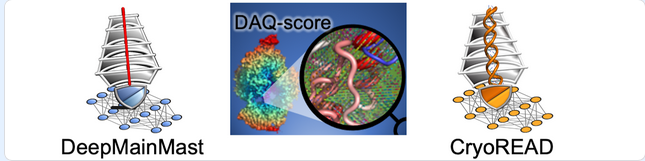
This webinar introduces software tools for protein and DNA/RNA structural modeling in cryo-EM maps: DeepMainmast for protein structure, CryoREAD for DNA/RNA, and DAQ for structure validation of protein structure models. Our speakers will introduce the algorithms of these tools and explain how to use them on web servers and other platforms. Whether you are new to structure modeling for cryo-EM maps or looking to enhance your skills, this webinar offers valuable insights into the latest developments and practical tools in structural modeling.

See references on the registration page for more information about the tools.

You will learn...

 1. The overview of the algorithm of computational modeling tools, DeepMainmast (for proteins) and CryoREAD (for DNA/RNA).
 2. The algorithm of the protein structure model quality estimation tool, the DAQ score.
 3. How to use the tools on the web server and Google Colab platform.
Bridging Length Scales in Magnetism â€" Diffuse Scattering from the Atomic to the Mesoscale
| - |
In Physikzentrum Bad Honnef
Distinguished Lectures on Quantum Crystallography and Complementary Fields: Lectures 31 and 32
|
In Online
Lecture 32: "Recent development in quantum refinement of protein structures" by Ulf Ryde (Lund University, Sweden)
User Webinar: How Rapid Assessment of Molecular Geometries Can Help the Structure-Based Drug Designer
|
In Online
3:00 PM - 4:00 PM GMT
It is well recognized that the pre-organization of a ligand into a low-strain binding conformation is a valuable objective in drug design. Mogul software from CCDC enables a rapid assessment of the geometry of a 3D model. During this webinar, Dr John Liebeschuetz will demonstrate recent work using Mogul, which validates the proposition that strained or unusual molecular geometries are seldom encountered in optimized drug molecules. When they do appear, they are often indicative of a crystallographic artifact.
We will explore:
The use of Mogul in distinguishing between crystallographic anomalies and genuinely unusual geometries in structure-based drug design.
Who should attend?
- Drug development scientists
- Computational chemists
CCDC Webinar: Exploring Morphology Prediction and Handy Tips for CSD-Particle
|
In Online
4:00 PM - 5:00 PM GMT
Anticipating the physical characteristics and surface properties of a structure by analysing its chemical attributes can save significant costs and time within the pharmaceutical industry. CSD-Particle software allows formulation scientists to gain insights into particle behavior, rapidly analyse the mechanical and chemical properties of a crystal particle, and address potential manufacturing issues with its visual and statistical tools.
During the webinar, Andy Maloney (Particle Science Team Leader) will demonstrate:
- Different approaches to morphology prediction.
- Rapid particle description and analysis using CSD-Particle and the CSD Python API.
Who should attend:
- Crystallization scientists
- Formulation scientists
- Chemical engineers
- Crystallographers
- Solid form scientists
- Materials scientists
Distinguished Lectures on Quantum Crystallography and Complementary Fields: Lectures 29 and 30
|
In Online
Lecture 29: “Quantum crystallography for chemical bonding analysis" by Simon Grabowsky (University of Bern, Switzerland)
Lecture 30: “(Intermolecular) Covalent Interactions: A Quantitative Molecular Orbital Picture “ by F. Matthias Bickelhaupt (Vrije Universiteit Amsterdam, The Netherlands)
High-throughput nanoscale crystallization for small organic molecules and pharmaceuticals
|
In Online
4:00 PM - 5:00 PM GMT
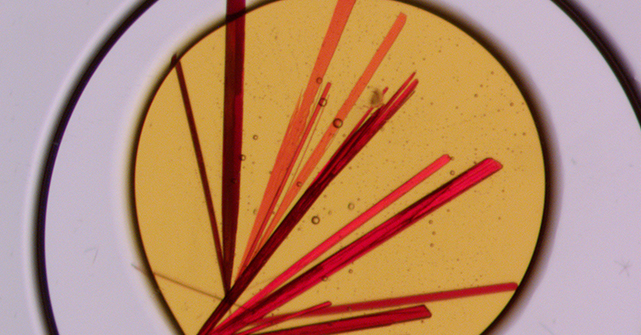
Professor Mike Probert (alongside Dr Michael Hall, both at Newcastle University, UK) led the development of a new high-throughput Encapsulated Nanodroplet Crystallization (ENaCt) technique that allows for extensive screening of solution phase crystal growth conditions, whilst using only a few milligrams of substrate, and provides crystals suitable for single-crystal X-ray analysis. The technique has been successfully employed on a diverse range of structurally challenging compounds, from small molecules through inorganic complexes to natural products and their synthetic analogues.
Why join the webinar?
- Learn about ENaCt and its key benefits from one of the lead developers
- Hear real-world success stories illustrating the structural diversity of its applicability
- Learn how your lab can access this new method
Distinguished Lectures on Quantum Crystallography and Complementary Fields: Lectures 27 and 28
|
In Online
Lecture 27:  "Topological Analysis of the Electrostatic Potential in Molecular Systems" by Enrique Espinosa (Laboratoire de Cristallographie, Résonance Magnétique et Modélisations,  Université de Lorraine, Nancy, France)
 Lecture 28: "Breaking the Ice: Cryo-EM's Quest for Better Resolution and Quality" by Holger Stark (MPI for Multidisciplinary Sciences, Goettingen, Germany)
Distinguished Lectures on Quantum Crystallography and Complementary Fields: Lectures 25 and 26
|
In Online
Lecture 26: "Phonon vibrations probed using the electron microscope" by Rebecca Nicholls (Department of Materials, University of Oxford, UK)