Topics
Synchrotron radiation
SPS-XRPD Workshop
| - |
In West Lafayette, IN
This aim of this workshop is to bring together experts from the pharmaceutical industry and synchrotron X-ray powder diffraction community to discuss current challenges in pharmaceutical research and development, and the latest opportunities offered by synchrotron-XRPD instruments and methods with the purpose of freely debating open questions and foster fruitful exchanges of ideas.
Deadline for abstract submission and registration: 8th April 2018
Synchrotron Radiation and Neutrons in Art and Archaeology
| - |
In Portsmouth
This international conference is jointly organised by the Diamond Light Source, the Mary Rose Trust, and ISIS Neutron and Muon Source. The focus of the conference will be on the innovative use of synchrotron and neutron radiation to investigate artistic and archaeological materials and artifacts. As such, the conference is open to all interested professionals, including potential users of synchrotrons.Â
Deadline for oral abstracts: 30th April 2018
Registration deadline: 24th August 2018Â

Neutrons for Chemistry and Materials Science Applications
| - |
In Erice
The primary aims of this school are to educate the next generation of scientists in the field of instrument design and promote collaboration between large scale facilities. The school is therefore relevant to anyone involved in any aspect of instrument and sample environment design and software development.
All registration details can be found online at:Â http://sons.uniroma2.it/ericeneutronschool/v-course-2018/registration-and-fees/
Registration deadline: 4th June 2018Â
3rd Joint AIC-SILS Conference
| - |
In Rome
The third joint conference of the Italian Crystallographic Association (AIC) and of the Italian Synchrotron Radiation Society (SILS).
The program selected by the Scientific Committee will encourage the participation and contacts between members of the two associations involved, enabling ideas exchange in scientific fields concerning the study of condensed matter properties, such as Crystal Growth, Nanoscience, Methods and Techniques for the determination of Atomic, Electronic and Vibrational Structures, Molecular Recognition, Polymer and Materials Science, Molecular Medicine and Structural Biology.
EPF Lausanne MOOC course: Synchrotrons and X-Ray Free Electron Lasers
| - |
In Web
The Massive Open Online Course (MOOC) from the EPFL (Ecole Polytechnique Federale de Lausanne) covers introductory aspects of synchrotron and XFEL radiation. A link to the course can be found at
https://www.edx.org/course/synchrotrons-and-x-ray-free-electron-laser.
A short 'teaser' video is also viewable at https://www.youtube.com/watch?v=CyIGssgri50, which gives an insight into the course contents.
The course is aimed at a broad scientific audience from historical-artefact restorators and paleontologists, through biologists, biochemists and chemical engineers, to materials scientists and physicists. It includes the following themes:
- Interaction of X-rays with matter;
- The production and physics of synchrotron and XFEL radiation;
- X-ray optics, beamlines, and instrumentation;
- X-ray diffraction and scattering;
- UV and X-ray spectroscopies;
- X-ray imaging (mainly tomography and lensless imaging/ptychography);
- Extra week on phasing techniques in macromolecular crystallography.
The course begins next Monday 5th March 2018 and lasts for nine weeks - each week, two to three new videos are released (youTube videos embedded in the edX player, which can be downloaded and viewed at leisure), each approximately 20 minutes long, plus optional problems (and optional final exam at the end of the course). Enrollment on the course (see above link) is free; a Verified Certificate can be purchased at the end for those who so wish and have achieved the pass grade.
This is an excellent opportunity, especially for younger staff and students, to learn more about the fascinating and interdisciplinary world of synchrotron science and all its myriad possibilities in an engaging and exciting manner!
Neutron Scattering Meeting 2018 (Journées de la Diffusion Neutronique)
| - |
In Roquebrune sur Argens
This multidisciplinary workshop will be dedicated to recent results, obtained using neutron scattering techniques, in various scientific domains representative of the whole neutron users community. The conference will contain five main topics: magnetism, soft matter, condensed matter, biology and environment, and instrumentation.
The aims of this meeting are:
- To strengthen links between French neutron scattering users,
- To provide a place where advanced results from neutron scattering experiments can be presented and discussed,
- To inform the community about the evolution of neutron facilities in France and abroad, and about the development of new neutron techniques, instrumentation, and their applications,
- And to welcome and promote the work of young neutron users.
Oral presentation abstracts should be sent by e-mail before April 2nd, 2018.Â
For additional information, please visit:Â https://jdn-conference.net/contactE.html
Â
SYNERGI2018. (SYnchrotron and NEutron Radiation Go Industrial
| - |
In Amsterdam
The Changing Landscape of MX
|
In Web
Diamond is pleased to present its fourth monthly Synchrotron User Webinar. This webinar is aimed at the User Community from PIs to students. It will be broadcast live online and will allow viewers to submit questions to be discussed.
This month's webinar is on Thursday 25th January 2018 at 16:00 (UTC, London time). The topic will be 'The Changing Landscape of MX' brought to you by the Principal Beamline Scientist of VMXi (Thomas Sorensen) and the Principal Beamline Scientist of I23 (Armin Wagner).
Â
We invite you to register for this webinar by clicking here. This will enable us to contact you closer to the date with the necessary viewing link.
Â
Starting at 16:00
- Welcome and introductions - Chairperson - Laura Holland
- VMXi beamline update - Principal Beamline Scientist of VMXi - Thomas Sorensen
- I23 beamline update - Principal Beamline Scientist of I23 - Armin Wagner
- Discussion - Panel: T. Sorensen and A. Wagner
- Upcoming available training and events in MX and conclusions - Chairperson - Laura Holland
Ending by 17:00
15th Annual European Pharma Congress
| - |
Discover and Explore the Future of Pharma.
The gathering will address Pharmaceutical Research in the area of Pharmaceutical manufacturing, while laying emphasis on innovative methodologies in pharmaceutical and food manufacturing. Pharma Europe 2018 will be the best venue for Research Associate, Research Scientist, Directors, CEO’s of Pharmaceutical Organizations, Supply Chain companies, Bio-informatics Professionals,  Noble laureates in Health Care and Medicine, Quality Assurance Specialist, Market research Analyst, Associate Product Manager, Product Manager, Strategy Director, Business Development Manager, Pharmacists, Deans, Students, Professors, Researchers, and Faculty of Pharmaceutical Sciences from Universities and Medical Colleges.
Pharma Europe 2018 Conference will encourage Young Researcher’s Forum, scientists and the researchers in their early stage of career graph to widely discuss their outcome so as to enrich and develop the idea. The ‘Best Poster Award’ is meant to encourage students in taking active part in the International Science platform to sharpen their skills and knowledgebase.
Â
The important tracks that are part of Pharma Europe 2018 includes Pharmacognosy and Phytochemistry, Pharmacological Sciences, Drugs and Regulations, Pharmaceutical Chemistry, Types of Pharmaceutical Formulations, Nanotechnology, Novel Drug Delivery Systems, Pre-formulation Studies, Bio-Pharmaceutics, Bioinformatics, Genetics & Genetic Engineering, Pharmaceutical Packaging, Radiopharmaceuticals, Pharma Companies, Hospital Pharmacy, Industrial Pharmacy, Ethics in Pharmacy, Pharma Consulting & Services
The Abstracts that are accepted for presentations are published in the proceedings of the Journals like Pharmaceutical Regulatory Affairs: Open Access, Journal of Pharmacy and Pharmaceutical Sciences and Journal of Pharmaceutics & Drug Delivery Research.
13th SOLEIL Users' Meeting
| - |
In Palaiseau
Remote X-ray data collection from European synchrotrons
| - |
In Rehovot
This workshop is particularly targeted for PhD students and postdocs having projects aimed at 3D structure determination using biomacromolecular crystals, working at institutes that are members of SESAME and/or working at institutes of Instruct-ERIC countries relatively far from European Synchrotrons, as well as for students from non-EU countries working at EU-institutes who need to apply for visa, restricting efficient access to perform on-site data collection. Students are encouraged to send crystals in advance, which will then subsequently be shipped to DLS or ESRF and used as examples for remote data collection.
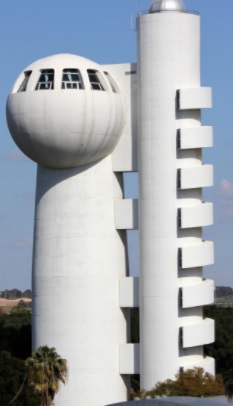
EDDI Workshop
|
In Berlin-Adlershof
15 Years of Russian-German Laboratory at BESSY II
| - |
In Helmholtz-Zentrum Berlin
The aims of the workshop are:
- to commemorate Professor Vera K. Adamchuk, the pioneer of Russian â€" German collaborations in the field of the use of synchrotron radiation and the co-founder of the Russian-German Laboratory at BESSY II, who passed away in fall 2016.
- to highlight recent progress at the Russian-German Laboratory and to discuss with the community the future use of the new undulator beamline that will be available besides the dipole beamline.
- to introduce the community into the future use of the European Free Electron Laser Facility European XFEL.
RapiData 2018
| - |
In Stanford, CA
RapiData 2018 at SSRL is a practical course in macromolecular X-ray diffraction data collection, data processing and structure solution. The aim of the RapiData course is to educate and train young scientists in data collection and processing methods at synchrotron beamlines, using state-of-the-art software and instrumentation
The course will comprise hands-on experiments at the SSRL beamlines, software tutorials, and lectures on the following topics:
- Specimen preparation, tactics in data collection
- X-ray light sources
- X-ray detectors
- Data reduction
- Structure solving by MAD, SAD and Molecular replacement
- Complementary methods (spectroscopy and small angle scattering)
NCNR 50 Year Symposium
| - |
In Gaithersburg, MD
This symposium has been organised to celebrate the achievements and lifetime of the NIST Center for Neutron Research, which is celebrating its 50th anniversary this year.
The symposium will span across the 7th and 8th December 2017, with a reception dinner on the evening of the 7th at the Gaithersburg Marriott-Washingtonian Center.
For more information, please visit:Â Â https://www.nist.gov/news-events/events/2017/12/ncnr-50-year-symposium
Registration ends on 30th November 2017 at 12:00PM EDT.Â
HERCULES 2018 - European School 28 Years of Neutron & Synchrotron Radiation Science
| - |
In Grenoble (and Hamburg, Trieste, Paris-Saclay, and Villigen)
The 1-month school includes lectures (60%), hands-on practicals and tutorials at partner institutes (Elettra and FERMI in Trieste, Italy; ESRF, ILL in Grenoble; Soleil and LLB in Paris-Saclay; PSI in Villigen, Switzerland) and Grenoble Laboratories (CEA, CNRS, EMBL, IBS). (*)
(*)Â also, participation of DESY and the European XFEL to be confirmed for 2018 due to scheduled down-time.
The school includes a common part and two parallel sessions:
- Biomolecular, soft condensed matter structure & dynamics
- Physics and chemistry of condensed matter
- to learn new techniques using neutron and synchrotron radiation
- to expand your theoretical and practical knowledge, not only for your present research but for your scientific career
- to experiment these techniques on world-class instruments & beamlines
- to build a network of relations with fellow young researchers and experienced teachers from all around the World

LAAMP session at World Science Forum 2017
|
In Dead Sea
The World Science Forum 2017 has been held at the King Hussein Bin Talal Convention Centre, Dead Sea (Jordan) on 7-11 November under the theme of "Science for Peace" and the high patronage of His Majesty King Abdullah II Ibn Al Hussein of the Hashemite Kingdom of Jordan; János Ãder, President of Hungary; Irina Bokova, Director General of UNESCO.
 ÂProgrammeÂ
Venue: King Hussein Bin Talal Convention Centre, Wadi Rum 1&2 - Ground FloorDate: Friday, 10 November 2017
Chairs: Michele Zema, Juste Jean-Paul Ngome Abiaga, Sekazi Mtingwa
11:30-11:45 Maciej Nalecz (Polish Academy of Sciences), Creation of SESAME as seen from UNESCO's perspective, an example of science for peace in action
11:45-12:00 Giorgio Paolucci (SESAME), SESAME: an opportunity for science and growth in the Middle East
12:00-12:10 Michele Zema (IUCr), Light sources and crystallography in emerging nations: projects for a sustainable development of education and research infrastructure
12:10-12:20 Juste Jean-Paul Ngome Abiaga (UNESCO-IBSP), Light Sources: opportunities for scientific leapfrog and sustainable development
12:20-12:30 Sekazi Mtingwa (TriSEED; IUPAP), International scientific collaborations for the socio-economic development of Africa
12:30-12:40 Simon Connell (University of Johannesburg, South Africa), The African Light Source (AfLS): Planning for a brighter future
12:40-13:00 ROUNDTABLE “Light Sources and Crystallographic Sciences for Sustainable Development†(Moderator: Sekazi Mtingwa)
Read more about this event on: Crystallites blog | LAAMP news
UKSR50. 50 years of Synchrotron Radiation in the UK and its global impact
| - |
In Liverpool
In Situ Serial Crystallography - ISSX2 Workshop
| - |
In Paul Scherrer Institute
presentation of the `in meso in situ serial crystallography (IMISX)' method
[Huang et al. (2016), Acta Cryst. D72, 93-112] for the X-ray structure determination of membrane proteins.
The workshop consists of introductory lectures, as well as presentations of
serial crystallography activities at both synchrotron and XFEL facilities.
The main part of the workshop focuses on hands-on practicals on methods for
growing crystals of membrane proteins by the in meso or lipidic cubic
phase (LCP) method, for collecting serial diffraction data on
micro-crystals directly in situ and for processing the data most
efficiently for high-resolution structure determination.
There is no registration fee and all local expenses will be covered, but
participants are requested to take care of their travel arrangements. The
workshop is limited to 20 students.
9th Joint BER II and BESSY II User Meeting
| - |
In Berlin