Topics
Synchrotron radiation
RACIRI Summer School 2016
| - |
In Repino (near Saint Petersburg)
The novel format of the RACIRI Summer School is driven by scientific frontier themes and challenges in the field of materials sciences with a strong connection to the superb analytical potential at current and future research infrastructures (synchrotron radiation, X-rays and neutrons) in the Baltic region.
The RACIRI Summer School is held every year under a special focus theme. Its venue rotates annually among the three partnering countries.
The first RACIRI Summer School was organized 2013 in Petergof, Russia. Focus theme: "Soft Matter and Nano Composites".
The second RACIRI Summer School was held from 24-31 August 2014 in the Stockholm area, Sweden, under the focus theme "Imaging with X-rays and Neutrons in Life and Materials Sciences".
The third RACIRI Summer School was held during 22-29 August 2015 in Sellin, Island of Rügen, Germany. Its focus theme: "Time-resolved and In-situ Studies of Materials: Basics and Applications".
Modern Methods in Rietveld Refinement for Structural Analysis
| - |
In Stony Brook University, New York

NYU X-Ray Diffraction Workshop 2016
| - |
In New York
The Workshop will span two days at New York University, with lectures and hands-on training on the X-ray diffraction methods. The Workshop will include lectures from various academic and industrial organizations. Faculty, graduate students, postdocs, and industrial researchers are invited to register. Attendees are encouraged to bring samples of interest to the workshop for the hands-on training Master Class, and scientific problems to the Round-Table Discussion.
AimsÂ
- Non-specialists can learn the basics of the X-ray diffraction and receive hands-on training on the operation of the instruments.
- Experts from similar or related areas can share experience and exchange ideas.
Topics
- Basics on single crystal and powder diffraction and the instrumentsÂ
- Crystallization
- Polymorphism and phase transitionÂ
- Phase identification, quantitative analysis, texture analysis, and crystallite size measurementÂ
- Applications of X-ray powder diffraction in industry
- Synchrotron radiation
Confirmed Speakers and InstructorsÂ
- Eric Dooryhee, Brookhaven National Lab, NY
- Bruce Garetz, New York University, NYÂ
- Ilia A. Guzei, University of Wisconsin-Madison, WIÂ
- Bob B. He, Bruker AXS, WIÂ
- Tony C. Hu, New York University, NYÂ
- Alexander G. Shtukenberg, New York University, NYÂ
- Michael D. Ward, New York University, NYÂ
- Shawn X. Yin, Bristol-Myers Squibb, NJ
Three SessionsÂ
- Lectures in both morningsÂ
- Hands-On Training Classes in both afternoons
RegistrationÂ
- The number of attendees in the workshop for Lecture Sessions is limited to 40.
- The Hands-On Training Master Class component is limited to 10 persons for APEXII and 10 for GADDS.Â
- Registration is free if you register by June 15, 2016. After that, $50 fee will be applied.Â
- Please register by providing the following information to Tony Hu at chunhua.hu@nyu.edu

CGE2016 â€" Cinquième école Cristallographie et Grands Equipements
| - |
In Saint Aubin (SOLEIL)
GISAS Summer School: experiments and data analysis
| - |
In Munich
Novel, smart thin film materials are the focus of many research projects ranging from sensing to displays and from wireless communication to energy conversion and energy storage. These are all active research fields where understanding of material properties will lead to innovation. Although the list of resulting applications is very wide, all these novel materials have something important in common: the physical properties, and therefore the industrial usefulness, is closely related to the molecular and nano-morphology of these materials.
Therefore, methods of characterizing such thin film materials are needed. Grazing incidence scattering techniques have proven here to be very successful. With this method the morphology inside thin films can be probed on the nanometer scale â€" not just on small micron spots â€" but on macroscopic areas of the sample, yielding industrially relevant information.
To aid students to carry out successful grazing incidence scattering measurements this summer school will kick-start beginners and introduce new data analysis tools for students with scattering experience.
The school takes place at the TUM Garching Campus and can be easily reached using public transport from Munich.(U6 Garching Forschungszentrum).
http://www.hg.mse.tum.de/en/gisas/Â
Â
V TALLER DE LA AACr "Técnicas de Luz Sincrotrón y de Neutrones para la Caracterización de Materiales"
|
In San Luis
Hard X-ray Spectroscopies and Imaging. CHESS-U Workshop
| - |
In Ithaca, NY
Diamond Synchrotron Radiation School
| - |
In Jesus College Oxford and Diamond Light Source
Diamond is delighted to announce it is to run a fifth synchrotron radiation school from the 19th to the 23rd September 2016.Â
It will run on very similar lines to the very successful SR Schools in 2014, 2012 and 2010 with the aim being to provide postgraduate students and post-doctoral researchers, who have little experience of SR, a broad-based introduction to many of the different types of experiments conducted using SR. It is largely aimed at physical scientists, but life scientists are welcome to apply.Â
The school gives attendees the opportunity to obtain hands-on practical experience of performing an experiment on several of the Diamond beamlines. At least 14 beamlines will be participating in the school.
Â
The school will be co-located at Diamond and Jesus College, Oxford, with participants staying in Oxford.
Â
The format of the school will be 2 days of lectures on SR methods, 2 days of experiments on the Diamond beamlines and on the final day there will be a symposium with 5 leading synchrotron practitioners talking about some of their research.
Â
The course is always over-subscribed, thus all registrants are required to complete an application form. Â
Priority will be given to those people in the earliest stage of their research career and who have definite plans to use Diamond.Â
The strength of the application and the statement from the applicant's referee are crucial to Diamond in selecting attendees for the course.Â
Given the expected over-subscription, registrants are expected to attend the entire course, thus if you apply please ensure you are available for the whole week.
Â
Applications for the course will close on 25th May 2016. It is expected that applicants will be notified if they have obtained a place within 2 weeks of that date.
Â
The SR School is free to attend and all accommodation and meals are provided free for the duration of the course. Students will need to fund their own travel and transport to the course.
Â
Rock Deformation. Gordon Research Conference
| - |
In Andover, NH
From Slow to Fast Rock Deformation and Back
GISAXS2016
| - |
In Hamburg
From November 16 to November 18, 2016, the international workshop GISAXS2016 will be held in Hamburg, Germany http://gisaxs2016.desy.de). It is a continuation of the very successful series of several international GISAXS workshops at DESY (in 2005, 2007, 2011, 2013) and the satellite conferences to the SAS conference series in Oxford (in 2009), in Kyoto (in 2012) and in Nice (in 2015). This workshop brings together different communities working in the field of thin films, nanostructures, surfaces and interfaces, to gain insights to the very powerful method of grazing incidence small angle X-ray scattering and related techniques. In keynote and invited lectures the possibilities and new trends in GISAXS and GISANS will be highlighted with a special emphasis on real-time investigations and data analysis. As in all the years, we expect about 100 participants from all over the world.
Keynote and invited lectures will highlight the possibilities and new trends in GISAXS and GISANS.
Poster sessions will allow for a profound discussion among the participants.
This workshop addresses students, experienced researchers, senior scientists working in the field of and exploiting the potentials of GISAXS and GISANS in the area of thin film technology.
The program is divided in two parts: Introductory lectures will be combined with expert lectures by leading expert's scientists of grazing incidence technology and application. In the second part of the workshop we will on hands-on GISAXS, namely on-line treatment and simulation of GISAXS data. Additionally, we will offer a visit to the new micro-and nano-focus beamline dedicated to GISAXS at the 3rd generation synchrotron radiation source PETRA III.
5th Joint Workshop on High Pressure, Planetary and Plasma Physics (HP4)
| - |
In Hamburg
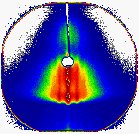
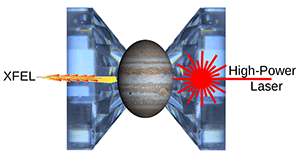
- The generation and diagnostics of extreme states of matter as appearing in the interior of planets, brown dwarfs and stars is one of the key scientific challenges in a number of scientific fields. These include:
- Generation of such conditions at FLASH at the future free electron laser facility (European XFEL).
- Generation of higher pressures in static experiments both in the laboratory and at synchrotron facilities (PETRA III).
- Development of new diagnostic tools.
- Predictions of high pressure and temperature properties of materials from ab initio methods.
- Application of such results to the study of interior of planetary and astrophysical bodies.
To bring together researchers from these different fields in the physical sciences a workshop series has been established by DESY, XFEL GmbH, DLR Berlin, the University of Rostock and Bayerisches Goinstitut to discuss related topics and problems. Earlier workshops were held at DESY Hamburg (2012), DLR Berlin (2013), University of Rostock (2014) and the Bayerisches Geoinstitut at the University of Bayreuth. The aim of the upcoming workshop is to continue the discussion of scientific questions with relevance for extreme planetary environments in terms of high pressure (HP) and high temperature (HT). The conditions prevalent in the deep interiors and atmospheric envelopes of solar system planets, their satellites as well as massive solid and gas giant extrasolar planets, respectively, and are not fully accessible by conventional experimental and theoretical methods. New and enabling techniques to be used in the HP/HT regime are based on the combination of intense pulsed X-ray sources with pulsed sample excitation, in particular but not exclusively related to high energy optical lasers. Simultaneously, ab initio simulations for matter under extreme conditions provide a more and more predictive data set for planetary interiors in this HP/HT regime.
The following topics will be part of the workshop:
- Evolution and structure of giant planet interiors
- Interior structure, bulk composition, and internal geodynamics of solid planets
- Deep volatile cycles and exchange processes between geochemical reservoirs
- Physics and chemistry of impact processes
- Equations of state, petrology, and geochemistry of planetary materials
- Melting relations and phase transformations of materials at extreme states
- Dynamic and ultrafast processes in strongly excited solids or similar,
- Compression experiments using high-power optical and free electron lasers
- Laboratory experiments using multi-anvil and diamond-anvil cells
- Ab initio simulation studies for matter under extreme conditions
International Beam Instrumentation Conference IBIC 2016
| - |
In Barcelona
IBIC is dedicated to exploring the physics and engineering challenges of beam diagnostic and measurement techniques for particle accelerators worldwide. The conference program will include tutorials on selected topics, invited and selected talks, as well as poster sessions that will cover the following topics.
Overview and Commissioning
Beam instrumentation at new facilities, commissioning results
BPMs and Beam Stability
Beam Position Monitors (for electron/hadron/photon beam, both electronics and pickups), orbit/trajectory feedback systems, bunch-by-bunch or intra train feedback systems
Time Resolved Diagnostics and Synchronization
Streak camera, transverse deflecting cavity, cavity based arrival time, fibre based timing distribution
Beam Loss Detection
Scintillator (both bulk or fibre) and PMT, ion chambers, electronics detectors (PIN, FET etc)
Transverse Profile Monitors
Screens (fluorescent and OTR), wire scanners (physical or laser), synchrotron radiation monitors (visible and X-rays, imaging and interference techniques), Ionization Profile Monitors (IPMs for hadron colliders)
Charge Monitors and Other Instruments
Current Transformers, Faraday cups, wall current monitors; also all other instruments and measurement procedures not part of other categories
Machine Parameter Measurements
Procedures and systems like betatron tune measurement, chromaticity measurement, luminosity monitors, beam-beam diagnostics, precise measurement of optics
10th LEEM/PEEM workshop
| - |
In Monterey, CA
LEEM-PEEM is a biennial meeting reviewing the status of LEEM, PEEM, SPLEEM, XPEEM and related techniques. The meeting promotes and disseminates applications of cathode lens microscopy to a broad audience of interested scientists.
The workshop highlights the most recent scientific advances as well as instrumental developments. Topics will cover surfaces, thin films, organic films, surface chemistry, magnetism, time resolved methods, instrumental advances and novel applications of LEEM and PEEM to other subject areas.
Synchrotron and Free electron laser Radiation: generation and application (SFR-2016)
| - |
In Novosibirsk (BINP)
VUVX2016. 39th International conference on Vacuum Ultraviolet and X-ray Physics
| - |
In Zurich
VUVX2016 is the third conference following a merger of two long standing conference series â€" the International Conference on Vacuum Ultraviolet Radiation Physics (last meeting was the 15th in that series, VUV-15 in Berlin, Germany in July 2007) and the International Conference on X-ray and Inner-shell Processes (last meeting was the 21st in that series, X-08 held in Paris in June 2008).Â
This international conference will bring together scientists from all over the world, working in fields involving electromagnetic radiation in the vacuum ultraviolet (VUV), soft X-ray and hard X-ray spectral regions generated by synchrotron, laser, or plasma based sources. Topics to be covered range from instrumentation and methods development to applications in a variety of fields.
Topics
- New Sources: diffraction limited storage rings, free electron lasers, ultrashort pulse XUV lasers and X-ray tabletop sources
- Resonant elastic and inelastic X-ray scattering
- X-ray absorption spectroscopy incl. linear, circular and magnetic dichroism spectroscopy
- Photoemission (angle/spin/time resolved, soft X-ray, hard X-ray, resonant, etc.)
- Imaging with nanoscale resolution: X-ray microscopy, coherent diffraction imaging, scanning small-angle X-ray scattering etc.
- Coincidence spectroscopy
- Theory of X-ray spectroscopy and diffraction
- Advanced data analysis methods
- Time-resolved spectroscopy
- In situ and operando applications
REXS2016. Resonant Elastic X-ray Scattering
| - |
In Hamburg
REXS2016 conference on resonant elastic x-ray scattering is the 3rd in a row after the very successful events in Aussois 2011 and the subsequent conference in Oxford 2013.
The REXS conference series re-started again almost 20 years after the conference on Resonant Anomalous X-ray Scattering 1992 in Malente and the first conference on Resonant X-ray Scattering 1974 in Madrid. The conference is aimed at stimulating interaction and discussion of scientists working in the field of hard condensed matter research with synchrotron radiation and using spectroscopy and scattering methods, that base upon resonance effects occurring close to the X-ray absorption edges.
Anomalous or resonant elastic X-ray scattering takes advantage of resonance enhancement of the scattered signal at the X-ray absorption edges and associated polarization effects. Experiments in this area range from conventional anomalous scattering and resonant magnetic diffraction to the investigation of exotic multipolar order or nuclear resonant diffraction. In addition, at REXS2016 we would like to emphasize the intrinsic ties and complementarity between scattering and spectroscopic methods (XMCD) for the investigation of properties of hard condensed matter materials and would like to bridge the gap between the two communities both in the soft and hard X-ray regime.The conference will cover the following topics:- Basic concepts/theory
- Electronic correlations
- Extreme conditions (pressure, electric/magnetic fields …)
- Nanostructures
- Chemistry
- Time resolved diffraction /XFEL
- Soft condensed matter/Life sciences
- Ultra-fast scattering studies (XFEL)
- Coherent scattering studies (at XFEL and storage rings)
- Combined XMCD / REXS studies

Synchrotron Radiation to study Atomic Layer Deposition
| - |
In Bellaterra (ALBA)
The three-day workshop will consist of different parts. On the first two days there will be three topical sessions with invited (introductory) lectures and contributed talks, and one evening poster session. On the third day we plan a visit to the beamlines of ALBA and tutorial sessions on the treatment and analysis of SR-data.
Tutorials on synchrotron experiments, data treatment and analysis
The participants will have the opportunity to register for three interactive tutorials that will be given in small groups on June 15th. The goal is to demonstrate how to prepare an experiment, and then treat and analyze XAS, GISAXS and PES data having some hands-on experience.
XANES and EXAFS
• Overview of the technique. How to organize a XANES and/or EXAFS experiment.
• Overview of available open-source software to treat XANES and EXAFS data.
• Introduction on how to use Athena.
• Practicing with Athena.
GISAXS
• Overview of the technique. How to organize a GISAXS experiment.
• Overview of available open-source software to treat GISAXS data / simulate GISAXS patterns.
• Introduction on how to use IsGISAXS.
• Practicing with simulating in IsGISAXS.
PES
• Overview of the technique. How to organize a photoemission experiment.
• Overview of available open-source software to fit photoemission spectra.
• Introduction on how to use Fityk.
• Practicing with Fityk.
8th ILSF Users Meeting
| - |
In Qazvin
Alfonso Franciosi: President & CEO, Elettra, Italy.
Caterina Biscari: Director, ALBA-CELLS Synchrotron, Spain
Ã-mer YavaÅŸeneral Director, Turkish Accelerator Center
Miguel A. G. ArandaScientific Director, ALBA-CELLS Synchrotron, Spain
Giuliana Aquilantiead of EXAFS Beamline, Elettra Light Source, Italy
Marco Marazzi: Industrial Liaison Office, Elettra Light Source, Italy
Majid Kazemian: Beamline Scientist, Diamond Light Source, UK
Aliakbar Ghafari: Beamline Scientist, Helmholtz-Zentrun, Germany
Mehran Taherkhani: Beamline Scientist, DESY Synchrotron, Germany
5th School of SAXS Data Analysis
| - |
In Campinas, São Paulo
The 5th SAXS school will be held in May 2016 at the Laboratório Nacional de Luz SÃncrotron and is intended to motivated post-graduate students and early career scientists willing to learn Small-Angle X-ray Scattering. The main objective of the school is to provide an opportunity for young scientists developing their research in areas related to Biology, Physical Sciences, Materials Science and Chemistry, to have a contact with the technique, acquiring both theoretical and experimental skills.
The course will offer an overview of SAXS theory, data reduction and analysis tools, as well as modelling techniques. It will include hands-on experiments at the LNLS SAXS facilities and tutorials.
The last day of the school will be dedicated to the new SAXS beamline, CATERETÊ @ SIRIUS, the 4th generation synchrotron in construction in Campinas), and the new techniques proposed such as coherent SAXS and coherent imaging techniques.
Circular and Linear Dichroism Summer School 2016
| - |
In Coventry
The school and workshop is targeted at postgraduate students. PDRAs, academic staff and industrial participants are welcome if places are available.
 Sessions to include:
- Introduction to absorbance, fluorescence and circular dichroism spectroscopy
- Principles of CD spectroscopy
- Linear dichroism
- Good practice
- Data bases for biomacromolecules
- CD of membrane proteins
- What is inside a CD spectrometer
- DNA-metalcomplex interactions
- Applications of SRCD and CD to structural and functional genomics
- CD theory & Dichrocalc