Topics
Powder diffraction
Free Virtual Workshop: Introduction to Mercury and ConQuest Software To Investigate Crystal Structures With a Focus on Powder Diffraction
|
In Online
Structural databases such as the CSD contain a wealth of information that can be used to derive new knowledge and gain deeper insights into your own crystal structures. In particular, functionality from the CSD Portfolio is designed to help you search, visualize and analyse structures. In the field of powder diffraction, accurately matching and optimizing crystal structures is a critical task. CSD Portfolio tools can help you with the process of comparing experimental patterns with predicted ones, which can help identify the most likely structure of a material.
You will learn hands-on how to search and visualise structures in the CSD using ConQuest and Mercury with a focus on structures determined by powder diffraction, and how to use functionality to calculate powder patterns.
What we will cover In this workshop you will explore the basics of searching and visualising structures using the CSD Portfolio, and advanced analysis features for powder patterns. The session will include presentations and demonstrations by CCDC expert tutors and a hands-on part for you to try the software, with the tutors available to help you and answer your questions.
You will learn: - How to search structures in the CSD, in particular finding structures determined by powder diffraction. - How to visualize crystal data. - How to simulate powder patterns from over 1.3 million structures in the CSD and from your own cif files in Mercury. - How to match and optimize experimental powder patterns with simulated ones using functionality based on AutoFIDEL algorithms. - The workshop will be recorded and all registered participants will have access to the recording.
Who should attend? - Crystallographers and structural scientists. - Academic and industrial chemists interested in exploring molecules in the solid form. - PhD and post-doc researchers in the field of crystallography and materials science. - Researchers and scientists who work with the CSD or their own structural databases. - Researchers and scientists who work with powder diffraction. - Industrial scientists using structural informatics to design new materials. - Educators looking to incorporate the CSD into their teaching.
CCDC Webinar: How To Match Powder Patterns to Crystal Structures
|
In Online
The FIDEL method can compensate for the preferred orientation frequently seen in powder data. It involves optimising the match between the experimental pattern and the simulated pattern of a selected structure, through varying the structure’s lattice parameters. It has proven effective for factors like preferred orientation and sample height displacement.Â
Â
During this webinar, we will show:
- What is AutoFIDEL and how to access it;
- The process of powder matching and optimization of crystal structures;
- Live demonstration of the process.
Â
Who should attend:
- Solid-state computational chemists
- Data scientists working with chemical data.
- Solid form scientists in academia or industry.
Cheminformaticians.

35 European Crystallographic Meeting
|
In PoznaÃ...„
 At the XXV Congress and General Assembly of the International Union of Crystallography in Prague, it was decided that the 35th edition of the European Crystallographic Meeting would be held in Lviv, Ukraine, in 2025.
 Unfortunately, there is a war in Ukraine, and it is not reasonable to organize a great scientific event in Lviv in 2025. An alternative was thus elaborated where, thanks to a collaboration between the Ukrainian Crystallographic Committee and the Polish Crystallographic Association, the conference site will be Poznan, a city in neighbouring Poland.
CCDC Webinar: How To Match Powder Patterns to Crystal Structures
|
In Online
Accurately matching an experimental powder X-ray pattern to a crystal structure is essential for identifying materials, especially for polymorphs in complex landscapes. The CSD-Materials suite now includes a CSD Python API feature based on the FIDEL method, known as AutoFIDEL, which allows for matching and optimizing crystal structures against experimental powder diffraction patterns, without requiring high-resolution transmission data and with preferred orientation.
The FIDEL method can compensate for the preferred orientation frequently seen in powder data. It involves optimising the match between the experimental pattern and the simulated pattern of a selected structure, through varying the structure's lattice parameters. It has proven effective for factors like preferred orientation and sample height displacement.
During this webinar, we will show:
-
What is AutoFIDEL and how to access it;
-
The process of powder matching and optimization of crystal structures;
-
Live demonstration of the process.
Who should attend:
-
Solid-state computational chemists
-
Data scientists working with chemical data.
-
Solid form scientists in academia or industry.
-
Cheminformaticians.
PPXRD-18 - Pharmaceutical Powder X-ray Diffraction Symposium
|
In The Cambridge Crystallography Data Centre (CCDC), Cambridge, United Kingdom
Rietveld and Pair distribution function (PDF) analysis workshop
| - |
In Stuttgart
In particular, the following topics will be covered:Â
ï‚· Basics of powder diffraction and Rietveld Refinement
ï‚· The profile of a Bragg reflection
ï‚· Determination of the Instrument Resolution Function (IRF) for powder diffractometers
ï‚· Whole Powder Pattern-Fitting techniques (WPPF)
ï‚· The intensity of a Bragg reflection
ï‚· Correction factors for diffraction angles and intensity
ï‚· Methods to develop a starting model for crystal structure determination
ï‚· Penalty-functions, constraints, restraints
ï‚· Rigid Bodies (RB) (flexible polyhedra, molecules, z-matrices)
 Strategies for structure determination, global optimization in direct space, Charge-Flipping (CF)
ï‚· Difference-Fourier-analysis in combination with Rietveld refinement
ï‚· Isotropic and anisotropic microstructural parameters
ï‚· Using the ICDD PDF5+ database for phase identification and str file export
ï‚· Quantitative Phase Analysis (QPA)
ï‚· Different methods for quantifying the amorphous content
ï‚· Alternative ways of describing crystal structures
ï‚· Sequential and parametric Rietveld refinementsÂ
ï‚· Stacking faulted superstructures
ï‚· The making of Rietveld-Plots for publication
ï‚· Basics of total scattering and pair distribution function analysis
ï‚· Obtaining the pair distribution function from total scattering data
ï‚· Determining and accounting for effects of instrumental resolution
ï‚· Small-box crystal structure refinement
ï‚· Modelling nanoparticle structures and particle size distributions
ï‚· Simulated annealing and large-box approachÂ
Main tutors:Â
Sebastian Bette (MPI-FKF), Robert E. Dinnebier (MPI-FKF), Martin Etter (DESY), John Evans (Uni. Durham), Paolo Scardi (Uni. Trento), Maxwell W. Terban (Momentum Transfer)Â Â
6th International Symposium on Halogen Bonding (ISXB6)
| - |
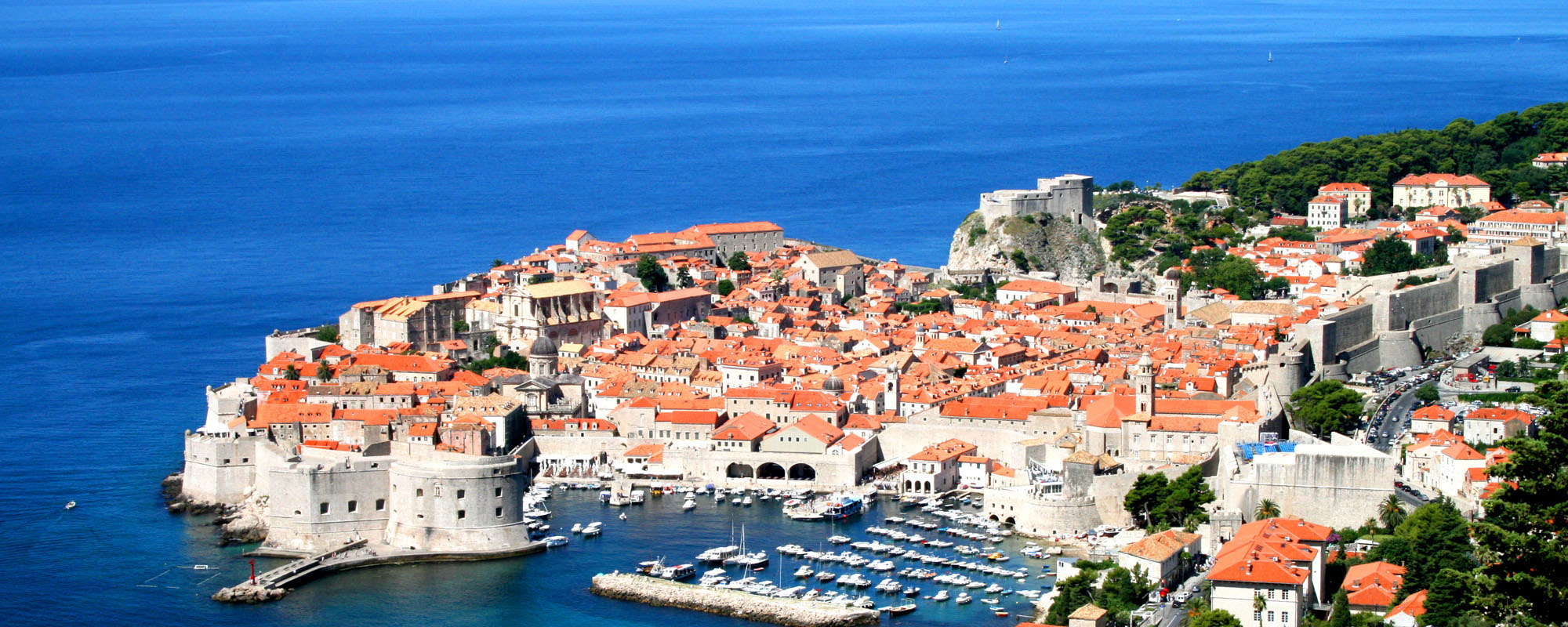
In Dubrovnik, Croatia.
Normal 0 21 false false false HR X-NONE X-NONE /* Style Definitions */ table.MsoNormalTable {mso-style-name:"Table Normal"; mso-tstyle-rowband-size:0; mso-tstyle-colband-size:0; mso-style-noshow:yes; mso-style-priority:99; mso-style-parent:""; mso-padding-alt:0cm 5.4pt 0cm 5.4pt; mso-para-margin-top:0cm; mso-para-margin-right:0cm; mso-para-margin-bottom:8.0pt; mso-para-margin-left:0cm; line-height:107%; mso-pagination:widow-orphan; font-size:11.0pt; font-family:"Calibri",sans-serif; mso-ascii-font-family:Calibri; mso-ascii-theme-font:minor-latin; mso-hansi-font-family:Calibri; mso-hansi-theme-font:minor-latin; mso-bidi-font-family:"Times New Roman"; mso-bidi-theme-font:minor-bidi; mso-fareast-language:EN-US;}
The ISXB series of symposium aim to bring together researchers from all over the world who are interested in the fascinating phenomenon of halogen bonding and related interactions, from fundamental principles to applied technologies, covering both experimental and theoretical approaches in various areas of research ranging from advanced materials to medicinal chemistry and chemical biology.
The ISXB6 will feature keynote addresses and invited lectures by internationally renowned experts, contributed presentations, posters, and flash communications by young and promising researchers. The Symposium will also provide ample opportunities for networking and socializing in a friendly and stimulating atmosphere.
It will be held in Dubrovnik, Croatia, from October 20-25, 2024. The symposium will take place at the Sheraton Dubrovnik Riviera Hotel, a modern resort located in a secluded beachfront location in the vicinity of the Dubrovnik Old Town.
The 7th CrysAC Workshop â€Å"Provenance in Art and Cultural Heritageâ€Â
|
In Slovak National Gallery, RieÄna 1, Bratislava, Slovakia
In keeping with the terms of reference of the Commission, the CrysAC workshop on “Provenance Studies in Art and Cultural Heritage†is within the series of one-day workshops organized by the IUCr Commission on Crystallography in Art and Cultural Heritage, aimed to stimulate knowledge exchange between crystallographers, researchers and other experts interested in Cultural Heritage investigations. Different communities are invited to present reviews of established research, recent results and envisaged trends in key areas of Archaeometry and Conservation Science.
The present workshop, organised as a satellite meeting of the 7th International Congress Chemistry for Cultural heritage (CHemCH 2024, Bratislava, Slovakia), will invite scientists from research institutions, museums, and conservation bodies, in order to illustrate state-of-the-art studies focusing on determining origin of materials (manufacturing method or natural sources) and provenance of art objects (whether in the sense of regional, workshop, or period) using methods of advanced materials analysis. Although only invited contributions are planned, all interested people are invited to exchange ideas and discuss the presented topics.
Â
There is no fee for participants but because of limited capacity the registration is required.
Please register using this online formular.
The workshop will be streamed thus you can watch it online using the link sent you by e-mail after your registration.
5th National Crystallography Meeting
| - |
In Ondokuz Mayıs University
The 5th National Crystallography Meeting is organized by the National Crystallography Society. The National Crystallography Society was founded in 2001 at Hacettepe University in Ankara, Turkey. The aim of our association is to organize the professional, cultural and social activities of the members, to support education in the field of crystallography, to contribute to the understanding, development and dissemination of Crystallography in Turkey and to carry out scientific activities and publications in this field. Our Association is a member of the European Crystallographic Association (ECA). During the meeting, in addition to the presentations of internationally recognized invited speakers, both oral and poster presentations of the participants will also take place.
65th Polish Crystallographic Meeting - Konwersatorium Krystalograficzne
| - |
In WrocÃ...‚aw
The Polish Crystallographic Meeting, Scientific Workshop and Session of the Young Crystallographers Sections of PCrA will be held at the Institute of Low Temperature and Structure Research of the Polish Academy of Sciences, ul. Okólna 2 in Wrocław.
The Workshop is devoted to selected issues and problems of modern crystallography.
The Scientific Session of the Young Crystallographers Section of PCrAÂ is a forum for exchanging experiences addressed primarily to students, PhD students and young doctors (maximum 5 years after defense).
The topics of the Meeting include basic and applied research on the ideal and real structure of crystals carried out with the use of X-ray radiation obtained both with traditional methods and in synchrotrons, research with the use of neutrons and electrons, problems of symmetry, phase transformations and crystal growth, new research and computational methods and all other aspects of crystallography. The conference is an annual meeting place and a forum for exchanging ideas of all Polish crystallographers.

29th Conference of The Serbian Crystallographic Society
| - |
In Ruma
The annual meeting of the Serbian Crystallographic Society. The Conference will be a live event.
Language
The official language of the Conference is English.
Topics
All fields of crystallography.
Presentations                                                       Â
- Plenary lectures
- Oral presentations
- Poster presentations
Awards
“The Best Oral Presentation†and “The Best Poster Presentation†prizes will be awarded at the Conference closing session.
Social activities
On Thursday afternoon, June 27th, an excursion will be organized.
On Friday evening, June 28th, SCS will organize a Conference dinner.
The price of the excursion and gala dinner is included in the regular registration fee.
Conference material
At the beginning of the Conference every participant will receive the Book of abstracts in Serbian and English.
Erice crystallography school 2024: Powder Diffraction: Advancing Real Materials in the Information Era
| - |
In Erice, Sicily
2024 ACA Summer Course in Chemical Crystallography
| - |
In Purdue University, West Lafayette, IN, USA
The ACA Summer Course in Chemical Crystallography is a program that is now into its third decade of instruction here in the United States. The current incarnation of the course is directed towards Single-Crystal Chemical Crystallography and Powder Diffraction techniques, as applicable to small molecule studies. The course is designed to instruct attendees in the theory and practice of these two aspects of crystallography.
The course is held every summer, in even years now at Purdue University, and in odd years at Northwestern University. For updates on the course, click here.
No prior knowledge of crystallography is expected from attendees. However, a good understanding of undergraduate level chemistry, physics and mathematics is desirable. While the course is geared towards graduate level attendees, applications from strong undergraduate students will be considered. Â Past course attendees have included faculty members and industrial researchers.
18th European Powder Diffraction Conference (epdic18)
| - |
In Padova
The EPDIC Conference is the biennial meeting dedicated to all aspects of the analysis of polycrystalline materials by diffraction methods. It brings together experts from universities, research institutes and instrumentation companies to share their knowledge and discuss the current trends and challenges in powder diffraction.
In agreement with the traditional character of this Conference, EPDIC18 will yield an exciting scientific program that will cover a broad range of hot traditional and new topics interesting to the powder community.
The Conference will be held in Padova, at the Padova Congress Centre on behalf of AIC. It will be organized in synergy with ECM34, which will precede EPDIC18 in the same location.
XRD excites: Non-Ambient XRD & Beyond
| - |
In Graz
Graz University of Technology and Anton Paar will host the First International XRD excites: Non-Ambient XRD & Beyond symposium. The latest advances in the field of powder XRD will be discussed, and 60 years of non-ambient XRD at Anton Paar will be celebrated with a series of special talks and activities.
Why Attend?
Join the discussion of key themes, such as non-ambient XRD methods and applications, operando battery analysis using X-rays, total scattering and PDF analysis of disordered and amorphous materials, thin-film and surface diffraction/scattering of materials, and SAXS for nanostructured materials, with internationally recognized scientists and other participants from complementary fields. Present and share your own research and ideas with international participants from a broad range of backgrounds. Establish contacts, broaden your horizons and discuss the future of X-ray structure analysis methods. The symposium will consist of several themed sessions with keynote speakers, contributing talks and a poster session.
To encourage networking, several social events will complement the scientific sessions. Participants can join a guided walking tour of Graz’s old city center â€" a UNESCO heritage site. Graz is Austria’s second-largest city, home to three universities and a bustling center of culture and higher learning. In addition to an optional tour of Anton Paar headquarters, a conference dinner for all attendees will be hosted at “Sudhaus,†Anton Paar’s first-class restaurant and brewery located on the company premises. It serves local delicacies alongside a selection of craft beers.
80th Pittsburgh Diffraction Conference
|
In Pittsburgh, PA
Dear Colleagues
We (the board members of the Pittsburgh Diffraction Society) are pleased to announce the availability of travel awards to attend the 80th Pittsburgh Diffraction Conference. The Conference will be held at the Society’s ancestral home, in Pittsburgh, PA, on October 15, 2023 â€" October 17, 2023.
The awards are aimed at students, postdoctoral fellows as well as (non-faculty) staff scientists. Applications from minorities underrepresented in the sciences are especially encouraged. Details can be found here as well as attached.
The conference program includes
·        A historic overview on the Pittsburgh Diffraction Society
·        Scientific Sessions covering the Latest Development at Light Sources, High-pressure Applications, Structure-based drug design, Synergy of Computation and Crystallography, Crystallography and Cryo-EM, Structure property relationships in Quantum and Layered Materials, and many more!
·        A Young Investigator Platform showcasing achievements of students and postdocs
·        Student posters are eligible for the Chung Soo Yoo Award, which carries a $400 cash prize, related to materials and biological research, respectively
·        Fun social activities and Vendor Shows!
·        A Phenix Workshop prior to the conference (Oct 14, 2023, limited availability!)
Â
For the entire program, the venue and more details, and to register, please visit the conference web page.
ECM-34. European Crystallographic Meeting
| - |
In Padova
The flagship of the European Crystallographic Association (ECA) activities is the European Crystallographic Meeting (ECM), held every year, except when there is an IUCr Congress. The ECMs are the main meeting point for crystallographers in the ECA area to show their recent research. Microsymposia at ECMs are proposed and organized by ECA SIGs.
ECM 34 will be organized at the Padova Congress Centre on behalf of ECA and AIC. It will include all topics of interest to crystallography and it will be organized in synergy with EPIDC 18, which will follow ECM 34 in the same location.
10th Anniversary Meeting of the Young Crystallographers
|
In Hamburg, Germany
The Young Crystallographers are a working group within the German Society for Crystallography (DGK). For 10 years, we meet regularly in autumn at different universities or the STOE facilities.
These meetings specifically aim to provide a platform for networking and scientific exchange for young scientists with an interest in crystallography, as well as to establish contacts with industry and research institutions.
We want to give young scientists the opportunity to gain early experience in scientific presentation in a relaxed atmosphere and without the stress of a larger conference.
For our grand anniversary, we are happy to meet at the DESY facilities! We are working hard to allow you deep insights as well as a great overview of the possibilities at this large-scale facility.
During the 3-day meeting, you willÂ
- present your own work as a poster (A0 portrait) and lightning talk (~5 min.)
- have the DESY campus tour
- participate in an experiment and get a hands-on experience at a beamline of your choice at PETRA III (see The Experiments)
- hear academic talks from senior scientists
- hear industry talks from our sponsors/partners
At the end of the meeting, you will also have the chance to join a tour of the European XFEL Campus. If you intend to participate, please indicate so during registration. Note that you will need to get to the XFEL facilities by public transport as it is a bit outside the main DESY campus.
The registration fee of 60 € includes the tours and experiments at DESY, coffee breaks as well as lunch and BBQ on Thursday.
Deadline for registration is 22.08.23.
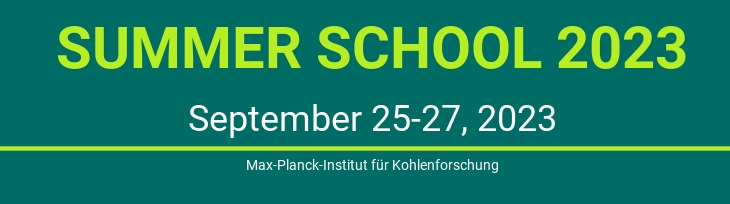
Summer School â€Å"Advanced methods for the characterization of applied materialsâ€Â
| - |
In Max-Planck-Institut für Kohlenforschung, Mülheim an der Ruhr
Characterization methods such as
Surface spectroscopy
Total scattering experiments
X-ray and neutron-tomography
X-ray absorption spectroscopy
Electron crystallography
Small angle scattering
Electron microscopy
Electron microprobe analysis
Vibrational spectroscopy
Solid state NMR
Advanced powder diffraction and in situ techniques
Â
Â
Deadline for registration July 31, 2023
XRD Session II â€" Advanced Methods in X-ray Powder Diffraction
| - |
In Newtown Square, PA