Topics
Electron crystallography
9th K.H. Kuo Summer School of Electron Microscopy and 2016 Kuo Symposium on 3D Cryo-EM Molecular Imaging
| - |
In Beijing
ED-XPD Workshop â€" Combining Electron and X-ray Powder Diffraction Techniques for Structural Characterization
| - |
In Stockholm
Computational and Structural Biology. The 23rd Jerusalem School in Life Sciences
| - |
In Jerusalem
Â
- David Bensimon, EÌcole Normale SupeÌrieure
- Avinoam Ben Shaul, The Hebrew University of Jerusalem
- Ron Dror, Stanford University
- Sarel Fleishman, Weizmann Institute of Science
- William Gelbart, UCLA
- Daniel Harries, The Hebrew University of Jerusalem
- Stephen Harrison, Harvard Medical School
- Barry Honig, Columbia University
- Tom Kirchhausen, Harvard Medical School
- Rachel Kolodny, University of Haifa
- Michael Levitt, Stanford University
- Emmanuel Levy, Weizmann Institute of Science
- Ohad Medalia, University of Zürich
- Gali Prag, Tel Aviv University
- Tamar Schlick, New York University
- Gideon Schreiber, Weizmann Institute of Science
- Arieh Warshel, University of Southern California
- Ada Yonath, Weizmann Institute of Science
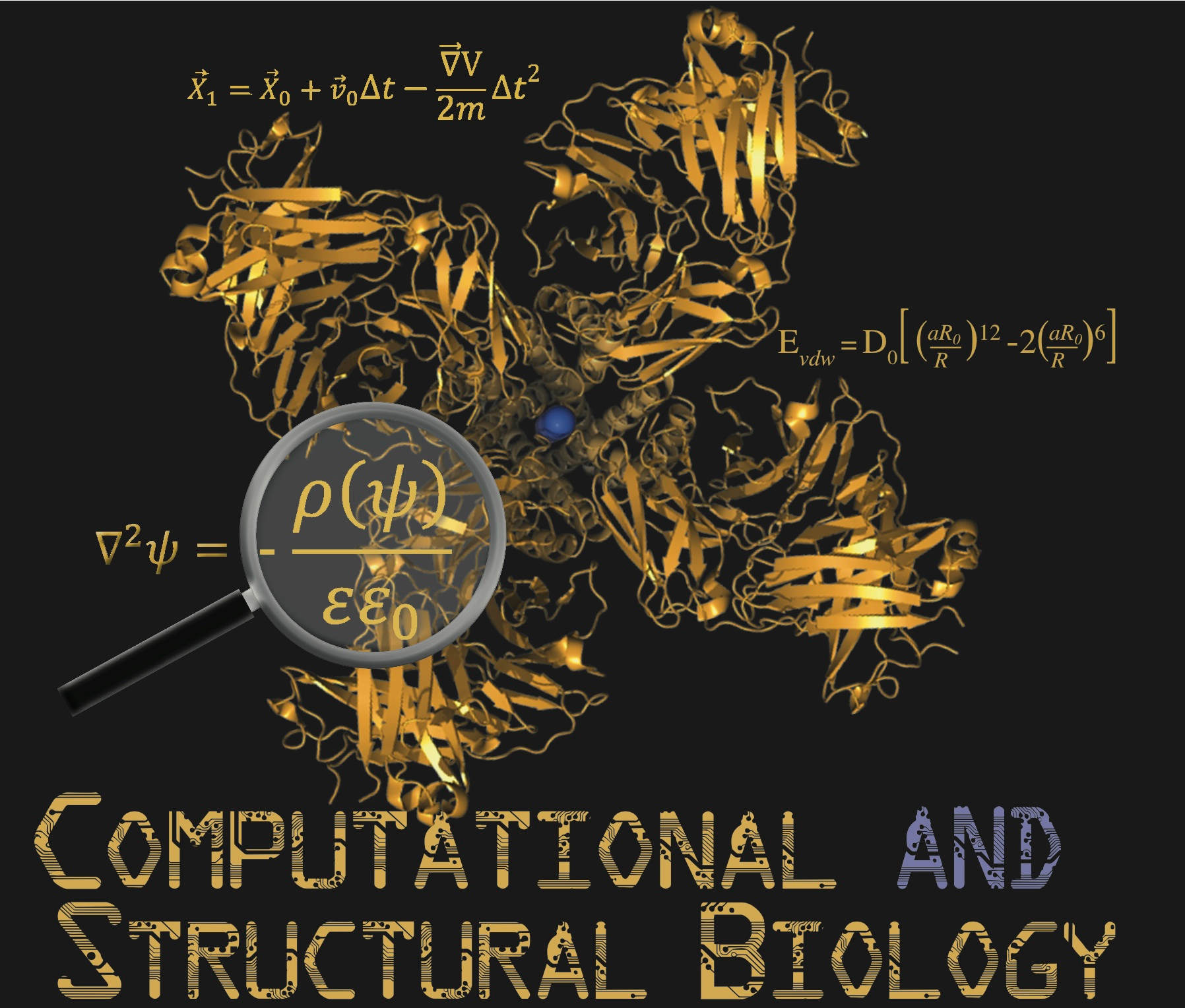
Resolution Revolution in 3D Cryo-Electron Microscopy
| - |
In Weizmann Institute
Yifan Cheng, UCSF, San Francisco
Deborah Fass, Weizmann Institute of Science, Rehovot
Werner Kühlbrandt, MPI Frankfurt
Stefan Raunser, MPI Dortmund
Peter Rosenthal, Crick Institute, London
Helen Saibil, Birkbeck College, London
Maya Topf, Birkbeck College, London

HERCULES 2016 - European School. 26 Years of Neutron & Synchrotron Radiation Science
| - |
In Grenoble
HERCULES is a European course for PhD students and young researchers using Neutrons and Synchrotron Radiation for applications in Biology, Chemistry, Physics, Hard & Soft Condensed Matter.
   The 1-month school includes lectures (60%), hands-on practicals and tutorials at partner institutes (DESY and European XFEL in Hamburg, Ellettra and FERMI in Trieste, ESRF, ILL in Grenoble, Soleil and LLB near Paris, SLS in Switzerland) and Grenoble Laboratories (CEA, CNRS, EMBL, IBS).
   The school includes a common part and two parallel sessions:
- Biomolecular, soft condensed matter structure & dynamics
- Physics and chemistry of condensed matter
  Â
   Why join Hercules ?
- to learn new techniques using neutron and synchrotron radiation
- to expand your theoretical and practical knowledge, not only for your present research but for your scientific career
- to experiment these techniques on world-class instruments & beamlines
- to build a network of relations with fellow young researchers and experienced teachers from all around the World
Deadline for application:Â Â 31 October 2015
Bursaries/reduced costs: a limited number of bursaries will be available either to reduce registration fees or cover travel costs.
Common Lectures:
- Interaction of X-rays and neutrons with matter (absorption, elastic and inelastic interactions, ...)
- Sources (neutron, synchrotron, XFEL)
- Detectors
- Optics &instrumentation
- Diffraction (single crystal, powder..)
- Scattering (elastic, inelastic..)
- Spectroscopy
- Imaging (Absorption, coherent,..)
- etc.
Session A: Applications to Biomolecular, Soft Condensed matter, Structure and Dynamics
- Protein structure and dynamics
- Studies in solutions
- Partially ordered systems
- Membranes, fibres and muscles
- Crystallography of viruses and ribosomes
- Structural genomics
- Biomedical applications (imaging, therapy)
- Time-resolved and ultra-fast X-ray science
- Biology with 4th generation sources
- etc.
Session B: Applications to Physics and Chemistry of Condensed Matter
- Neutron and X-ray (and UV and IR) spectroscopies
- X-ray reflectivity and diffraction of nano systems
- Single crystal and powder diffraction
- Coherent imaging and tomography
- Neutron and X-ray magnetic scattering
- Polarized X-rays and neutrons
- FEL and ultra fast X-ray science
- etc.

BBS2016. British Biophysical Society Biennial Conference
| - |
In Liverpool
New Horizons and emerging biomedical challenges for Biophysics
Standard Registration closes: 1st April 2016 and Abstract submission for contributed talks: 15th March 2016. To register click here.
SCIENTIFIC PROGRAMME
There will be dedicated sessions covering cutting edge biophysical approaches to areas of major interest to the wider community. Opportunities are available to secure a platform presentation under the following themes:
- Cryo electron microscopy and X-ray lasers
- NMR of proteins and cells
- Channels and transporters
- Molecular recognition
- Neurodegeneration and ageing
- Advances in computational biophysics
- Single cell biophysics
- Proteins and complexes in human diseases
- Metals in biology
- Synthetic biology: enzymes & organisms
- Biological soft matter including stem cells
- Catalysis
- Drug discovery
- Membrane proteins and complexes
Confirmed speakers include: Sir David Baulcombe, Sir Tom Blundell, Richard Henderson, Dame Pamela Shaw, Sir Munir Pirmohamed, Greg Petsko, Sheena Radford FRS, James Naismith, FRS, Chris Schofield, FRS, Lucia Banci, Ben Bax, Paul O'Neil, Imre Berger, Sriram Subramanian, Richard Strange, Mike White, Liz Carpenter, Yvonne Jones, Masaki Yamamoto, Malcolm Jackson, Richard Garratt, José M Mato, Nigel Scrutton, Robert Eady, Nigel Robinson, Rasmita Raval, Mike Hough, Stefan Marklund, Nigel Minton, Paul Huang, Stefan Przyborski, Violaine See.
2016 MicroED workshop
| - |
In Ashburn, VA
MicroED is a technique that uses electron diffraction to facilitate structure determination from sub-micron sized crystals, eliminating the need to grow large crystals. MicroED uses equipment and procedures that are standard on many cryo-TEM:s, and because of this the technique can be easily adopted in labs and facilities around the world. To encourage the widespread use of MicroED we are offering this workshop to teach microscopists how to perform the technique and adopt it at their own institutions.
There is no registration fee for participation, and Janelia will provide on-site housing and meals. Attendees are expected to cover their own travel expenses and must be able to stay for the duration.
Space in the course is limited. Those interested should send a brief statement on why they wish to participate to conference@janelia.hhmi.org by Friday, October 18.
XLIV Annual Meeting of the AIC
| - |
In Vercelli
Topics
Plenary Lectures
New Advances in Electron Diffraction: From Ab-initio Structure Solution to Refinement.Lukas Palatinus (Institute of Physics of the AS CR, Prague)
Ab-initio Modeling in Crystallography
Bartolomeo Civalleri (Universita' di Torino)
Watching Matter in Motion: Time Resolved Studies from Synchrotrons to FELs
Marco Cammarata (CNRS - University of Rennes)
Electron Diffraction and Imaging of Protein and Pharmaceutical 3D Nanocrystals
Jan Pieter Abrahams (Universiteit Leiden)
Microsymposia
MS1. Advanced Theoretical and Experimental Methods in CrystallographyMS2. Investigating Structure-Property Relationships in Complex Molecular Systems by a Multi-Technique Approach
MS3. From Nature to Advanced Materials: Structure Characterization at the Nanoscale
MS4. New Topics in Crystal Growth Research
MS5. Nanostructures and Nanoscale Phenomena
MS6. Crystal Chemistry of Inorganic Compounds for the Understanding of Their Properties and Stability
MS7. Imaging Biomolecular Machines in Action through Cryo-Electron Diffraction and Cryo-Electron Microscopy
30th Meeting of the European Crystallographic Association
| - |
In Basel
Focus Area Contacts
Focus Area 1: Michael Hennig, Basel for SIG 1:
Focus Area 2: Jürg Schefer, Paul Scherrer Institute Villigen, for SIG 5, 11, 12
Focus Area 3: Piero Macchi, Berne, for SIG 2, SIG 3, SIG 4
Focus Area 4: Katharina Fromm, Fribourg, for SIG 7 and SIG 13
Focus Area 5: Radovan Cerny, Geneva, for SIG 6, SIG 8 and SIG 9
Maud school on combined analysis
| - |
In Trento
This international school will cover many aspects of the “Combined Analysis†by X-ray, neutron and electron scattering and X-ray fluorescence applied to material science, ranging from fundamental requirements to technically relevant industrial and academic applications. The combined analysis method has been developed over the years starting from the Rietveld method, extending it to most of the powder diffraction analyses and more recently incorporating, on the same idea, other techniques such as reflectivity, X-ray fluorescence and electron diffraction.
Cristallographie Electronique
| - |
In Villeneuve d'Ascq
La première école de cristallographie électronique organisée par la Sfmu en collaboration avec l’AFC se tiendra au laboratoire UMET de l’Université Lille 1 du 16 au 20 novembre 2015.
L'école porte sur la détermination des structures et des microstructures à l’échelle nanométrique par diffraction électronique dans un microscope électronique en transmission (MET). Elle concerne en particulier les développements récents associés à l’utilisation de nouvelles techniques d’acquisition et/ou d’analyse des données telle que la précession, la tomographie et la cartographie d'orientation. Les méthodes d'analyse de symétrie en faisceau convergent seront également présentées.
3D solutions in Cryo-Electron Microscopy 2015
| - |
In Maastricht
The aim of this workshop is to show, through lectures and practical courses, the solutions for 3D reconstruction in Cryo-Electron Microscopy.
Methodology
The lectures will cover single particle analysis, cryo-tomography of isolated specimens and cryo-tomography of structures inside a vitreous cryo-section or lamella and cryo-CLEM. The practical courses will show to the participants how to do sample preparation (high pressure freezing, plunge freezing, vitreous sectioning and cryo-fibbing), image acquisition in cryo-EM single-particle and cryo-tomography and 3D-reconstruction.
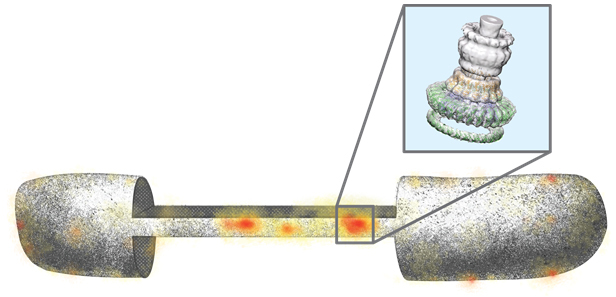
PDF(Pair Distribution Function) analysis of amorphous and nanocrystalline materials from electron diffraction
|
In Rovijn
Electron Diffraction for Quantitative Surface Structure Determination. ICSOS workshop-3 on surface structures
| - |
In Lodz
Powder diffraction of organic compounds
| - |
In Frankfurt/Main
Workshop of the working group `Chemical Crystallography (ChemKrist)' of the section `Analytical Chemistry' of the German Chemical Society (GDCh) and the working group `Molecular compounds' of the German Crystallographic Society (DGK)
Lectures and poster presentations
- Fundamentals of X-ray powder diffraction
- How to collect quality powder diffraction data
- Crystal-structure determination of organic compounds from X-ray powder diffraction data: Fundamentals, Rietveld refinement, applications, new developments, tips and tricks
- Qualitative and quantitative phase analysis, investigation of polymorphism
- X-ray powder diffraction in the pharmaceutical industry
- Investigation of nanocrystalline and amorphous organic compounds with the pair distribution function (PDF)
- Combination of X-ray powder diffraction and electron diffraction
Organization: Prof Dr Martin U. Schmidt (Goethe University, Frankfurt) and Dr Norbert Nagel (Sanofi-Aventis, Frankfurt)
ECS2. Second European Crystallography School
| - |
In Mieres (Asturias)
Crystallography: Fundamentals, Online Tools and Applications
The European Crystallographic Association (ECA) and the University of Oviedo invite the world-wide crystallographic community (and all scientists and students working in any related field) to an intensive session of working together and learning crystallography from each other.
With help from our sponsors, we have achieved a registration cost of 570 euros (young academic, including accommodation and meals). We expect to have student bursaries available to reduce the cost further for a limited number of attendees. The number of attendees is limited to 90 students.
The application deadline is March 31st, 2015.
Programme
The programme schedule aims to answer the new and challenging requirements of the crystallography education and training during the 2nd century of modern crystallography. It is divided into four different modules:

Pre-school basic tools:
- Matrix calculus in crystallography
- Symmetry elements and symmetry operations
- Basic group theory
- Introduction to Reciprocal Space
Fundamental Crystallography:
- Symmetry groups and types of symmetry in direct space
- Space groups and their description in International Tables for Crystallography, Vol. A
- Group-subgroup relations â€" On line tools.
- Crystal-structure descriptions â€" On line tools.
- Crystal-structure relations â€" On line tools.
- Diffraction and Phasing.
- Diffraction Methods for Metal-Organic and Inorganic crystals.
- Diffraction Methods for biological crystals.
- Diffraction Methods for Nanomaterials â€" Electron diffraction.
- Diffraction Metodos for Magnetic Materials.
- Practical sessions on Online Tools â€" Tutorials : Sir/Expo-Janaâ€"Toposâ€"Fullprof
 Specific Subjects:
- Biological Crystallography
- Materials Crystallography
- On line tools â€" Tutorials: CCP4, SHELX, SIR
Hot topic Subjects:
- Time resolved Crystallography
- XFEL Crystallography
- Electron Crystallography
- Crystallography in the Space
Electron Crystallography School â€" ECS2015
| - |
In Duga Uvala
The school is organized as a satellite event to European Crystallographic meeting â€" ECM29 in Rovinj, Croatia, 23-28 of August 2015. The school intends to cover main directions of contemporary research in the area of electron crystallography. The lectures are designed to meet the needs and interests of participants with diverse background â€" materials science, physics, chemistry, geology and biology. The participation in the school is granted with one ECTS credit point.
The program of the school comprises three days of lectures and tutorials and is structured as follows: each of the three days, a set of four lectures are given during each morning while the afternoon sessions are devoted to tutorials. The first day lectures are devoted to basic crystallography concepts and specifics of their application to electron diffraction. The second day lectures cover the structure solution methods and their use for structure analysis based on electron diffraction data. The third day lectures deal with specific crystallographic problems â€" lattice defects, modulated structures and poorly crystalline materials, seen by electron scattering. Tutorials will be given in small groups and interactive manner in order to encourage active discussions. A poster session gives students a possibility to present their research to the lecturers as well as to other participants.
As last but not least point it should be mentioned that active evening program facilitating free communication of students from different countries and also the lecturers should not be underestimated, and is in many cases a basis for fruitful scientific collaboration in the future.
ICESS-15. International Conference on Electron Spectroscopy and Structure
| - |
In Stony Brook, NY
The thirteenth International Conference on Electron Spectroscopy and Structure: ICESS-15, will be held in Stony Brook, New York, Sept 28th to bring together some 400 people interested in the properties of electrons and their interactions in systems ranging from atoms and molecules to complex condensed matter materials. Specific topics fordiscussion will include Atomic and Molecular Science, Photochemistry, Quantum Materials, Imaging Spectroscopies, Novel Instrumentation, and Nanomaterials.
Electronic structure is one of the fundamental properties of matter, and as such has been the subject of scientific investigation for more than a century. Â However the last two decades have witnessed important new discoveries in all areas ranging from the atomic level through to that of complex materials. Â There have also been significant developments in new methods, both theoretical and experimental, for investigating these properties. Â Â New experimental techniques have often evolved at the large scale facilities and by 2015 it is anticipated that the new state-of-the-art synchrotron radiation source at BNL, the NSLS II will be operational. Â It is anticipated that attendees will have the opportunity to tour this important facility.
Â
Â

The 24th Ad Hoc Workshop on Jana2006 Advaced topics
| - |
In Prague

Autumn School on Microstructural Characterization and Modelling of Thin-Film Solar Cells
| - |
In Potsdam, Germany
To be held at Resort Hotel Schwielowsee, Werder (near Potsdam)
The school's concept:In research and development of solar cells, the issue of microstructure and its impact on the device performance is often regarded inadequately, mostly because of insufficient knowledge about analysis and simulation methods. Apart of the microstructural properties of completed thin films in semiconductor devices, it is also of concern how the microstructure develops during growth.The school aims at giving insight into various techniques for microstructural analysis as well as simulation methods of the growth of crystalline materials, apart from a session on electrical materials and device characterization. Each session will comprise a keynote lecture of an expert in the corresponding field, followed by a 2-3 hours hands-on tutorial, giving the participants the possibility to get deeper into the topic, with the help of a specific question to be solved in teamwork practices. Two poster sessions are also planned as evening events, which intensify the discussions and scientific exchange between experts and participants.
Â
Confirmed invited speakers
- Thomas Kirchartz, FZ Jülich, Germany (electrical characterization of
solar-cell materials and devices) - Joachim Mayer, RWTH Aachen, Germany / Ernst-Ruska Center,
FZ Jülich, Germany (transmission electron microscopy) - Anthony D. Rollett, Carnegie Mellon University, Pittsburgh, U.S.A.
(electron backscatter diffraction) - Juan Rodriguez-Carvajal, ILL Grenoble, France (Rietveld refinement of
diffraction data) - Ingo Steinbach, Ruhr University Bochum, Germany (Phase-field theory and application to solidification of multi-crystalline solar cell materials)
- Xiaowang Zhou, Sandia National Laboratories, U.S.A. (molecular dynamics)
Â