Topics
Neutron scattering
40 Years of Neutron Scattering
|
In Gaithersburg Marriott Washingtonian
This event is to honor the contributions of three recent retirees, John Copley, Bill Kamitakahara, and David Mildner.  We will celebrate their contributions to neutron scattering at NIST and look ahead to how they have laid the groundwork for future advances.  This full-day event will be held on February 18, 2016 at the NIST Center for Neutron Research and consist of a dozen talks by scientists whose research was and is enabled/impacted by our honorees.   The event will conclude with a dinner and presentation at the Gaithersburg Marriott Washingtonian.  We very much hope that you will be able to attend this celebration. Please note that we have rather short notice to finalize the organization and there will be a cutoff date for the hotel. Registration is encouraged ASAP since it will help us estimate final numbers.  Registration: The cost of the event is $156 which will include coffee breaks, lunch and the banquet registration. Registration is available through NIST: https://www.fbcinc.com/e/NIST/Neutron/attendeereg.aspx
If you are not planning to attend but would like to send some words for any or all of the honorees, please send an email to: yamali@nist.gov.

Combined Analysis Using X-ray and Neutron Scattering by using MAUD software
| - |
In Caen

50 Years of Neutron Backscattering Spectroscopy
| - |
In Garching, Munich
In 1966 Heinz Maier-Leibnitz proposed the idea of neutron backscattering for achieving high energy resolution in neutron spectroscopy. This concept was successfully implemented and continuously developed at many neutron sources worldwide.
On the occasion of its 50th Anniversary a workshop will be held at the research campus of Garching near Munich on 2nd and 3rd September 2016. We are very pleased to welcome Anton Heidemann and Manfred Birr, the authors of the very first paper on neutron backscattering spectroscopy (along with Bert Alefeld), on the occasion of this event.
This workshop is jointly organized by the ILL, ISIS and the MLZ.
The organizers would like to cordially invite you to attend this workshop which will present both a historical overview and perspectives for neutron backscattering spectroscopy in the future.
For more specific information please visit our conference web-site www.mlz-garching.de/50-years-of-backscattering.
Registration and abstract submission are open now.
Organizers:
Prof. Dr. Winfried Petry, MLZ
Prof. Dr. Thomas Brückel, MLZ
Dr. Bernhard Frick, ILL
Dr. Victoria Garcia-Sakai, ISIS
For administrative matters please contact: Elisabeth Jörg-Müller, MLZ; phone: +49(0)89 289 14966

NIST Summer School on Methods and Applications of Small Angle Neutron Scattering and Neutron Reflectometry
| - |
In Gaithersburg, MD
This school provides participants the opportunity to learn about small angle neutron scattering (SANS) and neutron reflectometry (NR) at the NCNR. Â
These powerful experimental techniques are used by researchers in a variety of scientific disciplines to probe the microstructure of materials at length scales ranging from 1nm to 20 mm.ÂThe NCNR is home to world class SANS, USANS (Ultra Small Angle Neutron Scattering), and NR instruments that are available to qualified researchers through the NCNR’s peer review proposal system. Â
The school emphasizes hands-on training in the use of SANS, USANS, and NR instruments in addition to a thorough theoretical overview of these measurement techniques.
Applications of SANS and NR will be illustrated by specific examples drawn from recent cutting-edge research in polymer science, complex fluids, microporous media, and so on. ÂThe course will enable attendees to assess the applicability of the techniques to their own research, and will provide technical information needed to prepare effective experiment proposals.
The Summer School is sponsored in part by the National Science Foundation, and limited support for graduate students, postdocs and junior faculty will be available.  Attendance will be limited to 35 participants, and only applicants from North American institutions will be accepted.  For further information, and/or to apply, please go to: https://www.ncnr.nist.gov/summerschool/ss16/index.html  Early application is advised since attendance is strictly limited: typically we receive many more applications than the maximum number of participants.  Deadline: April 3, 2016.  Yamali Hernandez and Yiming Qiu National Institute of Standards and Technology 100 Bureau Drive, Stop 6102 Gaithersburg, MD 20899-6102 Tel: (301)975-5295 (YH), (301)975-3274 (YQ)
7th Workshop on Neutron Scattering Applications in Structural Biology
| - |
In ORNL, TN
The workshop on Neutron Scattering Applications in Structural Biology aims at enabling structural biologists to fully exploit the latest instrumentation and software development at the SNS and HFIR facilities at Oak Ridge National Laboratory. Attendees will participate in lectures and tutorials focusing exclusively on neutron techniques applied in structural biology. The workshop is designed for graduate students, post-doctoral fellows and faculty new to or with limited experience of neutron scattering.  Travel and accommodation expenses are supported for selected participants from the United States. International applications are welcome. However the course organization is not able to support travel or accommodation.  The number of participants will be limited to 15. There is no registration fee for all selected participants.
The application package consisting of (1) Information form, (2) CV, (3) Applicant motivation letter (1/2 to 1 page), (4) Principal Investigator letter of support (for graduate students only; 1/2 to 1 page), should be sent electronically to meilleurf@ornl.gov before April 1, 2016.Â
Detailed information can be found on the workshop web page: https://conference.sns.gov/event/15
Application deadline: April 1, 2016 ÂÂ
Magnetic Structure Analysis by Neutron Diffraction Techniques
|
In Denver, CO
Magnetic Structure Analysis by Neutron Diffraction Techniques
 The workshop will be structured as a series of lectures in the field of magnetic neutron scattering presented by organizers and invited speakers (including Branton Campbell, Huibo Cao, and Clarina Dela Cruz), and hands-on sessions where attendees will be assisted by the organizers. This workshop is part of this year’s American Crystallographic Association meeting in Denver, Colorado. Materials will be provided electronically to the students. Students will be required to install software on their computers before the workshop and will be required to bring their laptops for the workshop. They will be required to have access to a Windows operating system.  Tentative program:  7:45pm  Bus leaves Sheraton Hotel  8:00 AM Registration/Computer Setup  8:30 AM Intro to Neutron Diffraction/Refinement This lecture will introduce the formalism of neutron diffraction and offer a brief introduction to the Rietveld method.  9:15 AM Intro to Fullprof This lecture will give an overview of the Fullprof package for the refinement of magnetic structures.  9:45 coffee break  10:00 AM Hands on exercise in Fullprof This will introduce the students to the pcr file and how to perform a Rietveld refinement on a crystal structure using powder diffraction data.  11:30 AM Intro to Magnetic Structures Includes a brief talk on the different types of magnetic structures that students may encounter and will introduce FP_Studio for visualizing crystal structures  12 PM Lunch  1:00 PM Intro to Magnetic Structures (hands on) In this brief hands on, the students will use FP_Studio to visualize magnetic structures.  1:30 PM Intro to Representational Analysis This includes a lecture that will introduce the basic concepts of representational analysis and hands on with SARAh software to determine what types of magnetic structures are possible for a material.  2:30 PM Representational Analysis (hands on) In this hands on exercise, the students will use representational analysis to determine the possible magnetic structures for a material of a given wave vector.  3:00 PM Coffee break  3:15 PM Fullprof Magnetic Structure (hands on) In this hands on exercise, the students will use the K-search to determine the propagation vector, and will refine the magnetic structure of a material given powder diffraction data.  4:15 PM Advanced Fullprof Discussion of refinements using single crystals data and combined data sets  4:45 PM Intro to magnetic space groups This introduces the concept of magnetic space group and demonstration in using ISOTROPY software and the Bilbao Crystallographic server.  5:45 PM Wrap Up  Workshop will be held on the campus of the Auraria Higher Education Center. The campus is a dynamic and vibrant higher education community located in the heart of downtown Denver. The 150-acre campus is shared by three separate and distinct institutions of higher learning: Community College of Denver, Metropolitan State University of Denver, and University of Colorado Denver.   Round trip bus transportation between the hotel and campus will be provided. The workshop will begin at 8:00am and end at approx. 6:00pm. Lunch will be provided.  Preregistration and payment is required. Registration fee for everyone is $110.  Organizers:  William Ratcliff NIST 100 Bureau Drive, MS 6102, Bldg 235 Gaithersburg, MD 20899, Phone:  301-975-4316, william.ratcliff@nist.gov  Ovidiu Garlea Quantum Condensed Matter Division Oak Ridge National Laboratory, P O. Box 2008 - 6473 Oak Ridge, TN 37831, Phone: 865-202-7546, garleao@ornl.gov   More information is available at: http://www.amercrystalassn.org/wk.04-magnectic-structure http://www.amercrystalassn.org/2016-meeting-homepage Â24th Journées de la Diffusion Neutronique (JDN)
| - |
In Var
The French Neutron Society (SFN) organises with the Institut Laue Langevin and the Laboratoire Léon Brillouin neutron facilities the 24th "Neutron Diffusion Meeting", in the Vacanciel holiday village of Carqueiranne (Var, France), from May 2nd to May 4th, 2016. Â
This multidisciplinary workshop (traditionnally entitled "Rencontres Rossat-Mignod") will be dedicated to new results, obtained using neutron scattering techniques, in various scientific domains representative of the whole neutron users community. Â
Four sessions will be organised, in Magnetism, Soft Matter and Environment, Condensed Matter, and Biology.
Each session will be introduced by an invited talk, which will be followed by a series of shorter oral communications.
A Poster session, encompassing all the scientific topics cited above, and an Instrumentation session, will also take place.
WINS2016: Workshop on Inelastic Neutron Spectrometers
| - |
In Berlin

Quasielastic neutron scattering QENS 2016
| - |
In Potsdam
14th International conference on applications of quasielastic neutron scattering
We would like to invite you to the international conference on quasielastic neutron scattering QENS 2016, which will take part from 5 to 8 of September 2016 in Potsdam. Established in Windsor in 1992 the conference series aims to bring together newcomers and experienced scientists to share the latest developments in the investigation of the dynamics phenomena in materials using quasi-elastic neutron scattering. This issue of the conference will be focused on functional materials for energy and information technology applications. Modeling, either to deeper understanding of experimental data, or in the prediction of new materials and phenomena will also be part of the conference. A special session will be dedicated to water.

Structural and Biophysical Methods for Biological Macromolecules in Solution
| - |
In Suwon
- small-angle X-ray and neutron scattering (SAXS/SANS),
- nuclear magnetic resonance (NMR),
- static and dynamic light scattering (SLS/DLS),
- analytical ultracentrifugation (AUC),
- differential and isothermal calorimetry (DSC/ITC),
- spectroscopic approaches,
- cryo-electron microscopy (cryo-EM),
- bioinformatic tools to analyse protein-protein interactions,
- interdisciplinary approaches.
International School on Charge and Spin Density: From Experimental Determination to Interpretation
| - |
In Nancy
Robert F. Stewart school on electron density and related properties
High resolution X-ray diffraction and polarized neutron diffraction are the most relevant methods for respectively modeling charge density and magnetic moment (spin) distributions. Combining both experimental methods in a joint refinement leads to a precise spin resolved electron distributions in magnetic materials.
The aim of this School is to teach all participants the basic knowledge about paired and unpaired electron density distributions using neutron and X-ray diffraction methods and to practice existing refinement software.
This school is dedicated to electron density and its analysis with the emphasis on the combination of complementary experimental methods to enrich the electron density models leading to more complete description of the electronic behavior of crystalline solids.
The school will end with a round table about application of topological analysis and electrostatic properties of a charge distribution in chemistry, biochemistry and physics. Also we will discuss the role of the spin density in material science and how to combine experimental and theoretical methods for a better electron density modeling.
Target Audience: The audience will be typically early career scientists e.g. assistant professors, post-doctoral research fellows, and graduate students of crystallography, medicinal chemistry, solid state and materials science, biochemistry, theoretical, quantum and computational chemistry.
The number of participants is limited to 50.
The bursaries application can be made for ECA and AFC
RMCProfile Workshop at the SNS
| - |
In ORNL Oak Ridge TN
This workshop is aimed at introducing neutron total scattering users to the Reverse Monte Carlo refinement method, demonstrating their use in understanding complex functional materials, and reviewing recent developments and future directions in the technique. Half of the workshop will be focused on providing hands-on training with RMCProfile software, with the balance focused on providing a technical foundation and highlighting exemplary work in the community. The final day of the workshop will interface participants with a panel of experts focused on defining challenges and future directions.

13th TOPAS User's Meeting
| - |
In Bari
The meeting provides a review of state of the art profile fitting analyses using TOPAS, hosting a program of invited speakers. The major component is to demonstrate TOPAS's outstanding modeling methods and related applications in X-ray and neutron diffraction. Participation is open for anyone, TOPAS users and non-users, interested in learning more about the TOPAS capabilities and applications. Participants are encouraged to submit discussion topics in advance to the organizers. The final schedule will take issues of general interest into account. Presentations and example data used will be distributed to the participants as made available by the speakers.

8th ILL Annual School on Neutron Diffraction Data Treatment using the FULLPROF suite
| - |
In Grenoble
FPSchool aims to contribute to the training of scientists in treatment of X-ray and neutron diffraction data.The school is based on intensive hands-on sessions using the computer programs of the FullProf Suite.
The lectures and tutorials will provide the essential tools necessary for an efficient use of the FullProf Suite at an intermediate level. In addition to general applications, the new features on material science data analysis and magnetic structure determination and refinement will be given particular attention.
International Conference on Neutron Scattering (ICNS2017)
| - |
In Daejon
ICNS2017 will be held at Daejeon Convention Center, Daejeon, South Korea. ICNS2017 will be the latest and largest international platform for sharing and exchanging recent advances in neutron scattering science. On behalf of our organizing committee, we cordially invite you to submit your research and join the exciting international conference.
Condensed Matter Research at the IBR-2
| - |
In Dubna (Moscow Region)
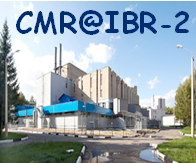
The topics of the Conference will highlight results of interdisciplinary research and development of neutron instruments and techniques, including:
- Functional and nanostructured materials;
- Magnetic colloid systems;
- Layered magnetic nanostructures;
- Carbon nanostructures;
- Materials under extreme conditions;
- Soft condensed matter (biological nanosystems, lipid membranes, polymers);
- Lattice and molecular dynamics of materials;
- Texture and properties of rocks and minerals; - Residual stresses in materials and products;
- Neutron imaging;
- Development of IBR-2 instruments;
- Development of neutron scattering techniques; - Development of neutron detectors.
ACNS2016. 8th American Conference on Neutron Scattering
| - |
In Long Beach, CA
Eighth in the series, the American Conference on Neutron Scattering (ACNS 2016) will provide essential information on the breadth and depth of current neutron-related research worldwide. A strong program of plenary, invited and contributed talks showcase recent scientific results in neutron science in a wide range of fields, including sources, instrumentation and software; hard condensed matter; soft matter; biology; materials chemistry and materials for energy; engineering and industrial applications; and neutron physics.
The conference will be held on board the historic Queen Mary in Long Beach, California and is hosted by the Neutron Scattering Society of America.

HERCULES 2016 - European School. 26 Years of Neutron & Synchrotron Radiation Science
| - |
In Grenoble
HERCULES is a European course for PhD students and young researchers using Neutrons and Synchrotron Radiation for applications in Biology, Chemistry, Physics, Hard & Soft Condensed Matter.
   The 1-month school includes lectures (60%), hands-on practicals and tutorials at partner institutes (DESY and European XFEL in Hamburg, Ellettra and FERMI in Trieste, ESRF, ILL in Grenoble, Soleil and LLB near Paris, SLS in Switzerland) and Grenoble Laboratories (CEA, CNRS, EMBL, IBS).
   The school includes a common part and two parallel sessions:
- Biomolecular, soft condensed matter structure & dynamics
- Physics and chemistry of condensed matter
  Â
   Why join Hercules ?
- to learn new techniques using neutron and synchrotron radiation
- to expand your theoretical and practical knowledge, not only for your present research but for your scientific career
- to experiment these techniques on world-class instruments & beamlines
- to build a network of relations with fellow young researchers and experienced teachers from all around the World
Deadline for application:Â Â 31 October 2015
Bursaries/reduced costs: a limited number of bursaries will be available either to reduce registration fees or cover travel costs.
Common Lectures:
- Interaction of X-rays and neutrons with matter (absorption, elastic and inelastic interactions, ...)
- Sources (neutron, synchrotron, XFEL)
- Detectors
- Optics &instrumentation
- Diffraction (single crystal, powder..)
- Scattering (elastic, inelastic..)
- Spectroscopy
- Imaging (Absorption, coherent,..)
- etc.
Session A: Applications to Biomolecular, Soft Condensed matter, Structure and Dynamics
- Protein structure and dynamics
- Studies in solutions
- Partially ordered systems
- Membranes, fibres and muscles
- Crystallography of viruses and ribosomes
- Structural genomics
- Biomedical applications (imaging, therapy)
- Time-resolved and ultra-fast X-ray science
- Biology with 4th generation sources
- etc.
Session B: Applications to Physics and Chemistry of Condensed Matter
- Neutron and X-ray (and UV and IR) spectroscopies
- X-ray reflectivity and diffraction of nano systems
- Single crystal and powder diffraction
- Coherent imaging and tomography
- Neutron and X-ray magnetic scattering
- Polarized X-rays and neutrons
- FEL and ultra fast X-ray science
- etc.

36th Berlin School on Neutron Scattering
| - |
In Berlin

Neutron imaging and tomography: New applications and developments.
| - |
In Evain les Bains, Haute Savoie