Topics
General
Temporally and Spatially Resolved Molecular Science. Faraday Discussion 177
| - |
In Bangalore
Introduction
Recently crystallography and spectroscopy have reached a level of experimental sophistication and theoretical and computational advancements such that it is possible to understand the structure of even the most complex molecular systems, such as, proteins. One community derives information from average atomic charge densities from X-ray data and the other from valence orbital electron densities based on vibrational spectroscopy data. The modern generation of synchrotrons and the powerful free electron lasers (X-FEL) offer new opportunities and exciting challenges in structural science, but they will require a coordinated approach of complementary methods if they are to achieve maximum impact. We are constantly improving technical and computational methods to accelerate and automate characterisation processes and this is crucial to the fields to be explored in this meeting.
This Faraday Discussion will bring together world experts in computational, crystallographic, spectroscopic, chemical, biological and numerous characterisation methods to share and enhance their expertise.
Aims
The main aim for this FD is to bring together crystallographers and spectroscopists from chemistry, physics and biology to promote new interdisciplinary research and to benefit from complementary approaches and techniques in the rapidly emerging areas of 'time resolved studies', leading to a greater overall understanding of structural dynamics.Â
We hope to achieve:Â
- cross-fertilization of recent knowledge in time and length scales
- linking structural and dynamical information (derived from both the techniques) to understand function
- understanding non-equilibrium states and their impact on reactivity
- new collaborations towards solving problems jointly. Â
In addition, the discussion meeting is expected to identify future challenges and the novel techniques yet to be developed towards addressing temporally and spatially resolved structure-function relationships in chemistry and biology.Â
Format
The Faraday Division have been organising high impact Faraday Discussions in rapidly developing areas of physical chemistry and its interfaces with other scientific disciplines for over 100 years.Â
Faraday Discussions have a special format where research papers written by the speakers are distributed to all participants before the meeting, and most of the meeting is devoted to discussing the papers. Everyone contributes to the discussion - including presenting their own relevant research. The research papers and a record of the discussion are published in the journal Faraday Discussions.Â
Themes
- Dynamics of the Chemical Bond New experimental and theoretical approaches to understand chemical bonding and the changes that take place in the excited state for a number of biologically and technologically important reactions. Obtaining insights into and recording data from processes associated with changes to chemical bonds, whether that is bond breaking, formation, changes in length or inter-/intra-molecular vibrations, is key to obtaining further understanding of a wide range of chemical and biological reactions.
- Time and Space Resolved Methods Development and exploitation of high resolution time-resolved crystallographic and spectroscopic methods predominantly for reactions occurring in the solid-state and examining processes occurring on a broad range of timescales (ms-fs), including novel methodologies and interdisciplinary approaches which are transferable to the study of a wide range of molecular processes. Combining structural, spectroscopic and theoretical data (in 1D, 2D or 3D) within the reaction energy landscape/surfaces will provide complementary information and give a more complete picture of the underlying the behaviour of chemical reaction or biological process.
- Local and Global Dynamics Understanding the relationship between local and global dynamics is essential to correlate knowledge of a molecular process to those occurring within an extended structure e.g. whether a process is cooperative and affected by the surround lattice or occurs independently of the local environment. A combination of current and emerging experimental and theoretical approaches, most of which are transferable between disciplines, will be discussed to provide maximum insight into the relationship between structure and function for both chemical reactions and biological processes.
- Future Challenges and Emerging Techniques Exciting new directions for combining time resolved spectroscopic and diffraction techniques with modern theoretical approaches and looking forward to how we can exploit lab sources to XFELs in novel ways, bringing together all of the topics and ideas covered in earlier sessions to define new research approaches and inter-disciplinary collaborations. Â
We look forward to welcoming you to Bangalore for this Faraday Discussion.
APSSS-1. Asia-Pacific Symposium on Solid Surfaces
| - |
In Vladivostok
The goal of Asia-Pacific Symposium on Solid Surfaces is to present new concepts, techniques and applications of atomically controlled processes at surfaces, interfaces and nanostructures. The Symposium covers:
- Surface/Interface Structures and Properties
- Thin Film Growth and Application
- Electronic Transport and Nano-Electronics
- Surface and Interface for Electronic Devices
- Nano-Magnetism and superconductors
- Graphene, Carbon Nanotubes, and Related Nanomaterials
- Molecular Assembly and Molecular-Based Devices
- Atomic and Molecular Manipulation
Language
The conference official language is English.
Presentation
Presentation style is oral
Advanced Structure Determination Techniques for Understanding the Atomic Mechanism of Complex Biological Functions
|
In Kyoto
Various methods for structural studies, such as X-ray crystallography (PX), X-ray small angle scattering (SAXS), cryoEM and molecular simulation, have been evolved very rapidly in the last decade. Combinations of these techniques reveal dynamic aspect of the molecular mechanism of biological macromolecular complexes based on the atomic structures.
This symposium celebrates the International Year of Crystallography (IYCr) in 2014 and will highlight several recent results on structural studies on membrane proteins and huge protein complexes by X-ray crystallography together with recent advance of important techniques for structural life sciences.
Â
XXXIII N.V. Belov Scientific Readings
| - |
In Nizhni Novgorod
The official language of the conference is Russian.
The Readings are held annually since 1982. The conference program includes plenary and poster presentations on the development of scientific fields which N.V. Belov conducted pioneer research in, as well as memories of him.
Conference topics
·        Fundamental aspects of crystallography and symmetry theory
·        X-ray structure analysis, modern methods and equipment
·        Scientific basis for the creation and development of new methods for crystalline materials, technologies and equipment for the creation and processing of materials
·        Properties of crystalline materials
·        First principles calculations of electronic structure and physical properties of solids
·        Memories of N.V. Belov
Â
Application deadline is 15 November 2014.

Colloquium: 50 years crystallography in Freiburg, Germany
| - |
In Haus zur Lieben Hand, Albert-Ludwigs-Universität
- growth and characterization of single crystal semiconductor materials under terrestrial and space conditions
- simulation of material and heat transport in metal and semiconductor melts
- synthesis, structure analysis and crystal chemistry of new ternary and multinary compounds
- defect characterisation and detector development at synchrotron light sources
- teaching of crystallography and materials sciences
Invited speakers
K. W. Benz (Freiburg), G. Bischopink (Bosch GmbH, Reutlingen), J. J. Derby (CEMS University of Minnesota, USA), P. Dold (Fraunhofer CPS, Halle), H. Hillebrecht (University Freiburg), J. Friedrich (DGKK, Fraunhofer IISB), W. Schmahl, DGK, LMU München), S. Schorr (FU Berlin), P. Rudolph (CTC Berlin)
8th Belgian Crystallography Symposium
|
In Brussels
Symposium organized by the National Committee for Crystallography - 15 October 2014 - Academy Palace Brussels
The organisers aim to promote interdisciplinary contacts between Belgian scientists operating in different fields of structural analysis. Therefore the organisers welcome poster contributions in all fields of condensed matter chemistry and physics, life sciences, material sciences, earth sciences, pharmaca, synchrotron radiation, neutron sources. Lecturers include T. Bergfors, E. Alekseev, J. Hadermann, L. Aerts and Y. Kerremans.

HZB User Meeting
| - |
In Berlin
BESSY II - Tender X-ray Workshop
| - |
In Berlin
Synchrotron Radiation from Terahertz to hard X-rays is a very powerful tool in various fields of modern science. However, many scientific questions addressing the grand challenges of today’s society indicate a growing demand in experimental infrastructure, particularly in the photon energy range between 1.5 keV and 8 keV â€" the Tender X-ray regime.
These excitation energies allow in-air or high-pressure experiments as well as depth-resolved analysis of (buried) interfaces in UHV.
Examples are spectroscopic investigations of modern catalytic  and solar energy conversion materials, i.e., lighter transition metals for solar fuels production as well as in situ studies of electrochemical or biological processes. An increasing demand for Tender X-rays might also be expected from scientists in life science, renewable energies, and battery research.
In a series of foresight work-shops, HZB wishes to establish a discussion of future projects and research activities in strong interaction with current and future users from universities, research institutes, and industry. Aim of the dialogue is to discuss future scientific fields and expectations, needs and requirements for cutting edge science with synchrotron radiation.
HZB kindly invites you to join our workshop on Tender X-rays and to start or intensify a vivid dialogue with us about future science as well as your expectations and requirements for successful experiments at our facility.
Frontiers of Structural Biology: New Advances in X-ray Diffraction and Cryo-Electron Microscopy
| - |
In Indian National Science Academy, New Delhi
As part of the celebration of the International year of Crystallography (2014), Indian National Science Academy (INSA), New Delhi and Regional Centre for Biotechnology (RCB), Gurgaon are jointly organizing a Symposium-cum-Workshop entitled "Frontiers of Structural Biology: New Advances in X-ray Diffraction and Cryo-electron Microscopy" during December 15-17, 2014 at INSA premises witha view to bringing together leading scientists in the field to discuss the major new advances in Structural Biology. The meeting will focus primarily on progressive developments in macromolecular crystallography, Cryo-electron Microscopy and X-ray Free Electron Laser (XFEL) Sources for structure determination.
The three day event will feature keynote lectures, poster presentations and workshop tutorials by distinguished experts from India and overseas. The workshop is highly encouraging participation of young scientists from India as well as the South Asian and Asia-Pacific region.
HSC17: Dynamical properties investigated by neutrons and synchrotron X-rays
| - |
In ESRF, Grenoble
The objective of the Hercules Specialized Course is to combine theoretical and tutorial courses with practical lessons performed using neutrons and/or synchrotron radiation on state of the art instruments/beamlines. The practicals will take place at the European neutron (ILL) and synchrotron radiation (ESRF) facilities located in Grenoble.
The attendance will be limited to twenty participants (mainly PhD students and Post-Doc scientists) to allow an actual participation in the tutorials and practicals, and the interaction between the participants and the lecturers, as well as among the participants themselves.
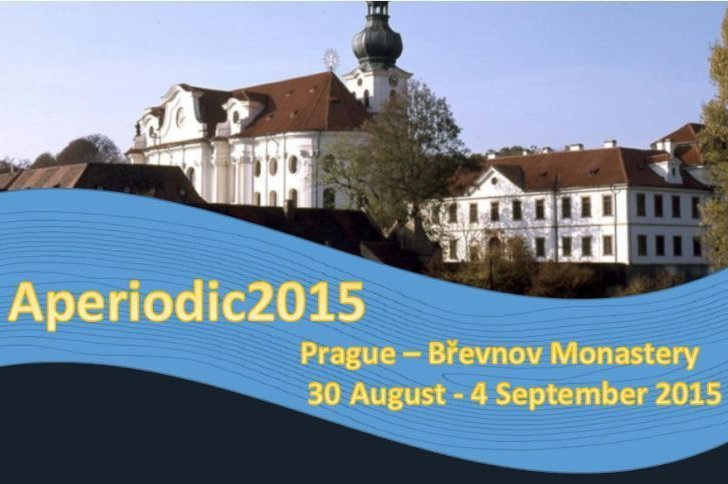
Aperiodic 2015
| - |
In Prague
This will be the eighth of a series of events held triennially since the first Aperiodic in Les Diablerets in 1994. The aim of the conference is to bring together scientists dealing with all aspects of aperiodic crystals and related problems. The conference will be hosted in the baroque building of the Brevnov monastery - the first male monastery in Bohemia founded in 993 AD. Despite of the historical origin, the venue offers all the necessary comfort for a successful and pleasant conference.
The venue is situated only about two kilometres from the Prague castle and about 20 minutes by tram from the famous historical city centre of Prague. Being considered by many one of the most beautiful cities in the world, we believe that the participants will enjoy not only the scientific programme, but also the opportunity to explore the magic and beauty of this city in the heart of Europe.
XV Intensive Teaching School in X-ray Structure Analysis
| - |
In Durham
The main focus of the school is on chemical and materials science. Topics to be covered will include:
- Growth and evaluation of non-macromolecular crystals
- Space group determination
- Background theory to data acquisition for small molecules and inorganics
- Practical aspects of data collection
- Practical aspects of data processing
- Fourier syntheses
- Patterson syntheses and direct methods for crystal structure determination
- Charge flipping
- Refinement of inorganic, organic and metal-organic structures
- Derivation of results
- Random and systematic errors
- Twinning
- Validation of results
- Crystallographic databases (CSD, ICSD, etc)
4ème Ecole de Cristallographie - Cristallographie et Grands Equipements
| - |
In Synchrotron SOLEIL, Saint-Aubin, 91192 Gif-sur-Yvette Cedex
CoursÂ
Réseau direct, cristal, plan réticulaire B. Capelle
Symétrie, groupes Yves Garreau
Diffusion Thompson, théorie cinématique, Laüe Sylvain Ravy
Méthodes expérimentales; neutrons Alexandre Bataille - Florence Porcher
Méthodes expérimentales; rayons X Pierre Fertey
Analyse des données â€" poudres Erik Elkaïm
Analyse des données â€" monocristaux Sébastien Pillet
Surfaces â€" interfaces Alejandro Coati
Diffraction de neutrons â€" structures magnétiques Françoise Bourée
Défauts Pascale Launois
Cristallo en biologie Beatriz Guimarães
Cristaux déformés Olivier Thomas
Diffusion aux petits angles en biologie Javier Perez
Cohérence David Le Bolloc'h
Atelier "Groupes" Yves Garreau
Atelier "Facteur de structure" Delphine Cabaret
T.D. Biologie Beatriz Guimarães
T.D. Monocristaux Pierre Fertey, El-Eulmi Bendeif
T.D. Poudre Erik Elkaïm, Gwénaëlle Rousse, Françoise Thomas
ICPAM-10 & PAMS-1
| - |
In Iasi
10th International Conference On Physics Of Advanced Materials (ICPAM-10)
ICPAM-10 is intended to be a forum of physicists, chemists, material scientists, physicians, engineers and artists for discussion and exchange of ideas and results, both in fundamental and applied research of advanced materials and will consist of invited and contributed papers during plenary, oral and poster sessions.
Young researchers, PhD and MSc students are warmly invited to attend the 1st Autumn School on Physics of Advanced Materials (PAMS-1). PAMS-1 will take place at Alexandru Ioan Cuza University in paralel with ICPAM-10 and will be focused on both fundamental information and on the current research activities in order to provide an interdisciplinary expert training.
The two-related satellite events: The 3rd International Festival of NanoArt and 1st Art and Science Photography Exposition and Workshop Iasi 2014, both public events devoted to promote and offer access to art and science in a new view, invite talented artists and scientists to present their artwork publicly for the first time in Romania.
Graphene World Summit 2014
| - |
In Berkeley, CA
International Workshop on Nanomaterials 2014
| - |
In Nancy
Nanomaterials 2014 is divided into two chapters : the scientific school MSnows 2014 and the industrial day Trans Nano Forum (10th September).
MSnows 2014
Because the size of magnetic object could be shrink down to typical magnetic characteristic length like (domain size, domain wall thickness, exchange length ..) or typical electrical transport length like (electron mean free path, spin diffusion length ..) new spintronic properties were recently discovered. Consequently a lots of effort is focussing on the study of a single nano-object and their applications. The aim of this workshop is to gather different scientific community on this particular topic of the manipulation of spin and Magnetisation at the nanometer scale.
Trans-Nano-Forum
This international event aims at:
- Informing industrial companies about issues and opportunities of nanomaterials revolution,
- Promoting a responsible approach of their development,
- Providing networking and partnering opportunities between European companies and research stakeholders.
The full day conference includes plenary session, workshops, flash presentations, and a BtoB matchmaking session organized by Enterprise Europe Network, with a special focus on 3 main industrial sectors: Energy, Transport & Packaging. Societal issues will also be emphasized.

International Conference on Diamond and Carbon Materials
| - |
In Melia Castilla (Madrid)
The International Conference on Diamond and Carbon Materials is a premier forum to showcase the latest results in the science and technology of carbon materials, with an emphasis on diamond. This will be the 25th event of the series, a longevity sign of the constantly renewed interest and consistent progress made in the science and technology of carbon-based materials.
We are pleased to announce that Professor Sumio Iijima (Meijo University, Nagoya University, NEC and AIST, Japan) has won the 2014 Diamond and Carbon Materials Award for his exceptional achievements in carbon nanoscience, in particular for his seminal work on carbon nanotubes.
ÂTopics:
This conference will present the latest research on the growth, fundamental aspects of the properties and structure of carbon- and diamond-based materials as well as their application spanning nanoelectronics, quantum computing, electrochemistry and biotechnology. Topics will include:
- CVD growth of diamond and production and properties of nano-crystalline of diamond
- Utilization of quantum effects for quantum computing, magnetometry and cryptography based on single defects
- New developments and applications of carbon allotropes for bio- and environmental sensing
- Manufacturing of pn and pin-junctions for deep UV-LEDs and power devices by way of progress in growth and doping of diamond
- Growth of graphene and CVD of carbon nanotubes
- Use of carbon nanotubes in electronics, supercapacitors and batteries
- Applications of nano-diamond in drug delivery
- Use of graphene in displays, RF electronics, supercapacitors, batteries, electrochemical and biochemical sensing as well as metal- replacement in power devices
Â

Multifunctional, Hybrid and Nanomaterials (Hybrid Materials 2015)
| - |
In Sitges (near Barcelona)
Fourth International Conference
Energy, the environment and human health have emerged as strategic priorities not only in research but in all aspects of our lives. Hybrid materials have already demonstrated good promise in addressing and offering solutions in each of these priority areas.
The main objective of this large interdisciplinary conference is to bring together, at a truly international level, people with shared interests in hybrid materials, including:
- Polymer chemists, physicists and engineers
- Biomaterials chemists, physicists and engineers
- Organic chemists
- Inorganic chemists
- Solid state chemists
- Sol-gel chemists
- Composites scientists
- Colloid chemists and physicists
- Zeolite, meso- and microporous materials scientists
- Broad nano- and materials scientists
Each day will start with a Plenary Lecture followed by 3 parallel symposia focusing on the following topics:
- Biohybrids and biomaterials
- Functional hybrid nanomaterials, nanocomposites and their applications (this symposium will run in two streams)
- Functional porous materials

MEDSI 2014. Mechanical Engineering Design of Synchrotron Radiation Equipment
| - |
In Melbourne
MEDSI 2014 will showcase international leading-edge developments in design and research on high end accelerator engineering and technology.
This vibrant event is to be hosted by the world class Australian Synchrotron and held in the dynamic and internationally recognised scientific hub of Melbourne.
The Australian Synchrotron has world class beamlines, of which three are considered world best. Beamline needs constantly challenge the mechanical engineering (ME) team to exceed current world standards. The expertise and enthusiasm of our ME team is attracting great interest for an exciting program, highlighting innovations in:
- Next generation light sources
- Accelerator and beamline design
- Insertion devices
- CryogenicsÂ
- UHV vacuum technology
- Magnet design and technology
- Endstation design
To be held at the elegant Hilton on the Park, just ten minutes from the centre of Melbourne, this event will be an outstanding and memorable MEDSI.

BioXFEL. 2nd International Conference
| - |
In Ponce
The BioXFEL National Science Foundation Science and Technology Center will be hosting its second annual international conference in Ponce, Puerto Rico. Primary areas of discovery will include femtosecond nanocrystallography; time-resolved imaging & spectroscopy; single particles; and instrumentation & algorithms.
Topics covered
Time-resolved Methods I: David Stuart
Nanocrystallography I: Henry Chapman + John Spence
Single Particle Imaging + Solution Scattering I: Michael Rossman
Nanocrystallography II: Ilme Schlichting + Elspeth Garman
Time Resolved Methods II: Keith Moffat
Spectroscopy + Solution Scattering II : Majed Chergui