Topics
Chemical crystallography
BCA Industrial Group Autumn Meeting: 'Cracking Challenging Crystals'
|
In AstraZeneca, Macclesfield
The BCA Industrial Group Autumn Meeting 2015 will take place at AstraZeneca in Macclesfield. The theme of the one-day conference is 'Cracking Challenging Crystals'.
The following speakers have already accepted to participate:
- Prof. Nicholas Blagden The University of Lincoln
- Dr Andrew Bond The University of Cambridge
- Prof. Steven Brown The UNiversity of Warwick
- Prof. Kim James Peakdale Molecular Ltd
- Prof. Ken Lewtas Lewtas Science & Technologies Ltd
- Dr Andy Stewart University of LimerickÂ
16th BCA/CCG Intensive Teaching School in X-Ray Structure Analysis
| - |
In Trevelyan College, Durham
Joint AIRAPT-25th & EHPRG-53rd International Conference on High Pressure Science and Technology
| - |
In Madrid

The 17th Annual National School on Neutron and X-ray Scattering
| - |
In ORNL, TN
This school is designed to help introduce graduate students to the capabilities available at the neutron and x-ray user facilities in the United States. Lectures, presented by researchers from academia, industry, and national laboratories, include basic tutorials on the principles of neutron and x-ray scattering theory, the characteristics of neutron and synchrotron X-ray sources, as well as seminars on the application of scattering methods to a variety of scientific subjects. Â As part of the school, students also conduct a series of short experiments to provide some hands-on experience using instruments at neutron and synchrotron sources, at Argonne's Advanced Photon Source, and Oak Ridge's Spallation Neutron Source and High Flux Isotope Reactor facilities.
Students interested in attending should complete an application at http://neutrons.ornl.gov/nxs/ by February 23, 2015.
Please note that all the travel and lodging costs for students accepted to attend will be covered as part of the school. Â Part of the application process includes submission of evaluation letters from among the student's advisor, department chair and other professors.
Lecture notes and videos of the 2014 NXS School are available at: http://neutrons.ornl.gov/conf/nxs2013/

canSAS-VIII
| - |
In Tokai
Temporally and Spatially Resolved Molecular Science. Faraday Discussion 177
| - |
In Bangalore
Introduction
Recently crystallography and spectroscopy have reached a level of experimental sophistication and theoretical and computational advancements such that it is possible to understand the structure of even the most complex molecular systems, such as, proteins. One community derives information from average atomic charge densities from X-ray data and the other from valence orbital electron densities based on vibrational spectroscopy data. The modern generation of synchrotrons and the powerful free electron lasers (X-FEL) offer new opportunities and exciting challenges in structural science, but they will require a coordinated approach of complementary methods if they are to achieve maximum impact. We are constantly improving technical and computational methods to accelerate and automate characterisation processes and this is crucial to the fields to be explored in this meeting.
This Faraday Discussion will bring together world experts in computational, crystallographic, spectroscopic, chemical, biological and numerous characterisation methods to share and enhance their expertise.
Aims
The main aim for this FD is to bring together crystallographers and spectroscopists from chemistry, physics and biology to promote new interdisciplinary research and to benefit from complementary approaches and techniques in the rapidly emerging areas of 'time resolved studies', leading to a greater overall understanding of structural dynamics.Â
We hope to achieve:Â
- cross-fertilization of recent knowledge in time and length scales
- linking structural and dynamical information (derived from both the techniques) to understand function
- understanding non-equilibrium states and their impact on reactivity
- new collaborations towards solving problems jointly. Â
In addition, the discussion meeting is expected to identify future challenges and the novel techniques yet to be developed towards addressing temporally and spatially resolved structure-function relationships in chemistry and biology.Â
Format
The Faraday Division have been organising high impact Faraday Discussions in rapidly developing areas of physical chemistry and its interfaces with other scientific disciplines for over 100 years.Â
Faraday Discussions have a special format where research papers written by the speakers are distributed to all participants before the meeting, and most of the meeting is devoted to discussing the papers. Everyone contributes to the discussion - including presenting their own relevant research. The research papers and a record of the discussion are published in the journal Faraday Discussions.Â
Themes
- Dynamics of the Chemical Bond New experimental and theoretical approaches to understand chemical bonding and the changes that take place in the excited state for a number of biologically and technologically important reactions. Obtaining insights into and recording data from processes associated with changes to chemical bonds, whether that is bond breaking, formation, changes in length or inter-/intra-molecular vibrations, is key to obtaining further understanding of a wide range of chemical and biological reactions.
- Time and Space Resolved Methods Development and exploitation of high resolution time-resolved crystallographic and spectroscopic methods predominantly for reactions occurring in the solid-state and examining processes occurring on a broad range of timescales (ms-fs), including novel methodologies and interdisciplinary approaches which are transferable to the study of a wide range of molecular processes. Combining structural, spectroscopic and theoretical data (in 1D, 2D or 3D) within the reaction energy landscape/surfaces will provide complementary information and give a more complete picture of the underlying the behaviour of chemical reaction or biological process.
- Local and Global Dynamics Understanding the relationship between local and global dynamics is essential to correlate knowledge of a molecular process to those occurring within an extended structure e.g. whether a process is cooperative and affected by the surround lattice or occurs independently of the local environment. A combination of current and emerging experimental and theoretical approaches, most of which are transferable between disciplines, will be discussed to provide maximum insight into the relationship between structure and function for both chemical reactions and biological processes.
- Future Challenges and Emerging Techniques Exciting new directions for combining time resolved spectroscopic and diffraction techniques with modern theoretical approaches and looking forward to how we can exploit lab sources to XFELs in novel ways, bringing together all of the topics and ideas covered in earlier sessions to define new research approaches and inter-disciplinary collaborations. Â
We look forward to welcoming you to Bangalore for this Faraday Discussion.
ACA Summer Course in Chemical Crystallography
| - |
In Notre Dame, South Bend, IN
The ACA Summer Course in Chemical Crystallography is a program that is now into its third decade of instruction here in the United States. The current incarnation of the course is directed towards Single-Crystal Chemical Crystallography and Powder Diffraction techniques, as applicable to small molecule studies. The course is designed to instruct attendees in the theory and practice of these two aspects of crystallography.
The course is held every summer, in even years at The University of Notre Dame, and in odd years at Northwestern University.
No prior knowledge of crystallography is expected from attendees. However, a good understanding of undergraduate level chemistry, physics and mathematics is desirable. While the course is geared towards graduate level attendees, applications from strong undergraduate students will be considered. Past course attendees have included faculty members and industrial researchers.Â
Engineering Crystallography: from Molecule to Crystal to Functional Form. 48th Erice Course
| - |
In Erice, Sicily
48th Crystallographic Course at Ettore Majorana Centre, Erice, Italy
X-ray crystallography is the pre-eminent technique for obtaining the three dimensional structures of organic materials. Understanding the translation of molecules to crystals and thought functional assembles is key if we want to be able to predict and control the assembly of matter with sufficient certainty and precision to allow preparation of materials and assemblies with far more sophisticated properties and functions than are accessible in materials synthesized using current methods. Great advances continue to be made in determining crystal structures, allowing the pace of structural understanding to increase and making it possible to respond rapidly to emerging opportunities in crystal and particle engineering. This course will help to equip the next generation of scientists with a deep understanding of the tools they need to prototype and engineer crystals to design materials with increasingly sophisticated properties.
The course has two core objectives. Firstly, it will provide a review of the fundamentals and the application of crystallography to molecule to crystal to functional form design together with an evaluation of the technology at the present state. Secondly, it will review the progress in this field and summarize the application and results to other fields of interest across speciality chemicals and other fields
Topics to be discussed include:
• Molecular Structure, Chirality, Crystallography and Crystal Chemistry
• Solution Supersaturation, Nucleation and Crystal Growth Fundamentals
• Defects, Reactivity and Mechanical Properties
• Molecular to Crystal Science Modelling Route Map
• Molecular and Solid-State Data Informatics
• Nano Particle Production and Dispersion
• Advanced Multi-scale Modelling
• Process Analytics and Crystal Characterisation
• Orientational Disordered Crystals and Liquid Crystals
• Reverse Engineering: Learning from Practice
• Forward Perspective: Grand Challenges in Directed Assembly
The total fee, inclusive of registration, boarding and lodging during the course, is 1,200 Euro for European Community residents and the equivalent in hard currency for the remaining ones.
In order to reflect the multi-disciplinary nature of the Course, attendants will be selected on the basis of the scientific discipline, publication record and the connection between their current research and the listed topics. The application date might also become a priority element. Financial support for young applicants (under 35 of age) is conditional to the success of the several applications submitted by the organizing committee to international and national sources.
Â
4th Banff Meeting on Structural Dynamics
| - |
In Banff, Alberta
Ultrafast Dynamics with X-Rays and Electrons
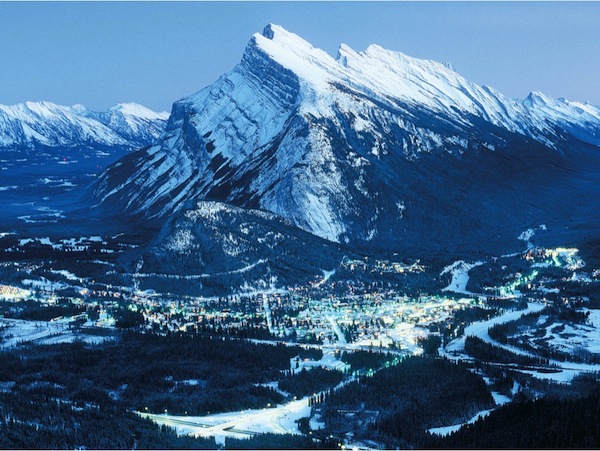
XXIV Symposium of the Specialized Group on Crystallography and Crystal Growth (GE3C)
| - |
In Bilbao
The Congress will be held at the Bizkaia Aretoa building: the auditorium of the University of the Basque Country (UPV / EHU) in the city of Bilbao. This building, designed by architect Ãlvaro Siza , is located in one of the most emblematic areas of Bilbao, over the sea loch and next to the Guggenheim Museum, just in the middle of Abandoibarra Avenue.
Â
Themes for 2014 symposia include:
- Biomaterials
- Crystal growth
- Crystallography
- Materials for energy
- Porous materials, Metal-organic Frameworks (MOFs)
- Nanomaterials
SCTE 2014 â€" 19th International Conference on Solid Compounds of Transition Elements
| - |
In Genova
The SCTE 2014 Conference started back in 1965 and, following a long tradition, has always been a forum where new ideas and discoveries related to the solid state chemistry and solid state physics of d- and f-Â element compounds are presented and discussed.
The conference will deal with the structure, crystal chemistry, chemical bonding and magnetic and electronic transport properties of different classes of intermetallic compounds. Hydrides, borides, carbides, silicides and homologues, pnictides, as well as chalcogenides, oxides and halides (especially those of low oxidation state exhibiting metal or semimetal properties) will also be covered.
Fundamental and applied research in the areas of solid state chemistry, physics and materials science of compounds containing d- and f- elements will be admitted.
Main topics addressed include:
- processes and syntheses;
- crystal chemistry;
- phase equilibria;
- thermodynamics;
- magnetic and electrical properties;
- theory, electronic structure, chemical bonding;
- applications.

XVIII International Conference on Crystal Chemistry, X-ray Diffraction and Spectroscopy of Minerals
| - |
In Yekaterinburg
School of Crystallization and Polymorphism
| - |
In San Jose
This kind of school (the first one in Costa Rica) is very useful for post-graduate students with intensive courses giving an overview of crystallization and polymorphism.

XIII Seminario Latinoamericano de Analisis por Tecnicas de Rayos-X
| - |
In Santa Marta
Indaba 7
| - |
In Kruger National Park,
Insights from Structure
The next Indaba, the seventh in a series of interdisciplinary workshops organized by the South African Crystallographic Society in conjunction with the Structural Chemistry Commission of the International Union of Crystallography, will be held over the period:
2 - 7 September 2012 at Skukuza in the Kruger National Park, South AfricaThe theme of the workshop is Insights from Structure. The organisers will aim for a broad interpretation of this theme, to include various aspects of molecular structure: crystallography, spectroscopy, theory, etc. The workshop will be directed at all molecular scientists from chemistry, biology, physics, materials science and related fields. The scientific sessions will include invited keynote and contributed oral presentations as well as poster sessions.
XVII International Conference on Crystal Chemistry, X-ray Diffraction and Spectroscopy of Minerals
| - |
In St Petersburg
You are cordially invited to attend the XVII INTERNATIONAL CONFERENCE ON CRYSTAL CHEMISTRY, X-RAY DIFFRACTION AND SPECTROSCOPIC STUDIES OF MINERALS to be held in Saint Petersburg State University on June 20-24, 2011. The conference is organized by the Commission on Crystal chemistry, X-ray diffraction and Spectroscopic Studies of Minerals of Russian Mineralogical Society, the Commission on Inorganic and Mineral Structures of International Union of Crystallography and St. Petersburg State University.Â
Planned sessionsÂ
- 1. General crystal chemistry of minerals and inorganic compoundsÂ
- 2. Structure â€" property relationshipsÂ
- 3. X-ray diffraction studies and structural typomorphism of minerals
- 4. Spectroscopic studies of mineralsÂ
- 5. High-temperature and high-pressure diffraction studiesÂ
- 6. X-ray diffraction studies of bio-minerals and technogenic productsÂ
- 7. Nano-minerals and methods of their studiesÂ
Dynamic Structural Photocrystallography in Chemistry and Materials Science
| - |
In Buffalo, NY
Topics
- Chemical reactions, linkage isomers, and photoinduced molecular excited states
- Experimental techniques used for in-house experiments at high intensity sources, at synchrotron beamlines, and at Free-Electron Laser sources
- New computational techniques for processing time-resolved data
- Interpretation of the results
The program will consist of lectures, software exercises, a poster session, and demonstrations. The workshop will open with a welcoming reception on the evening of Sunday, June 16th and close in the morning of June 20th.
Class size is limited to 45 participants. Registration deadline is April 1st or until the workshop is filled.
Organizing Committee
- Philip Coppens, general organization
- Elzbieta Trzop and Bertrand Fournier, software exercises
- Lisa Zimmerman, organization and facilities
International Advisory Committee
- Eric Collet, Professor, University of Rennes, France
- Masaki Takata, Professor, University of Tokyo, Japan
The Zurich School of Crystallography 2011 - Bring Your Own Crystals
| - |
In Zurich
The Zurich School of Crystallography - Bring Your Own Crystals
| - |
In Zurich
Gordon Research Conference on Electron Distribution and Chemical Bonding
| - |
In Les Diablerets
Electron Distribution and Chemical Bonding
Pushing the Limits of Experimental and Theoretical Charge and Spin Density Studies
June 2-7, 2013Â
Les Diablerets Conference Center Les Diablerets, Switzerland- Â Chair: Piero MacchiÂ
- Vice Chair: Wolfgang Scherer
The frontiers of this scientific area are addressed by putting the focus on the exploration of new types of chemical bonding/interactions and the identification of the control parameters providing the basis for a rational materials/drug design. Accordingly, the topics also enclose recent and future innovative concepts such as state-of-the-art charge density studies at "non-standard conditions" (high pressure, electric field, etc.) or novel techniques to explore photochemical or ultrafast processes. Another focus lies on the challenge to perform charge density studies at subatomic resolution. Here, the conference attributes to the dramatic instrumental achievements in pushing the resolution limits to meet the requirements for the study of core polarization effects.