Topics
Solid-state chemistry
Polymers: Design, Function and Application. Polymers2018
| - |
In Barcelona
Session 1: Design to function
- Structure and properties
- Design, modeling and simulation of polymer systems
- Polymer synthesis
- Characterization
- Macromolecular self-assemblyÂ
Session 2: Function to application
- Energy, optics and electronics
- Biomedical applications
- Environment
- High-perfomance materials
- Surface and interface
- Biomimetic materials
SSC2018. 13th International Conference on Solid State Chemistry
| - |
In Pardubice
HERCULES 2018 - European School 28 Years of Neutron & Synchrotron Radiation Science
| - |
In Grenoble (and Hamburg, Trieste, Paris-Saclay, and Villigen)
The 1-month school includes lectures (60%), hands-on practicals and tutorials at partner institutes (Elettra and FERMI in Trieste, Italy; ESRF, ILL in Grenoble; Soleil and LLB in Paris-Saclay; PSI in Villigen, Switzerland) and Grenoble Laboratories (CEA, CNRS, EMBL, IBS). (*)
(*)Â also, participation of DESY and the European XFEL to be confirmed for 2018 due to scheduled down-time.
The school includes a common part and two parallel sessions:
- Biomolecular, soft condensed matter structure & dynamics
- Physics and chemistry of condensed matter
- to learn new techniques using neutron and synchrotron radiation
- to expand your theoretical and practical knowledge, not only for your present research but for your scientific career
- to experiment these techniques on world-class instruments & beamlines
- to build a network of relations with fellow young researchers and experienced teachers from all around the World

6th Tunisian Crystallographic Meeting (TCM6)
| - |
In Djerba
You are cordially invited to participate to the 6th TUNISIAN CRYSTALLOGRAPHIC MEETING (TCM6) by submitting a paper and actively assisting in its work.
TCM6 is intended to provide an excellent opportunity for National, Maghreb and International researchers to make their own work known to a wider audience and to have discussions with other participants. This conference will also be an opportunity to exchange experiences, create and consolidate cooperation between different research structures.
This outstanding conference, organized by the “Tunisian Crystallographic Associationâ€, will take place from 1â€"5 November 2017 in a beautiful and exotic Hotel: El Mouradi Djerba Menzel 4* on Djerba Island, an ecological place, very popular by its palm groves, its beaches and its wetlands populated by various species of migratory birds.
The conference will expand to cover a broad set of research topics about:
- Crystal Structure of Materials, Nanoparticles and Minerals
- Chemical Crystallography
- Cements
- Thin films
- Magnetic order and its consequences
- Dielectrics and multiferroics
- Crystal structure relationships and their applications
- Semiconductor devices and their applications
Â
Important Dates :
Abstract submission deadline: September 15, 2017
Acceptance notification:Â October 1, 2017
Â
More information is available on the conference web site: http://tcm6.org/
Â
Abstracts for consideration as oral and poster presentations can be submitted online via:
·         The conference’s official website:http://tcm6.org/
·         Email: tcm6.Djerba2017@gmail.com
Â
Please feel free to forward this invitation to any of your colleagues who may be interested.
Â
We are really looking forward to welcoming you in DJERBA.Â
Â
Nanoporous Materials & Their Applications (GRS)
| - |
In Andover, NH
Connecting the Dots: New Materials to Meet Society's Needs
Spin Dynamics in Nanostructures (GRS)
| - |
In Les Diablerets
Hydrogen-Metal Systems (GRS)
| - |
In Easton, MA
Photoionization & Photodetachment (GRC)
| - |
In Galveston, TX
Intermetallics Conference 2017 and School on mechanical behaviour of intermetallic phases
| - |
In Bad Staffelstein

Polymers (GRC)
| - |
In South Hadley, MA
Synthetic and Biologically-Derived Polymers
Heterogeneous Catalytic Hydrogenation
| - |
In Lisbon

APME 2017. Advanced Polymers via Macromolecular Engineering
| - |
In Ghent

Oorgandagarna â€" Inorganic Days 2017
| - |
In Nynäshamn
Topics
- Coordination chemistry, bio-inorganic chemistry and medicinal applications
- Electrochemistry and battery applications
- Inorganic catalysis
- Computational modelling and bonding
- Materials synthesis and functionality
- Environment and sustainability
- New methods of characterizing materials and processes
- Inorganic chemistry in exotic places (arts, archaeology, etc)
- Chemical education and didactics
- Thin films
Self-Assembly & Supramolecular Chemistry (GRC)
| - |
In Les Diablerets
Equilibrated and Non-Equilibrated Systems for Anomalous Structures and Properties
6th German-French Workshop on Oxide, Dielectric, and Laser Crystals 2017
| - |
In Bordeaux
Attendants are encouraged to provide an oral presentation or a poster at the workshop.Â
The deadline for abstract notification: 2nd June 2017
The deadline for registration: 25th August 2017Â

German Physical Society Spring Conference of the Condensed Matter Section (DPG-Frühjahrstagung)
| - |
In Dresden
Chemical Physics of Electroactive Materials Faraday Discussion
| - |
In Cambridge
hemes
- Electroactuators: from understanding to micro-robotics and energy conversion
This session will deal with the conversion of the applied voltage to mechanical motion and the reverse processes of electrical energy harvesting from mechanical motion. The focus of the session will be on the search of new micro and nano structured electrodes and membrane materials for enhancement of the electroactuation effect. Applications in micro- and nano-robotics as well electrical energy generators will also be considered, particularly in view of maximizing their efficiency. In terms of systems to be considered at the session, we will focus on polymer-electrolyte composite membranes and nanostructured carbon electrodes, but the goal of the session will also be to reveal emerging systems. - Electrotunable wetting, and micro-and nanofluidics
This session will deal with electrical control of fluids on micro and nano scales, for instance in opto-fluidics, electroactive desalination, and liquid flow capacitors. We will also cover inverse electrowetting, in which mechanical pressure and deformation of liquid droplets generate voltage. - Nanotribology and voltage-controlled friction
In this session, we will discuss the possibilities of controlling friction in electroactive systems, such as interfaces with thin lubricant layers consisting of electrolyte solutions or ionic liquids. - Electrovariable nanoplasmonic
This session will deal with the tuning of surface plasmons in nanostructures, which can be used to electrically control optical properties. These may be used for future creation of switchable mirror-windows, or SERS based detection of hazardous molecules for security and environmental control. The main focus of the session will be on systems based on self-assembled nanoparticle arrays at liquid-liquid or liquid-solid electrochemical interfaces.
Materials chemistry research and the economic health of the nation
|
In Liverpool
16th European Conference on Solid State Chemistry
| - |
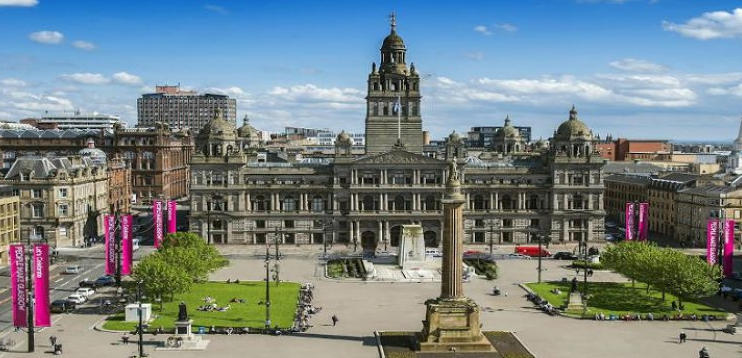
In Glasgow
New directions in porous crystalline materials: Faraday Discussion
| - |
In Edinburgh
Metal-organic frameworks (MOFs), covalent-organic frameworks (COFs), and related molecular porous materials have entered a stage where not just the porosity, but other physical attributes are now playing a major role in their properties. Catalytic properties rivalling those of classic heterogeneous catalysts are being unearthed by carefully engineering isolated active sites in the pores. Photophysical properties enabled by both the rigidity and the controlled dynamics of the porous environment are making strides from both fundamental and applied perspectives. Applications in energy storage are emerging as well, enabled by important advances in increasing the electrical and ionic conductivity in these materials to values that rival and even surpass those of organic semiconductors. Exciting magnetic properties are being reported in such materials with increasing frequency as well, suggesting that perhaps porous magnets and possibly superconductors are also within reach.
This Discussion will thus focus on several important new directions in the chemistry of porous crystalline materials and will attempt to distil converging themes.
Â
- New Directions in Gas Sorption and Separation with MOFs
Mainstay of many of the MOF researchers, this subfield is maturing into a much more applied field, with important applications especially in gas separation and methane storage. Both fundamental gas binding aspects and new structural aspects influencing gas sorption will be discussed and targeted as part of the discussion. - Electronic, Magnetic, and Photophysical Properties of MOFs and COFs
Electrical conductivity and charge transport have only recently become possible with MOFs. This is one of the newest potential applications of these materials. - Catalysis in MOFs
New trends here focus on electrochemical catalysis, strut-based metalloligand catalysis and organocatalysis, as well as node-based catalysis. All aspects have seen huge leaps in the last few years and these will be discussed in this session. - MOFs Modelling and Theory
This final session will focus on theoretical modelling of gas sorption processes in MOFs. A material genome is emerging, which is promised to allow ab-initio predictions of MOFs properties.
Aims
The aim of this discussion meeting is to develop fundamental understanding of key aspects in the chemistry of porous crystalline materials: chemical properties (i.e. catalysis, small molecule reactivity, post-synthetic tuning), electronic properties (i.e. magnetism, conductivity, and photophysics), and physical properties (adsorption and separation) will be discussed in this context.Â