Topics
Biological macromolecules
First K.H. Kuo Summer School of Electron Microscopy and Crystallography: Cryo-Electron Microscopy of Macromolecular Complexes
| - |
In Beijing
To train the next generation of scientists in this exciting field, a workshop on cryo-electron microscopy of macromolecular assemblies will be held at Tsinghua University, Beijing, China, July 14-16, 2008. The workshop will cover electron crystallography, single particle cryo-electron microscopy, and electron tomography. Both basic principles of these techniques and their state-of-the-art applications to biological systems will be taught at the school, and practical sessions may also be organized to show hand-on experience in cryo-electron microscopy as well as various image processing programs. Graduate students and postdocs who currently work in or who are interested in joining the field are particularly encouraged to attend. Importantly, a number of leading scientists will be lecturing at the school; young scientists will have plenty of opportunities to directly interact with these leading scientists.
Crystallization: Focus on Membrane Proteins
| - |
In Brookhaven, NY
Purpose and Scope of Workshop
The purpose of this course is to provide participants with hands-on experience of a variety of crystal growth methods for obtaining high quality crystals. The course will address both conventional and non-conventional methods in membrane protein crystal growth. Optimization methods will include application of oils, novel nucleating agents, detergents, crystallization in lipid cubic phase, crystallization with gels, and more... Introductory lectures will precede the eight practical sessions planned for the course. Time for discussions and informal meetings with the tutors is scheduled.A special session on cryogenic protection and crystal quality assessment will be conducted at the X6A beam line on the last day.
Intended Audience
Graduate students, post-doctoral fellows and research scientists interested in learning about different approaches to crystallization.From Molecules to Medicines: Integrating Crystallography into Drug Discovery
| - |
In Erice
Purpose of the Course
It is primarily intended to educate the upcoming generation with experts drawn worldwide, in an intensive, hand-on forum not available at any other meeting, and in particular, unavailable to these students in any other way.Â
Global disease is perhaps the greatest threat to mankind. There are three primary tools at our disposal to counter this threat, vaccines, drugs and diagnostic tests. Protein crystallography plays a major role in all of these, from its contribution to the explanation of fundamental biological processes to the application of structure-based drug design.Scientifically, there is no better aid to the understanding of biological processes than to be able to visualize the exact position of every atom in a biologically active molecule. It is therefore not surprising that protein crystallography is such a fundamental part of the modern drug discovery process; both in increasing our understanding of disease processes and in the direct, structure-based design of drugs. Parallel to the developments in structural biology, great strides have been made towards targeted medicines. The discipline of bioinformatics is maturing towards ‘systems biology', i.e. a complete elucidation of the biology of an organism; this has been massively aided by the completion of the sequencing of the human genome. Highly targeted medicines, specifically tailored to small groups of patients, are a reality that is already with us, one that has a fundamental dependence on understanding biology at a molecular level. Protein crystallography not only impacts on society via health, but also via economics. This is particularly so in Europe, which has a rich history in medicines research, from the pioneering studies at the turn of the last century through to the establishment of the pharmaceutical giants and biotechnology industry of today, a key part of Europe's economic strength. Competition in this industrial field requires young European scientists to be trained to be able to exploit the techniques in this multidisciplinary area.
Second International School on Biological Crystallization and International School on Crystallization: Drugs, Foods and Agrochemicals
| - |
In Granada
12th International Workshop on Protein Crystallization
| - |
In Quintano Roo
RapiData 2009
| - |
In Brookhaven, NY
RapiData 2008
| - |
In Brookhaven, NY
Workshop on Synchrotron-Light Applications in Biological Materials
| - |
In Cairo
Fundamentals of Modern Methods of Biocrystallography - BioCrys 2006
| - |
In Oeiras
Symposium in Honour of Professor Dame Louise Johnson, FRS, DBE
| - |
In Oxford
9th International Biology and Synchrotron Radiation Conference
| - |
In Manchester
BSR2007
We are pleased to announce that 9th International Conference on Biology and Synchrotron Radiation will be held in the UK in August 2007. The main event (13th to 16th August, inclusive) will take place at the Manchester International Congress Centre. This will be followed for those with special interests by a visit to DIAMOND Light Source (on 17th August) at the Rutherford Appleton Laboratory in Oxfordshire. The sessions at Diamond will be primarily oriented towards the instrumentation and technology.It is an exciting time for Biological sciences and synchrotron radiation. Several new synchrotron sources would be coming on line including SOLEIL in France and DIAMOND in the UK. In the UK, in 2007, the Synchrotron Radiation Source (SRS Daresbury) should still be producing important biological results, DIAMOND will be commissioned in January 2007 and the prototype of the new venture of the VUV Free-electron-laser based proto-type facility of 4GLS should be completed Daresbury. The world's first X-ray coherent source, LCLS is scheduled to produce first beam in 2008 offering new challenges to the biophysics and biological communities.
International School on Biological Crystallization
| - |
In Granada
ISBC 2006 - Overview
The International School on Biological Crystallization (ISBC) was held in Granada (Spain) May 22-26, 2006 under the auspices of the International Union of Crystallography through the Commission of Crystal Growth.Enrollment was 119 and participants came from 24 different countries from Asia, Africa, Europe and both Americas, North and South.
ISBC spanned five days of lectures and practical demonstrations performed by 22 selected experts in the field of crystallization of biological macromolecules, crystallisation of drugs, small-molecule biological compounds, polymorphic precipitations and biomineralization.
The first day of the School dealt with the fundamentals of crystallization from solutions. Starting with an overview of the history of protein crystallization, the lectures covered the physicochemical properties of solutions, nucleation and crystal growth theories and mass transport processes, finishing with a video selection of in situ observations of crystal growth.
The second day of the School focused on protein crystallization. The students and participants learned from a number of vivid and lively lectures covering all aspects of protein crystal growth from the handling of solutions to the handling of crystals, including high-throughput methods, additives, post-translational modifications, crystallization strategies and new windows on crystallizability. A highlight of the day was the "hands-on" demonstration put on by the ISBC "ensemble" (Alex McPherson, Madeleine Ries, Terese Bergfors, and myself) showing how to set up batch, vapor diffusion, dialysis or counter-diffusion experiments. After a busy day we walked to the Alhambra for a romantic night tour of the Moorish Palacios Nazaríes.
The third day of the ISBC was devoted to hands-on experiments and the way it was done was an experiment in its own right. Practical training during ISBC was organized in an innovative and lively format called a Demonstration Fair. During the whole day, 15 specialists offered short (5-20 minutes) practical sessions periodically at scheduled times. Participants were free to choose what sessions they wanted to attend and in the order they wished, so that they selected their own learning program "a la carte". There were sessions on polymorphism, chocolate crystallization, membrane protein crystallization, seeding of crystals, robotics, light scattering, and, of course, all sessions and techniques were repeated as many times as needed to satisfy the motivated students. The Demonstrations' Fair proved to be an excellent teaching tool: it provided students opportunities to interact personally with the teachers, to watch at finger distance how to perform experiment and do them themselves, to plan their teaching schedules on the fly, to devote more time and attention to a particular demonstration, even to attend a session a second time if desired. The Demonstration Fair was very demanding for organizers, of course, and special thanks go to the Laboratorio de Estudios Cristalograficos team led by Dr. José Gavira, Dr. Fermin Otálora and Luis Gonzalez-Ramirez, whose experience in setting up microgravity flight experiments at Cape Canaveral and Baikonur made the installation and removal of lab benches on the Hotel premises within few hours seem like child's play.
The blending of the protein crystallization, small molecule crystallization and biomineralisation communities over common issues and shared challenges was another initiative tested at ISBC for the first time. The risk, of course, was a possible phase separation or "demixing" of the two or three traditional communities. However, to the surprise of many, the lecture hall on the fourth day, which was devoted to small molecule crystallization, was as full of participants as it was on previous days. According to the comments of students and teachers, the cross-interaction was very intense and it was agreed to be a major achievement of the ISBC. The day started with protein crystallization on industrial scales and moved to crystallization of pharmaceuticals, polymorphism, high-throughput screening with pharmaceutical compounds, crystallization of lipids and computational methods, ending with a tasteful flourish, talks on the crystallization processes of ice cream and chocolate. That night, dinner time in Spain, the participants visited the famous gypsy district of Sacromonte, renowned for its flamenco music. There, in the cave of Venta del Gallo, participants enjoyed a tapas' dinner followed by a Flamenco Fiesta until we decided to walk back to the Hotel, meandering the streets close to the river Darro and the Alhambra.
The last day started with a talk on functioning crystallization databases, a crucial tool for understanding crystallization in the future, and then moved to the field of biomineralization and biomimetic materials. Models for the formation of biominerals were reviewed as well as tools for studying textural characterization, the precipitation of calcium carbonate, calcium oxalates and phosphates in living organisms, and as a study case, the wonderful mineralization process of eggshell formation. Next were lectures on the synthesis and production of materials inspired by biomineral structures and on self-assembly of hierarchical mineral structures. The School closed with the presentation of prizes offered by the International Union of Crystallography (International Tables Volume A, F, and the Teaching Guide to Volume A) and Triana Science & Technology (GCBs and Crystallization mushrooms) to the presenters of the six posters judged to be the best at the school. Winners from Italy, Japan, Spain, France, Chile and Belgium were selected for award by an international panel chaired by Howard Einspahr. Responding to strong demand from teachers and students, a CD containing all the lectures and demonstrations has been prepared that includes posters and pictures provided by the participants.
Crystallization: Focus on Membrane Proteins
| - |
In Brookhaven, NY
Crystallization: Focus on Membrane Proteins
June 19-23, 2007Four day practical course in crystallization and characterization of macromolecules.
Location: Brookhaven National LaboratoryPurpose & Scope of Workshop:
The purpose of this course is to provide participants with hands-on experience of a variety of crystal growth methods for obtaining high quality crystals. The course will address both conventional and non-conventional methods in membrane protein crystal growth. Optimization methods will include application of oils, novel nucleating agents, detergents, crystallization in lipid cubic phase, crystallization with gels, and more... Introductory lectures will precede the eight practical sessions planned for the course. Time for discussions and informal meetings with the tutors is scheduled.A special session on cryogenic protection and crystal quality assessment will be conducted at the X6A beam line on the last day.
Intended Audience
Graduate students, post-doctoral fellows and research scientists interested in learning about different approaches to crystallization.RapiData 2006
| - |
In Brookhaven, USA
RapiData 2007
| - |
In Brookhaven, NY
Society for Biomaterials 2014 annual meeting and exposition
| - |
In Denver, CO
The theme for the 2014 Annual Meeting of the Society For Biomaterials is “Pioneering the Future of Biomaterialsâ€, a nod to the historical significance of our host city, Denver, Colorado, and a recognition of the pioneering spirit required to advance the scientific frontier.
The Annual Meeting focuses on fostering development of new implant materials and devices for improvement of the human condition. The meeting program will include the latest innovations in materials science, molecular and cell biology and engineering, new opportunities and mechanisms for translation of these findings to new or improved medical treatments, and engagement of attendees from industry and academia to accelerate the translation of research to clinical applications.Â
The meeting format will include Symposia, General Sessions, Workshops, Panel Discussions, and Tutorials, covering all aspects of basic, applied, and translational biomaterials science.
Solution scattering from biological macromolecules. EMBO Practical Course
| - |
In Hamburg
About the practical course
The EMBO Practical Course is aimed at young scientists working in the field of structural biology including: biochemists, biophysicists, and those specializing in macromolecular crystallography (MX), electron microscopy (EM), NMR or bioinformatics. Small angle scattering (SAS) of X-rays and neutrons (SAXS/SANS) experiences a renaissance in structural biology allowing one to study native particles and complexes and to monitor structural changes in response to variations in external conditions (temperature, pH, salinity, ligands).Novel data analysis methods and a broader accessibility to high brilliance instruments on large scale facilities significantly enhanced resolution and reliability of structural models provided by SAS. Emerging automation of the experiment, data processing and interpretation made solution SAS a streamline tool for large scale structural studies in molecular biology. The method provides low resolution macromolecular shapes ab initio and is readily combined with other structural, biochemical and computational techniques in hybrid approaches. The extremely broad range of molecular sizes accessible by SAS, from kDa to GDa, allows one to monitor the interactions in hierarchical systems at different levels of structural organization. The participants are encouraged to bring their own samples for biophysical characterization (e.g. using light scattering, size exclusion chromatography and thermoflour experiments). They may also bring the SAXS or SANS data collected on other facilities to be analysed during the Course.
Crystal (cl-)Year
| - |
In Turin
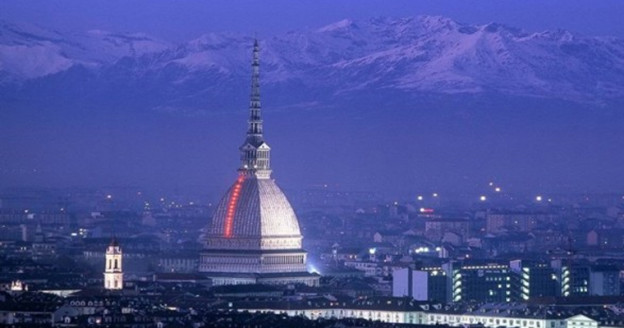
Crystal (cl)Year will celebrate 2014, the International Year of Crystallography, by bringing together some of the most important crystallographers of the world.
The conference will also contribute to broaden the scientific contacts among researchers and between the youngs and the most established scientists.
Keynote Speakers
- Prof. David Blake â€" Crystallography on Mars
- Prof. Paul J. Steinhardt â€" Impossible crystals
- Prof. Ada Yonath (Nobel Laureate) â€" Crystallizing macromolecular complexes: the ribosome
- Prof. John Walker (Nobel Laureate) â€" Crystals, energy and life
- Prof. Eddy Arnold â€" Crystals for drugs: Hiv-RT inhibitors
- Prof. Brian Kobilka (Nobel Laureate) â€" The structural basis of G protein coupled receptor signaling
GTBio 2014
| - |
In Grenoble
GTBio 2014
The 2014 meeting GTBio of the biological thematic group of the French Association of Crystallography will be held in Grenoble in autumn 2014. It will be one of the highlights of the International Year of Crystallography in France.Dates: Tuesday, October 7, 2014 from 13h to 13h Friday, October 10, 2014 Location: EPN Campus
HEC-17. 17th Heart-of-Europe Bio-Crystallography Meeting 2014
| - |
In Berlin
HEC-17 is being organized by Dr Manfred Weiss and Dr Uwe Müller from the Macromolecular Crystallography (MX) Group of the Institute Soft Matter and Functional Materials (F-ISFM) at the Helmholtz-Zentrum Berlin.
The meeting will welcome a prominent scientist to give the renowned HEC keynote speech. The keynote speech will be given by Prof. Dr Gerhard Klebe, who is currently professor for pharmaceutical chemistry at the University of Marburg, Germany. Focus of his research is directed towards the understanding of protein-ligand interactions, including chemical synthesis, microcalorimetry, molecular biology, crystallography, bioinformatics and software development.
Details about the current work of his group and the workshops can be found on the homepage: www.agklebe.de.